

Western Ghats Endemics Birding Tour
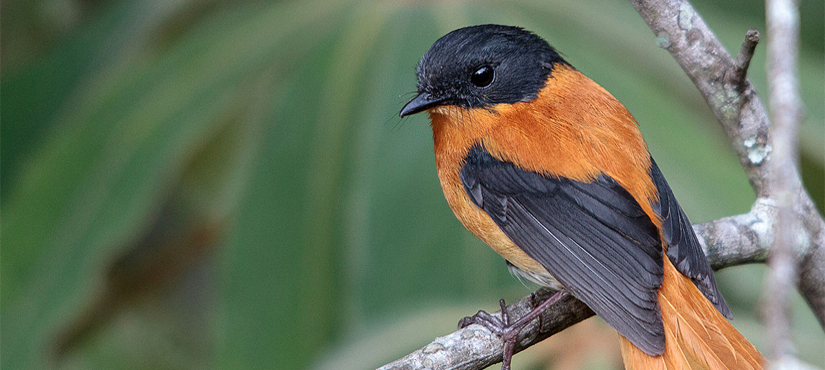
 3rd–16th December 2026: Western Ghats endemics birding tour in India highlights include White-bellied Treepie, Palani (Kerala) Laughingthrush, Nilgiri Woodpigeon, Malabar Parakeet, Malabar Grey Hornbill, Black-and-orange Flycatcher, Nilgiri Pipit, Malabar Trogon, White-cheeked Barbet, Nilgiri Thrush, Crimson-backed Sunbird, Indian Pitta, Wayanad Laughingthrush, Nilgiri Blue Robin, Painted Spurfowl – £3750 per person
Trip Details
- Dates: 3-16th Dec 2026
- Cost: £3750
- Single Supplement: £300
- Deposit: £650
- Tour length: 14 Days (12 days birding)
- Min / Max group size: 4 / 6
- Start/Finish: Cochin/Bangalore
- Tour Type: Birding
- Photo Opps: Good
- Physical Classification: Easy
- Tour Leaders: Nick Upton & Local Guides
If you have any questions about this trip please feel free to ask by contacting us at info@calidrisbirdingtours.com
Western Ghats Birding
Set among ancient rainforests, misty mountains, shola forests, rolling grasslands, river valleys, reservoirs, spice plantations, and tropical wetlands, the Western Ghats of India offer a birding experience that showcases one of the world’s richest concentrations of biodiversity. Imagine Great Hornbills gliding above the forest canopy, flocks of parakeets streaming across the valleys, laughingthrushes and babblers emerging from dense undergrowth, Malabar Trogons perched silently in the shade, Nilgiri Flycatchers and Black-and-orange Flycatchers flitting through cool montane forests, and wetlands alive with kingfishers, storks, herons, and wintering waterbirds. Few places combine such a remarkable diversity of habitats with such a high concentration of endemic birds, making the Western Ghats one of Asia’s premier birding destinations and an essential journey for anyone seeking the unique birds of the Indian subcontinent.
Stretching for over 1,600 kilometres along India’s western coast, the Western Ghats form an ancient mountain chain that is recognized as one of the world’s great biodiversity hotspots. While many visiting birders focus on the Himalayas or the great parks of central India, the Western Ghats reward those who venture south with an exceptional collection of endemic species found nowhere else on Earth. Comfortable accommodation, and a well-planned route allow us to sample the region’s many habitats efficiently, from montaine evergreen forests to low-elevation grasslands and marshes. The result is an outstanding variety of birds and repeated opportunities to enjoy prolonged views rather than fleeting encounters in dense forest.
For birders wanting to experience an extraordinary diversity of species and habitats, few destinations can match the Western Ghats. This tour is designed not only to find the region’s celebrated endemics, but also to appreciate the ecology and conservation of these remarkable forests with the help of our expert guides. It is a journey for anyone fascinated by birds, whether your goal is to connect with iconic species such as Malabar Grey Hornbill, Nilgiri Wood Pigeon, White-bellied Blue Robin, Malabar Trogon, Nilgiri Flycatcher, Black-and-orange Flycatcher, and White-bellied Treepie, or simply to enjoy the spectacle of birdlife across one of the most beautiful and biologically rich landscapes in Asia. The sheer variety of habitats and species is the defining strength of this tour, ensuring that every day in the field brings fresh discoveries.
Day 1, Arrival in Cochin – 3rd December
Flights to Cochin will arrive on this day from mid-morning to mid-afternoon with a short transfer to a nearby, comfortable hotel for the night. In the early evening you will have dinner with your guide and there will be a pre-trip briefing. Here you will get a good night’s sleep before this Western Ghats endemics birding tour adventure begins the following morning.
Days 2-3, Thattekkad – 4th-5th December
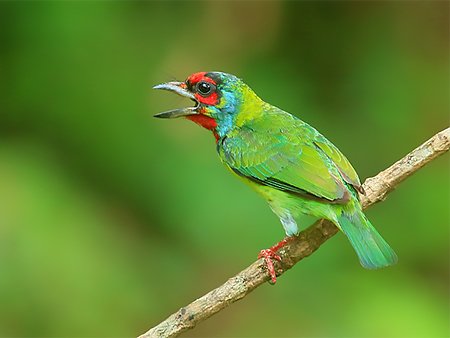
We start our birding tour by visiting what many birders know as the “jewel in the crown” of birding in Kerala and, indeed, the whole of South India; Thattekkad Bird Sanctuary, also known as the Salim Ali Bird Sanctuary. Just around an hour from our hotel we head straight into the forest home of a high proportion of the endemic species of the Western Ghats. A mixture of lowland habitats that include tropical and deciduous forest, riverine grassland and nearby scrublands will provide us with three days of excellent birding in search of groups of noisy Malabar Grey Hornbills passing through the trees, White-bellied Blue Flycatcher in the shadows, Malabar Barbet with its repetitive call and one of the smartest parakeets in Asia in Malabar Parakeet alerting us to its presence with its raucous screeching.
Spending time birding in the forest we will be looking for some good birds including the colourful and range-restricted Malabar Trogon, the endemic White-bellied Treepie, an impressive bird, as well as the endemic Crimson-backed Sunbird. There is plenty to see in the forest and around the gardens of the accomodation with superb White-bellied Woodpecker to enjoy as well as Loten’s Sunbird feeding on flowers plus Southern Hill Myna, the endemic White-cheeked Barbet, Black-hooded Oriole, Green Imperial Pigeon and colourful Indian Roller. The lowland habitat here hosts not only birds endemic to the Western Ghats but many species that are much depleted throughout their Asian range.
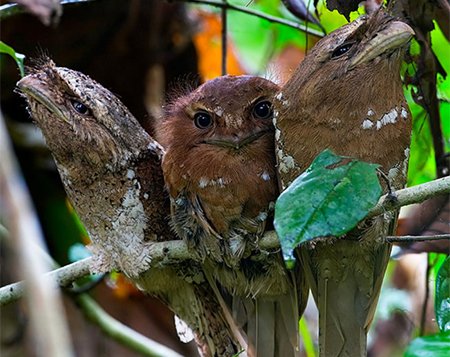
Nocturnal birds are a feature here too but we do expect to see many of them on daytime roosts given the intimate knowledge of our local guides. Large Owls such as Mottled Wood Owl, Brown Fish Owl and Spot-bellied Eagle Owl are frequently seen as are smaller species including Indian Scops Owl and Oriental Scops Owl although Sri Lanka Bay Owl might be rather harder to locate. There is also a very good chance of seeing the weird and cryptic Sri Lanka Frogmouth, a regional endemic that is often seen on daytime roosts in this area.
For some really amazing views we can also spend some time watching birds from a hide as a variety of species come to drink and bathe. In this way we can observe endemic species such as White-bellied Treepie, Flame-throated Bulbul, Blyth’s Starling and White-browed Bulbul as well as more widespread species like Black-naped Monarch and Blue Whistlingthrush.
There are plenty of options for us in this area and the length of time here means that we should be able to connect with a very high proportion of the target species and enjoy the birding at a good pace.
Days 4-5, Munnar – 6th-7th December
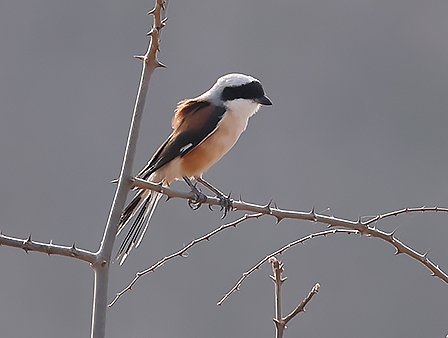
We have two full days to explore the hill station of Munnar, leaving early in the morning, making a two-hour drive through tea plantations where Long-tailed Shrike and Pied Bushchat are common, along with migratory Brown Shrike. Our first port of call in this region will be Eravikulum National Park, an area of rolling mountains with extensive areas of upland grassland, interspersed with forested gulleys and valleys and areas of shrubland among rocky cliffs. This is more than just a scenic area being the best place to see some of the region’s endemic species and we will time our arrival to spot Nilgiri Woodpigeons perched in the open, enjoying the early morning light.
Other key birds here to search for include the smart Palani (Kerala) Laughingthrush, split from Grey-breasted Laughingthrush, and a species that can be quite confiding at the right spot, Yellow-throated Bulbul and Nilgiri Flycatcher. More widespread species are also likely to include Large-billed Leaf Warbler, Tytler’s Leaf Warbler and Tickell’s Leaf Warbler to test our skills with Phylloscopus warblers, Indian Scimitar Babbler, Indian Black-lored Tit, the stunning Indian Blue Robin, Indian Blackbird and Orange Minivet.
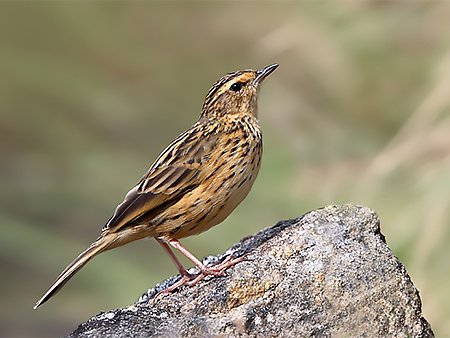
Higher up the mountain within woodland patches and the shola grasslands we expect to see the endemic Nilgiri Pipit, a specialist of upland grasslands with the lovely White-bellied Blue Robin to find too. If we are lucky we may be able to find Broad-tailed Grassbird, but this species can be very skulking and hard to see. In the leaf litter of the woodland we have a great opportunity to spot a cryptic Zoothera thrush in Nilgiri Thrush as well as intricately marked Painted Bush Quail with other possibilities including Malabar Whistlingthrush, Grey-fronted Green Pigeon, Yellow-browed Bulbul, Velvet-fronted Nuthatch and the stunning Blue-capped Rockthrush as well as another chance of the amazing Malabar Trogon.
Our time here will be spent targeting the key species in and around the Munnar area as well as enjoying the birds with a wider range along the way, before we head back, at the end of the day, to our base at Thettakad.
Day 6, Chinnar – 8th December
A change of scenery takes us to nearby Chinnar, an area of dry forest which serves as an interesting change of avifauna including a number of species not likely to be seen elsewhere as well as regional specialities. One of the big targets here is Spot-bellied Eagle Owl which is often located on daytime roosts at this site while brown Fish Owl is also a distinct possibility. On the ground level, some of the more moist patches harbour Indian Pitta while in the mid-storey the fairy-like Indian Paradise-Flycatcher flitters around.
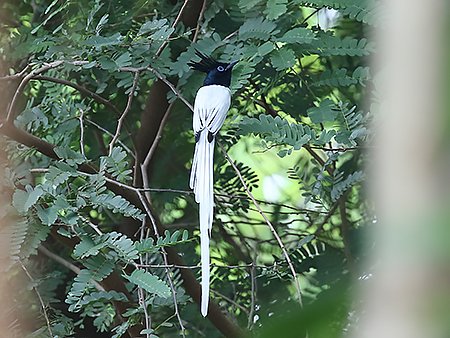
Some of the more tangled patches of woodland here attract some interesting species and it is here that we have our best chance of finding Sirkeer Malkoha as well as Tawny-bellied Babblers darting around in the undergrowth. Yellow-crowned Woodpecker is a widespread bird in India but this is perhaps the easiest place to see it on this itinerary while Grey-bellied Cuckoo occupies the same habitat. Brown-headed Barbet is abundant here and we can find this bird most easily in the early morning as it calls from the treetops and at the same time Green Imperial Pigeons are likely to be sunning themselves on exposed perches. This drier forest lends itself to spotting birds perched in the open with Crested Treeswifts likely to be seen using them as a post from which to launch feeding missions and raptors such as Changeable Hawk Eagle to be found resting too.
Here we are likely to see our first Grey Junglefowl in open areas and in the areas of grasses and tangled vegetation we can look for Yellow-eyed Babbler, a widespread bird in Asia but one that is rarely numerous or easy to see. Yellow-throated Sparrow is another bird that we should also see in this scattered woodland habitat as well as in bordering farmland and villages.
Day 7, Chinnar to Mudumalai – 9th December
After breakfast and some early morning birding we start the journey towards Mudumalai, around four hours away. On arrival in these foothills the habitat is rather drier than some of that which we will have already spent time within, containing its own set of specialities. We will be able to spend the whole afternoon birding at Mudulamai Forest, looking for a wide range of species including the intensely-coloured Indian Nuthatch as it creeps characteristically down tree trunks, White-cheeked Barbet as it calls from a favourite perch, woodpeckers such as Black-rumped Flameback and the range-restricted Streak-throated Woodpecker, noisy parakeets including Plum-headed Parakeet and Malabar Parakeet as well as a wide range of more widespread species.
In some of thorny forest at Mudulamai we also hope to see Grey Junglefowl foraging on the forest floor while the noisy Indian Peafowl is ubiquitous and Blue-faced Malkoha adds some colour within the foliage as it moves from one tangle to another. This forest contains a mosaic of small clearings and wet patches which increases the diversity of species with some commoner wetland birds probable and the possiblity of White-rumped Vulture.
Of course the main reason to travel to this region of India is for its endemic species and at this location we will be looking for Red Spurfowl in scrubby areas, Malabar Lark in areas of open country and the rather plain Nilgiri Flowerpecker. At dusk we will wait in a reliable spot for Jerdon’s Nightjar to emerge.
Days 8- 9, Ooty – 10-11th December
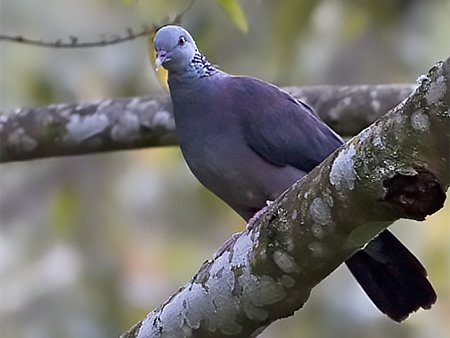
Starting very early in the morning we will head uphill to the hill statio of Ooty, at an altitude of about 2,200m in the Nilgiri Hills. We will spend the whole day in this area that will rather cooler than we will have been used to for the previous few days where we hope to see yet more superb, regional specialities and endemic species. perhaps highest on our wish-list when birding at Ooty will be the remarkable, endemic Black-and-orange Flycatcher. This stunning bird prefers the misty hills here with dense undergrowth and leaf litter where it announces itself from the shadows with a flash of its exceptional plumage.
There are many spots for us to investigate in this region of the Nilgiri Hills and one of the most pleasant is the botanical gardens where we can look for Nilgiri Blue Robin, Nilgiri Sholakili, Blue-capped Rockthrush as well as the secretive and hard-to-find Nilgiri Thrush; we might need a bit of luck for that one! There will also be another chance at seeing other endemics such as Nilgiri Laughingthrush, Nilgiri Woodpigeon and Malabar Whistlingthrush as well as other birds of interest that include Kashmir Flycatcher and Spot-breasted Fantail.
Day 10-11, Mudumalai & Bandipur – 12-13th December
Staying nearby we have the full day to use for birding around Mudumalai and the adjacent Bandipur wildlife sanctuary. These two locations are part of a great area of protected habitat and our local guide will decide which of them will be worth spending most of our time at depending on current conditions and recent sightings. Bandipur, in particular, can be good for ground-dwelling birds with frequent sightings of Grey Junglefowl and Red Spurfowl as well as the more widespread Grey Francolin and we even have a decent chance of seeing Jungle Bush Quail as it feeds in the early morning in open areas.
Areas of wetland should provide sightings of birds such as Painted Stork, Asian Woolyneck and Red-shouldered Ibis with raptors in close attendance inc;uding the impressive Red-headed Vulture as well as White-eyed Buzzard. This can be a good birding location for day time roosting owls too with species such as Spotted Owlet, Brown Fish Owl and Spot-bellied Eagle Owl being regularly located without having to go out at night to look for them. The regional endemic woodpecker, Malabar Flameback, will also be a bird we search for on this day of the birding tour but plenty of other species of woodpecker are likely too from the diminutive Brown-capped Pygmy Woodpecker to the mighty White-bellied Woodpecker. Additionally, a supporting cast of more common birds will be inevidence too with colourful Orange Minivets, Black-headed Cuckooshrike, Spot-breasted Fantail, Bay-backed Shrike, Ashy Prinia, Indian Scimitar Babbler and Purple-rumped Sunbird all to look out for.
Tiger are present in these national parks but sightings at this time of the year are infrequent.
Day 12, Bandipur to Mysore – 14th December
The early morning can be spent searching for any of the key birds we have yet to see, or ones that we want a better look at before starting the journey towards Mysore. This journey takes around three and a half hours but we will be making birding stops along the way, with Indian Eagle Owl and Indian Vulture of note, intending to spend the afternoon birding in the wetlands and woodlands close to Mysore that contain a wide variety of species and a real abundance of birds. We can scan through a wide selection of shorebirds, with Small Pratincole and Great Thick-knee being two highlight species, and there should be plenty of wildfowl too with Knob-billed Duck, Bar-headed Goose and Cotton Pygmy Goose accompanying many species of more widespread Eurasian species.
While enjoying the general abundance of birds here one of the key species to see will be River Tern and perhaps Black-bellied Tern too. These two birds of inland wetlands have had population collapses in much of their world range but here we have a good chance of seeing them as they hunt. In the more wooded areas we can expect to see Indian Grey Hornbill, Indian Golden Oriole and Indian Robin.
There are alos plenty of species associated with grassy and open areas to be seen here with perhaps the star attraction being White-bellied Minivet; there is a fairly good chance of finding them here. Species such as Booted Warbler, Sykes’s Warbler, Paddyfield Warbler and Blyth’s Reed Warbler will pose some identification challengesas will a selection of larks that can include Rufous-tailed Lark, Jerdon’s Bushlark, Tawny Lark and Malabar Lark, among others, although Ashy-crowned Sparrow Lark is easier to separate from others.
Day 13, Mysore to Bangalore – 15th December
We can spend the morning birding the areas that we spent the previous afternoon in, looking for anything we think we can add to our list, or just enjoying whatever we can see. We will then make the three hour drive to the city of Bangalore to our hotel for the night where we will finish this Western Ghats endemic birding tour.
Day 14, Departure – 16th December
After breakfast head to Bangalore Airport for our onward flights.
The following list is of the key species of birds that we have a very good chance of finding based on the experience of previous visits. The list is not meant as a complete inventory of the birds that we will search for but they are many of the regional highlights that we will put effort into locating because they are memorable and/or have restricted ranges. We do expect to find a very high proportion of these birds but we obviously cannot guarantee that we will see all of them.
- Painted Bush Quail – Perdicula erythrorhyncha
- Red Spurfowl – Galloperdix spadicea
- Painted Spurfowl – Galloperdix lunulata
- Grey Junglefowl – Gallus sonneratii
- Sri Lanka Bay Owl – Phodilus assimilis
- Indian Scops Owl – Otus bakkamoena
- Indian Eagle Owl – Bubo bengalensis
- Spot-bellied Eagle Owl – Bubo nipalensis
- Brown Fish Owl – Ketupa zeylonensis
- Mottled Wood Owl – Strix ocellata
- Malabar Trogon – Harpactes fasciatus
- (Southern) Greater Coucal – Centropus sinensis (parroti)
- Nilgiri Woodpigeon – Columba elphinstonii
- Great Thick-knee – Esacus recurvirostris
- River Tern – Sterna aurantia
- Indian Vulture – Gyps indicus
- Malabar Grey Hornbill – Ocyceros griseus
- White-cheeked Barbet – Psilopogon viridis
- Malabar Barbet – Psilopogon malabaricus
- Brown-capped Pygmy Woodpecker – Yungipicus nanus
- Black-rumped Flameback – Dinopium benghalense
- White-bellied Woodpecker – Dryocopus javensis
- Plum-headed Parakeet – Psittacula cyanocephala
- Blue-winged (Malabar) Parakeet – Psittacula columboides
- Indian Pitta – Pitta brachyura
- Orange Minivet – Pericrocotus flammeus
- Malabar Woodshrike – Tephrodornis sylvicola
- White-bellied Treepie – Dendrocitta leucogastra
- Indian Black-lored Tit – Machlolophus aplonotus
- Indian Bushlark – Mirafra erythroptera
- Syke’s Lark – Galerida deva
- Malabar Lark – Galerida malabarica
- Grey-headed Bulbul – Pycnonotus priocephalus
- Yellow-throated Bulbul – Pycnonotus xantholaemus
- Flame-throated Bulbul – Pycnonotus gularis
- Yellow-browed Bulbul – Acritillas indica
- Tytler’s Leaf Warbler – Phylloscopus tytleri
- Broad-tailed Grassbird – Schoenicola platyurus
- Indian Scimitar Babbler – Pomatorhinus horsfieldii
- Dark-fronted Babbler – Rhopocichla atriceps
- Rufous Babbler – Argya subrufa
- Wayanad Laughingthrush – Pterorhinus delesserti
- Nilgiri Laughingthrush – Montecincla cachinnans
- Palani (Kerala) Laughingthrush – Montecincla fairbanki
- Southern Hill Myna – Gracula indica
- Malabar (Blyth’s) Starling – Sturna blythii
- Orange-headed Thrush – Geokichla citrina
- Nilgiri Thrush – Zoothera neilgherriensis
- Indian Nuthatch – Sitta castanea
- White-spotted Fantail – Rhipidura albogularis
- White-bellied Blue Flycatcher – Cyornis pallidipes
- Nilgiri Flycatcher – Eumyias albicaudatus
- Malabar Whistlingthrush – Myophonus horsfieldii
- Indian Blue Robin – Larvivora brunnea
- Nilgiri Blue Robin – Sholicola major
- White-bellied Blue Robin – Sholicola albiventris
- Rusty-tailed Flycatcher – Ficedula ruficauda
- Black-and-orange Flycatcher – Ficedula nigrorufa
- Blue-capped Rockthrush – Monticola albogularis
- Nilgiri Flowerpecker – Dicaeum concolor
- Crimson-backed (Small) Sunbird – Leptocoma minima
- Loten’s Sunbird – Cinnyris lotenius
- White-browed Wagtail – Motacilla maderaspatensis
- Nilgiri Pipit – Anthus nilghiriensis
The map of South India below displays the main locations visited on this Western Ghats endemics birding tour. Depending on local knowledge at the time there may be other sites visited and there will be a number of shorter birding stops on some of the journeys between sites.
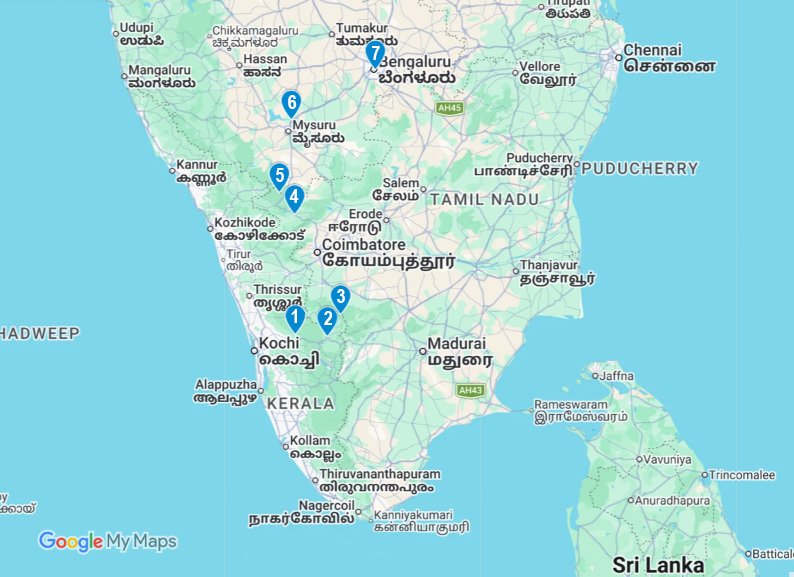
1. Thattekkad
5. Mudulamai & Bandipur
2. Munnar
6. Mysore
3. Chinnar
7. Bangalore
4. Ooty
Tour Details
Tour Cost: £3750 per person
Single supplement: £TBA
Included in the tour cost: All transport during the tour, road tolls, all meals starting from dinner on the day of arrival to breakfast on the day of departure, bottled drinking water at all times, accommodation (based on two people sharing a room), national park entry fees, services of an English-speaking birding guide, translator and Calidris Birding Tours guide with a telescope.
Not included in the tour cost: International flights, taxi from and to airports, travel insurance, visa (most nationalities get 30-day visa-free entry), alcoholic and soft drinks, tips, laundry and any other items of a personal nature.
Accommodation: All accommodation is selected either for its proximity to the birding or that it is the most acceptable quality for the area. All accommodation is a pleasant standard with en-suite toilet/shower facilities.
Physical effort: This birding tour does not require a high level of physical exertion, participants simply need to be able bodied and capable of spending all day in the field, making mostly short walks from the vehicle although there may be one or two longer walks along forest trails.
Weather: In lowland areas hot and humid conditions can be expected although at this time fo the year mornings can be cool. The upland areas that we visit are much cooler with daytime temperatures usually in the low 20s degrees Celcius, although at night it can be much colder so that some warm weather clothing is required; a light fleece or jacket. In December dry weather and clear skies are expected but again, in the mountains there can be misty conditions and even light showers at times.
Food: Typical Indian food but with a regional twist to some of the tastes using a lot of fresh green herbs to dishes that visitors may already be familair with. More western style breakfasts are usually served on these tours but with such a rich cuisine you can expect a wide variety of Indian dishes to try. Vegetarians are easily catered to, indeed, some of the best dishes are vegetarian here. Please do tell us in advance of any particular eating requirements and/or any food allergies you have so that we can check that these can be catered for.


Tour Leaders

Nick Upton
Nick Upton has been birding since the age of seven and leading birding tours full-time since 2007. After travelling extensively in Asia he settled in Thailand in 1997, teaching English and science while establishing thaibirding.com. With a BSc (Hons) Wildlife & Countryside Conservation he is well placed to understand the ecology of birds as well as the conservation issues that affect them.
Nick is co-founder/director of Calidris Birding Tours.
While we make every effort to adhere to the advertised itinerary for this Western Ghats endemics birding tour, we reserve the right to make changes in the case of unforeseen circumstances that are beyond our control. These can include problems with accessibility, national park closures, unseasonal weather events or any other reason that may demand a change of itinerary.
Recommended Field Guide
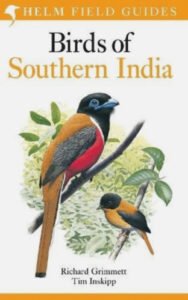 Birds of Southern India
Field Guide to the Birds of Southern India is the recommended field guide for this tour and illustrates all of the species we are likely to encounter during our time in the Western Ghats. We encourage participants to obtain a copy well before the tour begins so they can become familiar with the region’s endemic birds, as well as the many widespread species that occur across the diverse habitats we will be visiting.
The checklist issued by Calidris Birding Tours for this trip follows Avi List taxonomy, with cross-reference to the taxonomy used in this field guide.
Related Birding Links
- Birding in Munnar – posted by Whistling Trails
Terms and conditions: Please read full Calidris Birding Tours terms and conditions which apply to the Western Ghats Endemics Birding Tour.