

North Sulawesi Birding Survey Trip October 2025
Tour Leader: Nick Upton
Dates: 21st-25th October
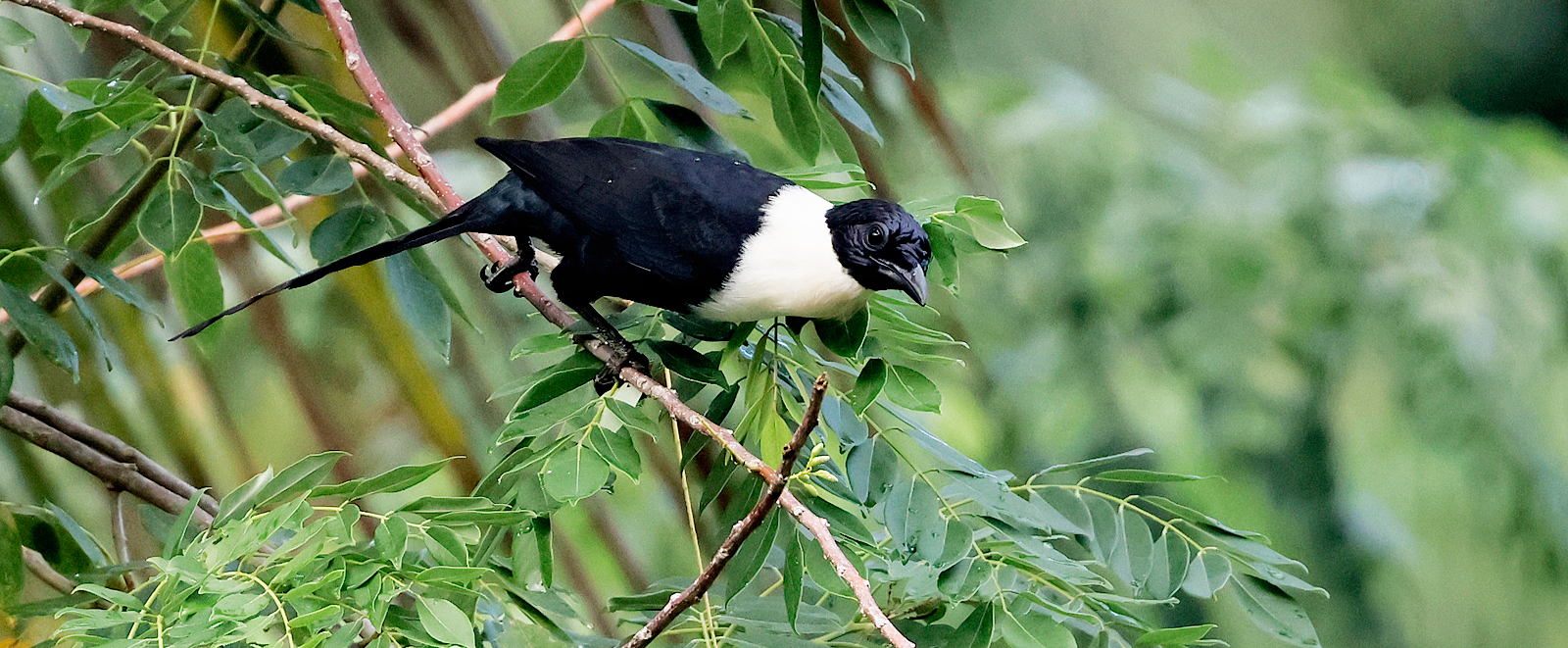
North Sulawesi Birding Survey Trip Highlights: The birds on the list below are those that were favourites of ours in the field, mostly due to the high-quality views that we obtained, but some of them because of their rarity value or visual impact. Naturally, a high proportion of these birds are endemic to Sulawesi or the region.
- Philippine Megapode
- White-faced Cuckko Dove
- Black-naped Fruit Dove
- White-bellied Imperial Pigeon
- Yellow-billed Coucal
- Channel-billed Cuckoo
- Sulawesi Nightjar
- Isabelline Bush Hen
- Sulawesi Serpent Eagle
- Sulawesi Goshawk
- Sulawesi Masked Owl
- Sulawesi Scop Owl
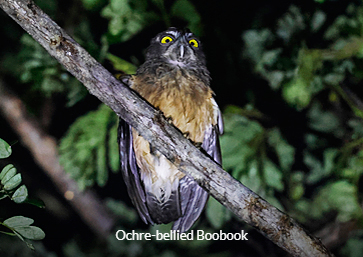
- Ochre-bellied Boobook
- Knobbed Hornbill
- Sulawesi Pygmy Woodpecker
- Ashy Woodpecker
- Green-backed Kingfisher
- Scaly-breasted Kingfisher
- Sulawesi Lilac Kingfisher
- Great-billed Kingfisher
- Sulawesi Dwarf Kingfisher
- Purple-winged Roller
- Ornate Lorikeet
- Yellow-breasted Racket-tail
- Azure-rumped Parrot
- Sulawesi Hanging Parrot
- Sulawesi Myzomela
- Finch-billed Myna
- White-necked Myna
- Sulawesi Myna
- Rusty-backed Thrush
- Sulawesi Blue Flycatcher
- Turquoise Flycatcher
- Yellow-sided Flowerpecker
- Black Sunbird
Summary:
Even on just a short North Sulawesi birding survey trip the number of high-quality and exciting birds, as illustrated in the highlights list above, was very impressive and demonstrates that Tangkoko and Gunung Mahawu will be integral parts of our upcoming tours to this endemic-filled island. We found an incredibly high proportion of the target birds given that this was such as short trip and the general levels of bird abundance was very good; enjoyable birding without having to try too hard most of the time. Beginning with some relaxing birding at our accommodation of The Grand Luley Resort that included some good birds, the highlight here being Great-billed Kingfisher. On to Tangkoko the forest birding here was superb with an array of spectacular birds, endemic species and a couple of interesting mammals as well as some variety with birding in some forest clearings and open areas; here almost every bird was a highlight species. Finally Gunung Mahawu gave us a taste of Sulawesi’s higher altitude species with enough to whet our appetite to create a more extensive Sulawesi birding tour combined with the nearby island of Halmahera.
Join us on our next birding tour to Sulawesi & Halmahera. See the full itinerary and book here – Sulawesi & Halmahera.
Field Guide
Birds of The Indonesian Archipelago (Second Edition) by Eaton, van Balen, Brickle & Rheindt, published by Lynx. This field guide is the most up-to-date one for this extensive part of the country which makes it the natural choice for us to recommend. An amazing number of species and range maps are packed into this book which, with its water-resistant cover, is a suitable size for your luggage and backpack in the field. The checklist used was based on IOC and eBird taxonomy with reference to names used within this field guide.
Day 1, 20th October – Arrival Manado
A flight from Singapore delivered us to Manado airport where we were met by our local contacts and taken to Grand Luley Resort where we had dinner.
Day 2, 21st October – Grand Luley Resort
Waking up to the sound of bird calls was a nice way to start this short North Sulawesi birding survey trip. We had decided to take it easy around the hotel grounds for the first day as a break from previous travel over the preceding weeks; Grand Luley Resort is a great place to relax but still do some birding from the accommodation. A cup of tea on the veranda turned up a couple of calling Collared Kingfishers on exposed perches, swooping Pacific Swallows, Pink-necked Green Pigeons provided some colour, some Sooty-headed Bulbuls and Eurasian Tree Sparrows after which a walk around the garden seemed like the best plan. Opening the door of the room, a Barred Rail was strutting around on the lawn just outside, which was a nice bird to be able to photograph to start with.
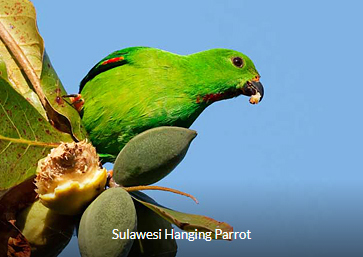
Walking to the front of the hotel there were a couple of fruiting trees that were catching the early morning sun’s rays and proved to be a great spot at this early hour. The high-pitched call of hanging parrots drew our attention but even in a low tree it proved tricky to spot these little parrots but once we found them great views were gained and we could watch them at length as they fed on small fruits. Also attracted to this fruiting tree were a small group of Asian Glossy Starlings and a pair of Sulawesi Pygmy Woodpeckers, less interested in the fruits than the insect larvae within some of the branches. Nearby, the call of a Sahul Brush Cuckoo revealed the location of this bird while a pair of White-rumped Cuckooshrikes seemed to be feeding a recently fledged youngster. The first Sahul Sunbirds and Brown-throated Sunbirds of the short trip were seen, birds that would become very familiar over the next few days and then there were more views of Barred Rail mooching around the gardens.
Overhead there was a confusing mix of White-nest Swiftlets and Moluccan Swiftlets to deal with, joined by the slightly easier to identify Glossy Swiftlets, picked out by their bat-like flight pattern. Within the flowering plants in the garden a mixed group of Scaly-breasted, Chestnut and Pale-headed Munias were fun to watch while a Grey-streaked Flycatcher turned up to catch insects. With things already getting sweaty the breakfast buffet was calling us towards its selection of fruit juices, coffee, bakery products and local foods but the was just time to spot three circling Chinese Sparrowhawks on migration.
After a good breakfast we decided to make use of the facilities, some of us going for a swim, some just taking a rest in the room but after lunch we took a short stroll along the boardwalk to the jetty. At this time of the day there was not too much to be seen, but a Ruddy Turnstone on the boardwalk, a few Eurasian Whimbrels in the mangroves and a small group of Tibetan Sand Plovers on some rocks were new. White-breasted Woodswallow and Javan Mynas were seen in the garden too but we agreed to meet a bit later when things were not so hot.
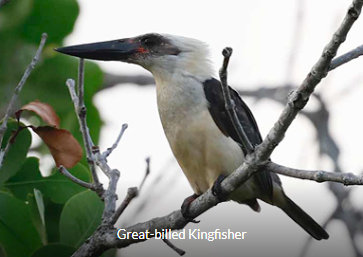
In the late afternoon there was much more bird activity, particularly as the sun began to set and it was definitely the right thing to do to stay out until it was almost dark. This time we concentrated on birding in and around the mangroves in an attempt to find Great-billed Kingfisher, slowly walking the boardwalk and waiting. White-rumped Cuckooshrikes were common and provided some nice photographic opportunities and Pink-necked Green Pigeons were easily seen too but no sign of the kingfisher at first. On the edge of the mangroves there was Black Sunbird and a nice Pale-blue Monarch making a commotion which turned out to be agitated behaviour because of a Sulawesi Cuckoo.
As the sun began to go down various birds started to fly to roost sites including quite a few Javan Mynas and a flock of Pied Imperial Pigeons being the most numerous but with a single adult Nankeen Night Heron making the opposite journey. Just as it seemed that we might miss the kingfisher, there it was, sitting quietly close to the boardwalk. A very smart Great-billed Kingfisher sat still allowing for prolonged study of this impressive endemic species. The walk back to the hotel, and dinner, was in the half light which proved to be the best time to see the very skulking Black-billed Koel as a pair of them interacted in some tall trees. After this, dinner and some drinks made a nice ending to a relaxing day of birding.
Day 3, 22nd October – Temboan Hill – Tangkoko
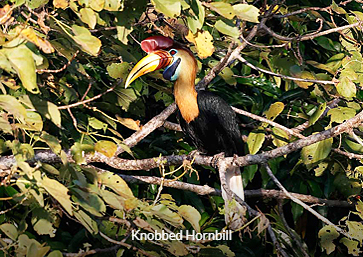
Having had a relaxing day we decided to get up really early to leave for Tangkoko, just over an hour and a half away, to arrive just after first light. Although we were all dozing through the journey it was definitely worth the effort as we got to the outlook over the forest, at Temboan Hill, exactly at the right time with a high level of bird activity. Our first sighting as soon as getting out of the vehicle caused much excitement with a pair of Knobbed Hornbills perched high in a nearby tree. They were fairly obscured for photographs but gave us a good view, however, later in the morning they would drop into a fruiting tree, giving us superb views of this extremely striking hornbill; this is perhaps the best-looking of all hornbills?
There was plenty more to see here over the course of the morning too; a wonderful Yellow-billed Malkoha danced around in a nearby tree while Sulawesi Hanging Parrots made repeated visits to feast on fruits in the Ficus trees. Plenty of pigeons and doves were sitting around in treetops allowing for superb views through the telescope. Sultan’s Cuckoo Dove, a couple of stunning Black-naped Fruit Doves, Green Imperial Pigeons, Grey-cheeked Green Pigeons and Grey-headed Imperial Pigeon were all seen in this way and we also got lucky with a perched Sulawesi Goshawk. A pair of endemic White-rumped Trillers caused further excitement after which it was a little bit of a struggle to get onto fast-moving Yellow-sided Flowerpeckers and a Grey-sided Flowerpecker provided the same level of trickiness. We had a great breakfast served in the field which allowed us to continue birding while eating but by mid-morning we moved on to a location further downhill where we used a small trail to get into the shade of the forest canopy.
Tangkoko has gained fame as a birding destination particularly as a great place to see many of the endemic kingfishers and along this trail we were searching for one of them: Sulawesi Dwarf Kingfisher. While entering the forest we soon came across another endemic, Sulawesi Babbler, before locating the main target bird sitting quietly in some dense bamboo overlooking a tiny streamlet. We were able to get awesome views of this little gem of the forest before leaving it to its late morning resting place. There was still more to come though with our first Ashy Woodpecker of the trip, a really fantastic bird, as well as a Bay Coucal, hunting for prey within the foliage of a palm tree. This had already been a great morning and we were starting to think about a short rest before lunch before we then found a wonderful Green-backed Kingfisher, a female, but still a bird that we all really appreciated. This time it really was time to made the short journey down the road to our accommodation and a nice home-cooked lunch.
Birding resumed in the late afternoon, after a heavy storm cleared the air, and we headed back uphill to the viewpoint we had started the day at. This time we walked a small distance to a second viewpoint that overlooked a different direction. Here we saw many of the same species as in the morning but with enough new birds to make it interesting again. We ‘scoped a distant Sulawesi Honey Buzzard and an even more distant Sulawesi Hornbill, a bird we were not to see again leaving us with rather unsatisfactory views of this key species. However, White-necked Mynas with their fantastically long tail were a great sight and a couple of Azure-rumped Parrots joined the party too. The distant call of Pied Cuckooshrike prompted us to search for this bird and we spotted it quite far away but eventually it came much closer while we added good numbers of Silver-tipped Imperial Pigeon to our list of Columbidae. Some distant Ivory-backed Woodswallows were also a nice addition.
As darkness approached we waited for some nocturnal birding but, of course, nightjars are crepuscular so it was still half light when a Sulawesi Nightjar came out to entertain us, giving us some close flypast encounters. After dark we played the call of Sulawesi Masked Owl and it did not take long to get a reply. Soon after this beast of an owl came flying in and perched in a nearby palm tree: wonderful. The night birding continued further down the road and it was impressively efficient with first Sulawesi Scops Owl peering down at us followed soon after by an Ochre-bellied Boobook. Great views, little waiting and wonderful birds. This was our cue to go back to our accommodation to engage in local gastatory delights.
Day 4, 23rd October – Tangkoko
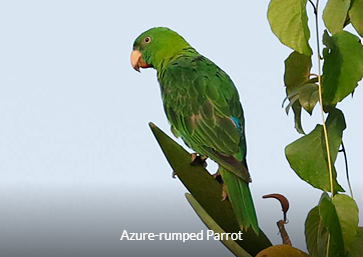
An early reinvigoration by morning refection allowed us to enter Tangkoko National Park as the sun was rising and we took a short walk to a grassy clearing in the forest. Here we were able to wait and scan surrounding trees for birds perched in the open and foraging for food in the treetops. There were a number of Hair-crested Drongos that were easily seen and although we had already seen it, we were happy to get much-improved views of Azure-rumped Parrot.
The main objective here, though, was yet to show up but the distinctive scratchy call of Purple-winged Roller alerted us to its presence a few moments before one and then two birds arrived to perch on exposed branches. This colourful endemic stayed for a long time but inevitably our attention was taken away by another new bird, a triumvirate of Ornate Lorikeets perched atop a small tree as if presiding over their domain. They did not stay long though and this species would be ocularly observed on only one occasion.
With these successes it was time to walk further into the forest where more exciting birds awaited us as well as some mammal sightings. The walk employed the remainder of the morning and ended up being fairly long but the terrain was flat, with slight undulations, and some great birds along the way. we found a couple of Green-backed Kingfishers that allowed us to approach very closely and detected several Philippine Megapodes scratching around on the dark forest floor before coming across a troop of Sulawesi Crested Macaques. These monkeys are endemic to this region of Sulawesi and much more ape-like than most of the monkeys of Southeast Asia.
Our local guide took us to an area which is often frequented by Sulawesi Lilac Kingfisher and at first there was no sing of them. However, there was a very quiet sound coming from the trees nearby and by slowly triangulating where the noise was coming from we found a pair of fantastic Sulawesi Liliac Kingfishers that turned out to be excavating a nest hole. We were able to hang around for as long as we liked watching these birds take turns in attending the nest hole before leaving to look for yet another stunning bird. Along the way we came across another Ashy Woodpecker, it’s fairly common here, before getting to an area of forest favoured by a very under-rated bird: Rusty-backed Thrush. Once again, by being quiet we were able to find a pair of these awesome thrushes and spent the next forty minutes or so watching them and getting some very nice photos. I say that this bird is under-rated, well, not by those who have actually seen it! This was about it for our target birds but we had one more appointment, this time with a couple of Spectral Tarsiers hiding among the twisty trunk of a strangler fig. It felt like a fairly long walk back so it was nice to take a break from the heat in our rooms for a short time before lunch.
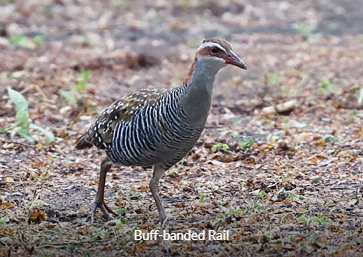
The early afternoon brought another rain storm that dragged on into the late afternoon but when it eased off into a drizzle we had another change of pace with a visit to a nearby agricultural station, an open area surrounded by forest and hills. The weather wasn’t great but we got good views of White-faced Cuckoo Dove, a really smart bird, before blundering into a Barred Rail. Our main targets here were also in the family Rallidae and it turned out that the best way to see them was to sit down in a well-chosen spot and wait for them to arrive. So, while enjoying coffee and snacks we got great prolonged views of Buff-banded Rails sneaking around a scruffy area as well as an Isabelline Bush Hen that repeatedly crossed a track while slipping in and out of the grassy vegetation.
We sat waiting for the appointed “nightjar hour” with some Grey-rumped Treeswifts calling overhead, a couple of brief Purple Needletails and a single Pacific Swift to keep us amused. Various other widespread species were seen while waiting until, at the appointed time, a Great Eared Nightjar put in a brief appearance but the views were not very satisfying; dinner and beer lived up to expectations though!
Day 5, 24th October – Tangkoko
For our final morning at Tangkoko we decided to make a return to Tamboan Hill viewing area to see what else we could add to our list of sightings. As one might expect, birding the same spot at the same time of the day, we saw many of the same species as before, although our views of Knobbed Hornbill, this time, were more distant than previously. Breakfast was, once again, served in the field so that we were able to watch birds while enjoying pancakes and coffee. An early morning collection of pigeons and doves was very nice especially as we added a striking White-bellied Imperial Pigeon to the species that we had previously seen as well as a female Superb Fruit Dove. One of the birds we had been hoping to see was Channel-billed Cuckoo so we were delighted when this beast of a bird came flying overhead uttering a crazy call!
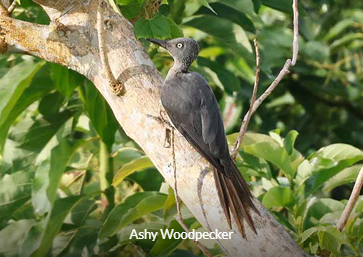
This morning a lot of birds were perching on exposed branches and in this way we got far improved views of Ivory-backed Woodswallow as they sallied for prey at close range. A big flock of Finch-billed Mynas joined them and a female Ashy Woodpecker gave us exceptional views. Adding to the list of birds that gave great views were a few Yellow-breasted Racket-tails that came to feed in a nearby tree while their cousins, Golden-mantled Racket-tails, only gave flypast sightings. Sulawesi Myna, with its wild bushy crest, was another top-quality bird that entertained us here, that we did not see on previous visits with another nice display by White-necked Mynas to enjoy too.
As things warmed up we began to see soaring raptors, both migratory and resident. The first to be spotted was a Grey-faced Buzzard which was soon followed by a Brahminy Kite, a smart species if very widespread in the region. At least five Chinese Sparrowhawks were obviously on migration but Sulawesi Serpent Eagle was an undoubted resident and a really great sighting as it repeatedly circled above us. A young Rufous-bellied Eagle completed the raptors for the morning and a Pied Cuckooshrike came in fairly close giving us improved views of this smart species. With the heat building we went back to the accommodation for lunch and a break.
Once again an afternoon storm dumped a lot of rain on the area but in the late afternoon we went to an open spot next to a small lake. As we had seen most of what we had hoped to see we decided to do something a bit different and see what happened. Well, as it turned out we did not see anything new of great note but we did enjoy close sightings of White-necked Mynas, Azure-rumped Parrot and Sulawesi Goshawk in flight. Oriental Darter was new for the trip and a juvenile Nankeen Night heron provided a distraction too. In the end though we called it a day and prepared to leave the following morning and go to our next North Sulawesi birding location.
Day 6, 25th October – Gunung Mahawu
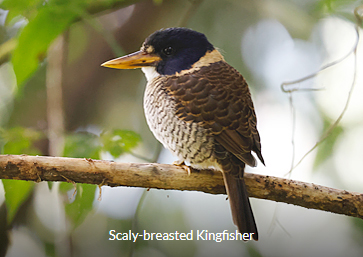
An early departure took us towards the town of Tomohon and beyond to Gunung Mahawu where we would go a bit higher in altitude than we had previously been, bringing us into the realm of some different species. Things were rather cloudy from the onset with the threat of worse to come so we focussed our efforts on one of the key birds: Scaly-breasted Kingfisher. We stumbled around a bit on a tiny forest trail with nothing much happening until we heard the sweet song of Sulawesi Blye Flycatcher. This one took a bit of finding and every time one of us spotted it, the bird would move but eventually clear views we obtained. We continued to search for our kingfisher with no sound detected but suddenly there it was, sitting quietly in the understorey of the forest. At times it seemed like it was a stuffed bird as we slowly moved closer, but it did move a little to confirm we were not the victims of some prank. This was a superb bird to start with and after we had enjoyed it to its full we left the Scaly-breasted Kingfisher to its own business and drove uphill to our breakfast spot.
While eating breakfast a fast-moving flock of birds came through which contained numerous Black-crowned White-eyes, which we had seen before, but also several Sulawesi Heleias and Sulphur-bellied Whistlers which were new for us and endemics too. Overhead a couple of White-throated Needletails were visible through the canopy for a few moments but after breakfast was finished we decided to walk slowly down the road. Things were quiet, probably due to the building cloud and we spent quiet a long time trying to track down some fruit doves but they eluded us. Mountain Tailorbird and Sulawesi Babbler showed briefly but the best quality sighting was of a Turquoise Flycatcher in a low twiggy tree. Flowerpeckers and sunbirds were in evidence on the forest edge and we also added a Crimson-crowned Flowerpecker to the list but things were slow. Once the road emerged into some farmland we spotted some Eastern Yellow Wagtails before the first spots of rain fell.
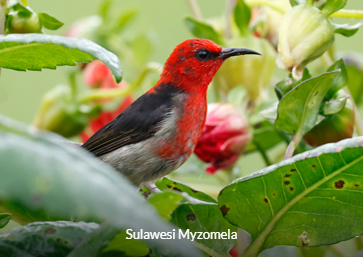
We took this as the prompt to go a little early to where we intended to have lunch, the Gardenia Resort, set in lovely gardens in the valley below Gunung Mahawu. This has become THE place to see Sulawesi Myzomela and this stunning little bright red did not disappoint us. This location proved to be a great spot for photographing Sulawesi Myzomela but also other species including Sahul Sunbird, Black-crowned White-eye, Chestnut Munia and Glossy Swiftlets as they flew low around the gardens. Unfortunately, while enjoying this location and its birds the rain began to fall in earnest which presented us with the chance to have a very delicious lunch and spot a flypast Cinnamon Bittern, flushed from the flowers by a gardener.
After lunch the garden became flooded and we got wet feet getting back to the van but were able to dry off at our nearby hotel, a very comfortable place for a rest. In the later afternoon we went out again but the rain was still a problem and sit as we might, at a hide, the hoped-for Sulawesi Pitta remained unseen, with just Sulawesi Babbler for entertainment. As dusk approached things did dry out and we tried for some owls but again, without success, although we found some roosting Black-crowned White-eyes, so it was time to retreat to the hotel and have dinner together where we would talk about the fantastic sightings we had had over the previous few days rather than dwell on the few that let us down.
Bird of the Trip
- Knobbed Hornbill
- Rusty-backed Thrush
- Scaly-breasted Kingfisher
- Sulawesi Dwarf Kingfisher
- Channel-billed Cuckoo
Grand Luley Resort: An an area of gardens adjacent to an extensive area of mangroves with access to the sea via a mangrove boardwalk to a jetty.This is a nice place to relax and do some morning and late afternoon birding with some key species fairly easy to find; White-rumped Cuckooshrike and Great-billed Kingfisher.
Tangkoko: One of the premier birding sites not only on Sulawesi but in Southeast Asia in general. Pleasant accommodation, a wealth of impressive birds, high bird abundance and good night birding make this a must-visit site for any birders visiting this region. Tangkoko is a great site for many of the endemic birds of the Minahasa peninsula, especially several of the much-wanted kingfishers. Some coastal areas and open country offers birders a bit of variety too and here a large bird list is possible.
Gunung Mahawu: The forested slopes of this mountain give birders easy access to some higher altitude birding although the overall selection of species is not as good as other highland sites elsewhere on Sulawesi. Key species here include Scaly-breasted Kingfisher and Sulawesi Pitta.
Gardenia Restaurant: This restaurant is set in very well-maintained gardens where flowering plants attract lots of seed and nectar-feeding birds. This is the best site to see and photograph Sulawesi Myzomela. Great local food is served here too.
The sites at which each species were seen are coded as below;
- Grand Luley Resort: GL
- Tangkoko: T
- Gunung Mahawu: GM
- Gardenia Restaurant: GR
During this short North Sulawesi Birding trip 120 species were seen.
SPECIES
GALLIFORMES: Megapodiidae
Philippine Megapode
CAPRIMULGIFORMES: Caprimulgidae
Great Eared Nightjar
Sulawesi Nightjar
APODIFORMES: Hemiprocnidae
Grey-rumped Treeswift
APODIFORMES: Apodidae
Glossy Swiftlet
Moluccan Swiftlet
Uniform Swiftlet
White-nest Swiftlet
White-throated Needeltail
Purple Needletail
Pacific Swift
CUCULIFORMES: Cuculidae
Bay Coucal
Lesser Coucal
Yellow-billed Malkoha
Black-billed Koel
Channel-billed Cuckoo
Sulawesi Brush Cuckoo
Sulawesi Cuckoo
COLUMBIFORMES: Columbidae
Sultan’s Cuckoo Dove
White-faced Cuckoo Dove
Zebra Dove
Pink-necked Green Pigeon
Grey-cheeked Green Pigeon
Superb Fruit Dove
Black-naped Fruit Dove
White-bellied Imperial Pigeon
Grey-headed Imperial Pigeon
Green Imperial Pigeon
Pied Imperial Pigeon
Silver-tipped Imperial Pigeon
GRUIFORMES: Rallidae
Barred Rail
Buff-banded Rail
White-breasted Waterhen
Isabelline Bush Hen
PODICIPEDIFORMES: Podicipedidae
Little Grebe
CHARADRIIFORMES: Charadriidae
Siberian Sand Plover
CHARADRIIFORMES: Scolopacidae
Eurasian Whimbrel
Common Sandpiper
Ruddy Turnstone
SULIFORMES: Fregatidae
Lesser Frigatebird
SULIFORMES: Anhingidae
Oriental Darter
PELECANIFORMES: Ardeidae
Cinnamon Bittern
Nankeen Night Heron
Pacific Reef Heron
Little Egret
Eastern Cattle Egret
ACCIPITRIFORMES: Accipitridae
Sulawesi Honey Buzzard
Sulawesi Serpent Eagle
Rufous-bellied Eagle
Sulawesi Goshawk
Chinese Sparrowhawk
Spot-tailed Sparrowhawk
Japanese Sparrowhawk
Vinous-breasted Goshawk
Brahminy Kite
White-bellied Sea Eagle
Grey-faced Buzzard
STRIGIFORMES: Tytonidae
Sulawesi Masked Owl
STRIGIFORMES: Strigidae
Sulawesi Scops Owl
Ochre-bellied Boobook
BUCEROTIFORMES: Bucerotidae
Knobbed Hornbill
Sulawesi Hornbill
CORACIIFORMES: Coraciidae
Purple-winged Roller
CORACIIFORMES: Alcedinidae
Green-backed Kingfisher
Scaly-breasted Kingfisher
Sulawesi Lilac Kingfisher
Great-billed Kingfisher
Collared Kingfisher
Common Kingfisher
Sulawesi Dwarf Kingfisher
PICIFORMES: Picidae
Sulawesi Pygmy Woodpecker
Ashy Woodpecker
PSITTACIFORMES: Psittaculidae
Golden-mantled Racket-tailed
Yellow-breasted Racket-tail
Azure-rumped Parrot
Ornate Lorikeet
Sulawesi Hanging Parrot
PASSERIFORMES: Meliphagidae
Sulawesi Myzomela
PASSERIFORMES: Acanthizidae
Golden-bellied Gerygone
PASSERIFORMES: Artamidae
Ivory-backed Woodswallow
White-breasted Woodswallow
PASSERIFORMES: Campephagidae
Pied Cuckooshrike
White-rumped Cuckooshrike
Sulawesi Cicadabird
White-rumped Triller
PASSERIFORMES: Pachycephalidae
Sulphur-bellied Whistler
PASSERIFORMES: Oriolidae
Black-naped Oriole
PASSERIFORMES: Dicruridae
Hair-crested Drongo
PASSERIFORMES: Monarchidae
Pale-blue Monarch
PASSERIFORMES: Laniidae
Brown Shrike
PASSERIFORMES: Corvidae
Sulawesi Crow
PASSERIFORMES: Pycnonotidae
Sooty-headed Bulbul
PASSERIFORMES: Hirundinidae
Pacific Swallow
Barn Swallow
PASSERIFORMES: Cettiidae
Mountain Tailorbird
PASSERIFORMES: Zosteropidae
Black-crowned White-eye
Sulaesi Heleia
PASSERIFORMES: Pellornidae
Sulawesi Babbler
PASSERIFORMES: Sturnidae
Asian Glossy Starling
Sulawesi Myna
White-necked Myna
Finch-billed Myna
Javan Myna
PASSERIFORMES: Turdidae
Rusty-backed Thrush
PASSERIFORMES: Muscicapidae
Grey-streaked Flycatcher
Turquoise Flycatcher
Sulawesi Blue Flycatcher
PASSERIFORMES: Dicaeidae
Yellow-sided Flowerpecker
Crimson-crowned Flowerpecker
Grey-sided Flowerpecker
PASSERIFORMES: Nectariniidae
Brown-throated Sunbird
Black Sunbird
Sahul Sunbird
Crimson Sunbird
PASSERIFORMES: Passeridae
Eurasian Tree Sparrow
PASSERIFORMES: Estrildidae
Scaly-breasted Munia
Chestnut Munia
Pale-headed Munia
PASSERIFORMES: Motacillidae
Grey Wagtail
Eastern Yellow Wagtail
SCIENTIFIC NAME
GALLIFORMES: Megapodiidae
Megapodius cumingii
CAPRIMULGIFORMES: Caprimulgidae
Lyncornis macrotis
Caprimulgus celebensis
APODIFORMES: Hemiprocnidae
Hemiprocne longipennis
APODIFORMES: Apodidae
Collocalia esculenta
Aerodramus infuscatus
Aerodramus vanikorensis
Aerodramus fuciphagus
Hirundapus caudacutus
Hirundapus celebensis
Apus pacificus
CUCULIFORMES: Cuculidae
Centropus celebensis
Centropus bengalensis
Rhamphococcyx calyorhynchus
Eudynamys melanorhynchus
Scythrops novaehollandiae
Cacomantis virescens
Cuculus crassirostris
COLUMBIFORMES: Columbidae
Macropygia doreya
Turacoena manadensis
Geopelia striata
Treron vernans
Treron griseicauda
Ptilonopus superbus
Ptilonopus melanospilus
Ducula forsteni
Ducula radiata
Ducula aenea
Ducula bicolor
Ducula luctuosa
GRUIFORMES: Rallidae
Gallirallus torquatus
Gallirallus philippensis
Amaurornis phoenicurus
Amaurornis isabellina
PODICIPEDIFORMES: Podicipedidae
Tachybaptus ruficollis
CHARADRIIFORMES: Charadriidae
Anarhynchus mongolus
CHARADRIIFORMES: Scolopacidae
Numenius phaeops
Actitis hypoleucos
Arenaria interpres
SULIFORMES: Fregatidae
Fregata ariel
SULIFORMES: Anhingidae
Anhinga melanogaster
PELECANIFORMES: Ardeidae
Botaurus cinnamomeus
Nycticorax caledonicus
Egretta sacra
Egretta garzetta
Ardea coromanda
ACCIPITRIFORMES: Accipitridae
Pernis celebensis
Spilornis rufipectus
Lophotriorchis kienerii
Lophospiza griseiceps
Tachyspiza soloensis
Tachyspiza trinotata
Tachyspiza gularis
Tachyspiza rhodogaster
Haliastur indus
Icthyophaga leucogaster
Butastur indicus
STRIGIFORMES: Tytonidae
Tyto rosenbergii
STRIGIFORMES: Strigidae
Otus manadensis
Ninox ochracea
BUCEROTIFORMES: Bucerotidae
Rhyticeros cassidix
Rhabdotorrhinus exarhatus
CORACIIFORMES: Coraciidae
Coracias temminckii
CORACIIFORMES: Alcedinidae
Actenoides monachus
Actenoides princeps
Cittura cyanotis
Pelargopsis melanorhyncha
Todiramphus chloris
Alcedo atthis
Ceyx fallax
PICIFORMES: Picidae
Yungipicus temminckii
Mulleripicus fulvus
PSITTACIFORMES: Psittaculidae
Prioniturus platurus
Prioniturus flavicans
Tanygnathus sumatranus
Trichoglossus ornatus
Loriculus stigmatus
PASSERIFORMES: Meliphagidae
Myzomela chloroptera
PASSERIFORMES: Acanthizidae
Gerygone sulphurea
PASSERIFORMES: Artamidae
Artamus monachus
Artamus leucorynchus
PASSERIFORMES: Campephagidae
Coracina bicolor
Coracina leucopygia
Edolisoma morio
Lalage leucopygialis
PASSERIFORMES: Pachycephalidae
Pachycephala sulphuriventer
PASSERIFORMES: Oriolidae
Oriolus chinensis
PASSERIFORMES: Dicruridae
Dicrurus hottentottus
PASSERIFORMES: Monarchidae
Hypothymis puella
PASSERIFORMES: Laniidae
Lanius cristatus
PASSERIFORMES: Corvidae
Corvus celebensis
PASSERIFORMES: Pycnonotidae
Pycnonotus aurigaster
PASSERIFORMES: Hirundinidae
Hirundo javanica
Hirundo rustica
PASSERIFORMES: Cettiidae
Phyllergates cucullatus
PASSERIFORMES: Zosteropidae
Zosterops atrifrons
Heleia squamiceps
PASSERIFORMES: Timaliidae
Pellorneum clebense
PASSERIFORMES: Sturnidae
Aplonis panayensis
Basilornis celebensis
Streptocitta albicollis
Scissirostrum dubium
Acridotheres javanicus
PASSERIFORMES: Turdidae
Geokichla erythronota
PASSERIFORMES: Muscicapidae
Muscicapa griseisticta
Eumyias panayensis
Cyornis omissus
PASSERIFORMES: Dicaeidae
Dicaeum aureolimbatum
Dicaeum nehrkorni
Dicaeum celebicum
PASSERIFORMES: Nectariniidae
Anthreptes malacensis
Leptocoma aspasia
Cinnyris frenatus
Aethopyga siparaja
PASSERIFORMES: Passeridae
Passer montanus
PASSERIFORMES: Estrildidae
Lonchura punctulata
Lonchura atricapilla
Lonchura pallida
PASSERIFORMES: Motacillidae
Motacilla cinerea
Motacilla tschutschensis
SITES SEEN
GALLIFORMES: Megapodiidae
TK
CAPRIMULGIFORMES: Caprimulgidae
TK
TK
APODIFORMES: Hemiprocnidae
TK
APODIFORMES: Apodidae
GL, TK, GM, GR
GL, TK
TK
GL
GM
TK
TK
CUCULIFORMES: Cuculidae
TK
GL
TK, GM
GL
TK
GL, TK
GL
COLUMBIFORMES: Columbidae
TK, GM
TK
GL
GL
TK
TK
TK
TK
TK
TK
GL
TK
GRUIFORMES: Rallidae
GL, TK
TK
TK
TK
PODICIPEDIFORMES: Podicipedidae
TK
CHARADRIIFORMES: Charadriidae
GL
CHARADRIIFORMES: Scolopacidae
GL
GL
GL
SULIFORMES: Fregatidae
TK
SULIFORMES: Anhingidae
TK
PELECANIFORMES: Ardeidae
GR
GL, TK
TK
TK
GR
ACCIPITRIFORMES: Accipitridae
TK
TK
TK
TK
GL, TK
TK
TK
TK
TK
TK
TK
STRIGIFORMES: Tytonidae
TK
STRIGIFORMES: Strigidae
TK
TK
BUCEROTIFORMES: Bucerotidae
TK
TK
CORACIIFORMES: Coraciidae
TK
CORACIIFORMES: Alcedinidae
TK
GM
TK
GL
GL, TK
GL
TK
PICIFORMES: Picidae
GL
TK
PSITTACIFORMES: Psittaculidae
TK
TK
TK
TK
GL, TK
PASSERIFORMES: Meliphagidae
GM, GR
PASSERIFORMES: Acanthizidae
TK
PASSERIFORMES: Artamidae
TK
GL, TK
PASSERIFORMES: Campephagidae
TK
GL
TK
TK
PASSERIFORMES: Pachycephalidae
GM
PASSERIFORMES: Oriolidae
TK
PASSERIFORMES: Dicruridae
TK
PASSERIFORMES: Monarchidae
GL
PASSERIFORMES: Laniidae
GR
PASSERIFORMES: Corvidae
TK
PASSERIFORMES: Pycnonotidae
GL, TK, GR
PASSERIFORMES: Hirundinidae
GL, TK, GR
GR
PASSERIFORMES: Cettiidae
GM
PASSERIFORMES: Zosteropidae
TK, GM, GR
GM
PASSERIFORMES: Timaliidae
TKGM
PASSERIFORMES: Sturnidae
GL, TK, GR
TK
TK
TK
GL
PASSERIFORMES: Turdidae
TK
PASSERIFORMES: Muscicapidae
GL,TK
GM
GM
PASSERIFORMES: Dicaeidae
TK, GM
GM
TK, GM
PASSERIFORMES: Nectariniidae
GL, TK
GL, TK, GM
GL, TK, GM, GR
GR
PASSERIFORMES: Passeridae
GL, GM, GR
PASSERIFORMES: Estrildidae
GL, GR
GR
GL
PASSERIFORMES: Motacillidae
GM
GM
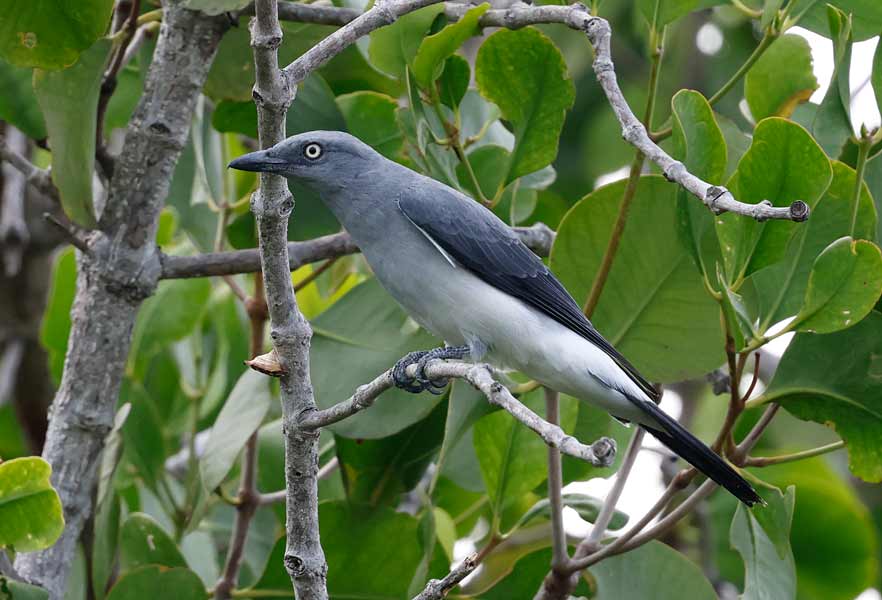
White-rumped Cuckooshrike 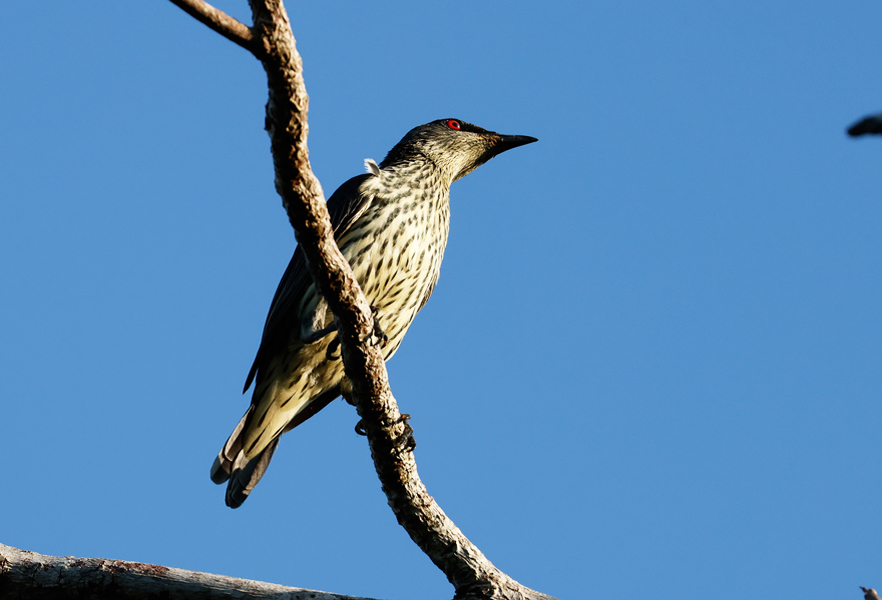
Asian Glossy Starling 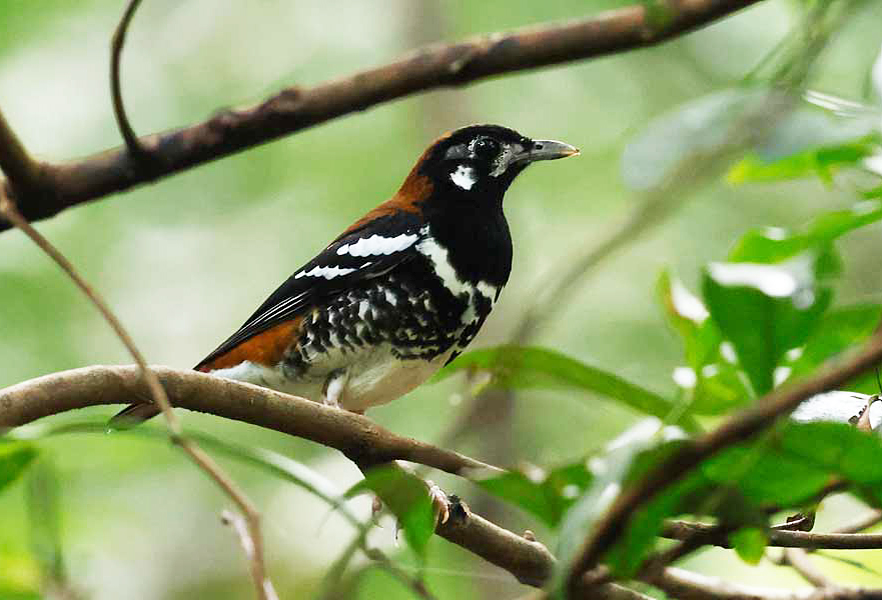
Rusty-backed Thrush 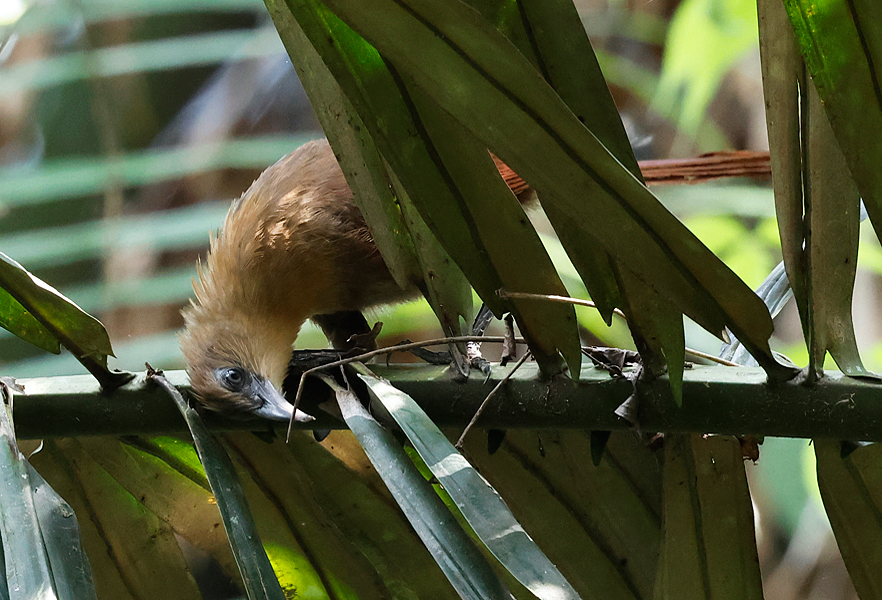
Bay Coucal