Mongolia Birding Trip Report June 2026
Tour Leader: Nick Upton
Dates: 15-30th June 2026
Mongolia Birding Trip Highlights:
- Altai Snowcock
- Daurian Partridge
- Swan Goose
- Black-throated Diver
- Falcated Duck
- Mandarin Duck
- White-headed Duck
- Black Stork
- Little Bittern
- Saker Falcon
- Amur Falcon
- Eastern Marsh Harrier
- Upland Buzzard
- Steppe Eagle
- Pallas’s Fish Eagle
- Bearded Vulture
- Himalayan Griffon
- Siberian Crane
- White-naped Crane
- Demoiselle Crane
- Oriental Plover
- Asian Dowitcher
- Ruff
- Pallas’s Sandgrouse
- Relict Gull
- Ural Owl
- Spotted Nutcracker
- Azure Tit
- Mongolian Lark
- Savi’s Warbler
- Barred Warbler
- White-crowned Penduline Tit
- Guldenstadt’s Redstart
- Desert Wheatear
- White-winged Snowfinch
- Pere David’s Snowfinch
- Mongolian Accentor
- Long-tailed Rosefinch
- Pine Bunting
- Pallas’s Reed Bunting
- Yellow-breasted Bunting
Summary:
The above list of highlights of this Mongolia birding trip illustrates not only the quality of the birds that we saw in Mongolia but the variety of species from raptors to buntings and wildfowl to redstarts. From the point of view of finding the main target species we were largely successful, with one obvious exception that left us desiring better views, with a few surprises thrown in along the way, which is always nice. Starting in Ulan Bataar we enjoyed plenty of birds on our first morning with Long-tailed Rosefinch being the pick of the bunch before spending a few days at Gun Gulut Nature Reserve for our first experience of Mongolia’s wild, sweeping landscapes. Here we saw specialities such as White-naped Crane, Pere David’s Snowfinch and Mongolian Lark as well as seeing an unexpected highlight in Siberian Crane. After moving on to nearby Gorkhi-Terelj National Park we had a frustrating encounter with Black-billed Capercaillie as well as having to deal with some problematic weather but still saw birds such as Pine Bunting, Ural Owl, Chinese Bush Warbler and Steppe Eagle before taking a flight to Western Mongolia. From the town of Khovd we visited Khar-Us Lake where we were treated to a profusion of birds included a very confiding Savi’s Warbler and male White-headed Ducks then moving on to the lower slopes of Jargalant Mountain and a real top-quality bird in the form of Mongolian Ground Jay. The upper reaches of Jargalant Mountain provided one of the best days of birding of the tour with distant Altai Snowcock, White-winged Redstart and White-winged Sbowfinch and then we had a short visit to Durgun Lake for Pallas’s Sandgrouse, Asian Dowitcher and a fabulous male Ruff in breeding plumage. A long, wild drive to Margaz Mountains and Bayan Lake got us to a location which was wonderful for birds, landscape and mammals; Pallas’s Fish Eagle being a standout bird among many but an incredible encounter with Snow Leopard was the most magical moment of the whole tour. From here we made a quick stop for Oriental Plover before arriving at the gigantic Uvs Lake where Relict Gull gave us the most incredible close-up views and then some farmland birding near the town of Ulan Gom where singing Yellow-breasted Bunting was wonderful. Heading back to Ulan Batar we visited a couple of sites that consited of wooded hills we we continued to add new birds to our Mongolia birding tour list up until the last moments.
Join us on our next birding tour to Mongolia. See the full itinerary and book here – Mongolia Birding Tour.
Field Guide
Birds of Mongolia by Gombobaatar Sundev and Christopher Leahy, published by Helm/Princeton. This field guide is the most up-to-date one for this enorous country and although there have been additions to the Mongolian bird list since its publication it still contains all of the species likely to be seen as well as being very portable publication in the field. The checklist used was based on IOC and eBird taxonomy with reference to names used within this field guide.
Day 1, 15th June 2026 – Arrival at Mongolica Resort
Today was the offical arrival date to begin this Mongolia birding the trip but I had spent a few days birding close to Mongolica Resort on 13th and 14th June. Both Scott and David arrived early enough to do some pre-trip birding on 15th and there were a few species that were seen in this pre-trip birding period that were not seen on the main tour. These are indicated on the species list. In the evening the whole group gathered for dinner together and to discuss what would be upcoming in the tour, ready for an early start the next day.
Day 2, 16th June 2026 – Mongolica Resort – Gun Gulut Nature Reserve
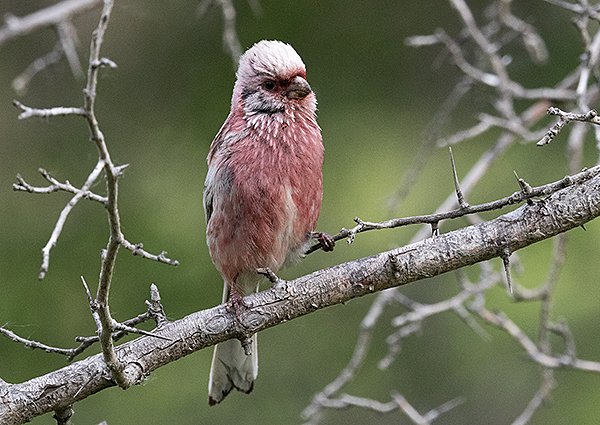
With everyone keen to start we met at 5.45am to start birding around the hotel. Having spent a few days birding in the area I knew where we could find our main targets for this location and within a minute we were enjoying our first Long-tailed Rosefinch; a nice bright pink male singing from the top of a small bush in the early morning sunshine. Finding one of our main targte species so quickly was a really nice way to start the trip and, indeed, Long-tailed Rosefinch would prove to be one of the most beautiful birds of this whole Mongolia birding tour. The combination of the rosy colouration against black and white wing markings along with the white frosting on the head feathers made this bird a really stunning one to start with.
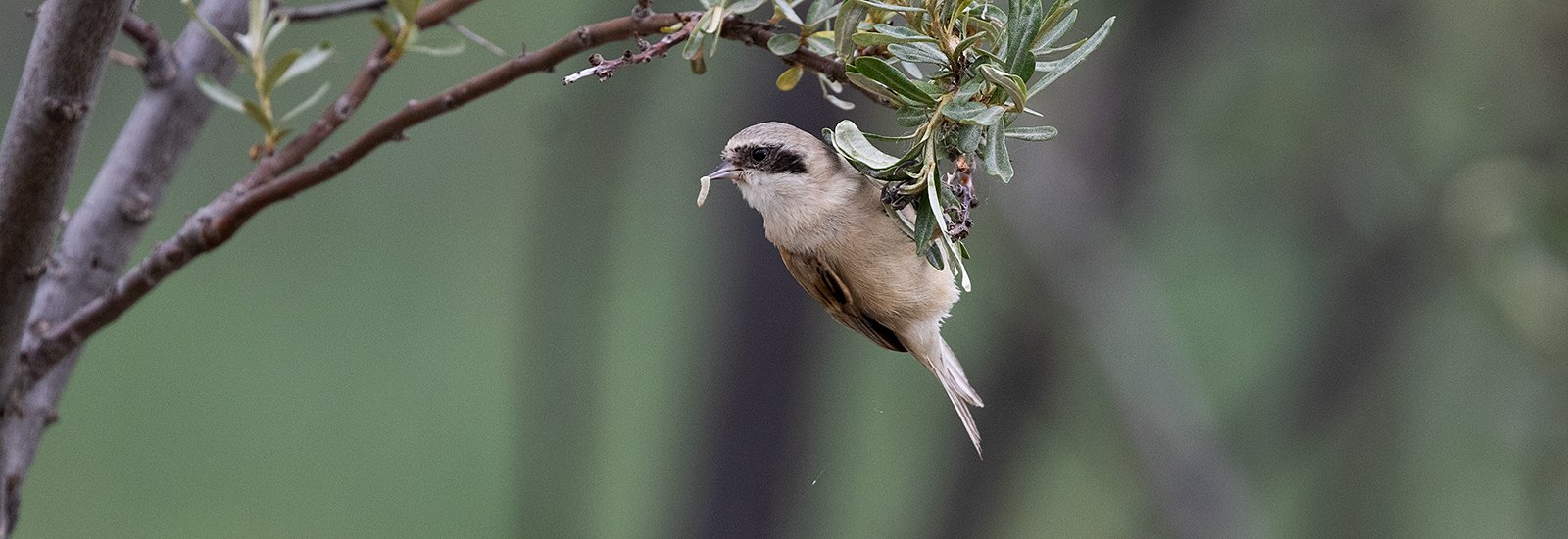
It didn’t take long before we added White-cheeked Starling to our list, a fairly common bird at this location with several pairs feeding chicks in nests but also another species that we would only see at this first site of the tour. Nesting Rooks and Carrion Crows were impossible to miss, noisly going back and forwards between their foraging areas and their nests while a small number of Daurian Jackdaws among them were of more interest. Moving on to some willow scrub in the grounds of the Mongolica Resort we bumped into a few Great Tits and numerous Eurasian Tree Sparrows before another one of our targets arrived; a pair of lovely White-crowned Penduline Tits. These tiny birds performed remarkably well for us, perched at eye level before they began foraging for invertebrates in low foliage. We were able to watch these at length before our attention was drawn away by the strident call of Amur Falcon. Looking up we were able to spot a couple of these handsome birds circling overhead in some sort of dispute. As we watched it turned out that two pairs of Amur Falcons were involved in some sort of aerial battle; a teritorial dispute presumably.
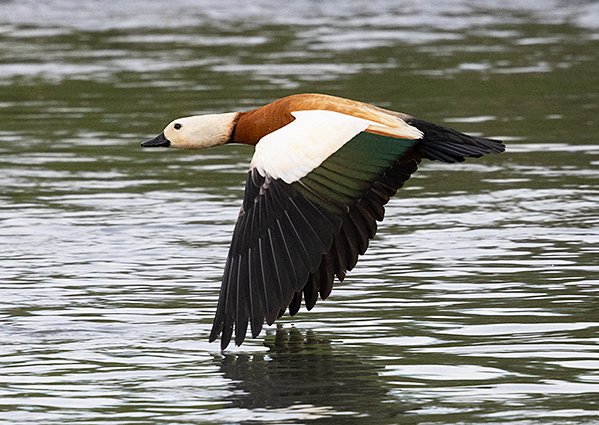
A short walk to some wetter areas close to the hotel revealed the first Ruddy Shelducks of the trip, always a colourful character, and a few more ducks in the shape of Mallard, Gadwall and several fly-past Goosander (Common Merganser) while in a grove of small trees we found a colourful male Daurian Redstart. Red-billed Choughs were feeding in wet grassland and Black Kites were wheeling overhead at all times but it was pleasing that we found the final one of our key birds for this site in the form of Azure Tit. This bird is one of the most striking looking little birds and it always a pleasure to see. Most of us had seen several of them while enjoying some pre-trip birding and others had seen it elsewhere in the past but it was certainly enjoyed by all. A calling Common Cuckoo eventually showed itself well and was even joined by a second bird for a nice addition to the list before we felt that breakfast was calling after a very successful couple of hours.
After breakfast we loaded the vehicles up and began our journey to Gun Gulut Nature Reserve, stopping along the way to admire the very impressive Chinggis Khan Monument set within some fine scenery just outside of Ulan Bataar. Continuing along we arrived at the Steppe Nomad’s Camp, situated next to a meandering river set within a vast landscape of rocky hills; a stunning location for two nights. After lunch we took a short break before heading out to an area of marshy wetlands and pools, getting some good views of three Black Storks circling at low altitude along the way. On arrival we found ourselves slightly elevated area from which to view a large area of reedy pools and grassland and were greeted with incredible views of a pair of White-naped Cranes with a little brown chick in attendance. Birds that were abundant here included Common Tern, Common Shelduck, Common Pochard, Northern Lapwing and Mallard but among these a flock of around 30 Swan Geese caused a big excitement. This endangered species was one that was highly-anticipated for this group so it was nice to see them so early in this birding tour and be able to see them feeding and in good light.
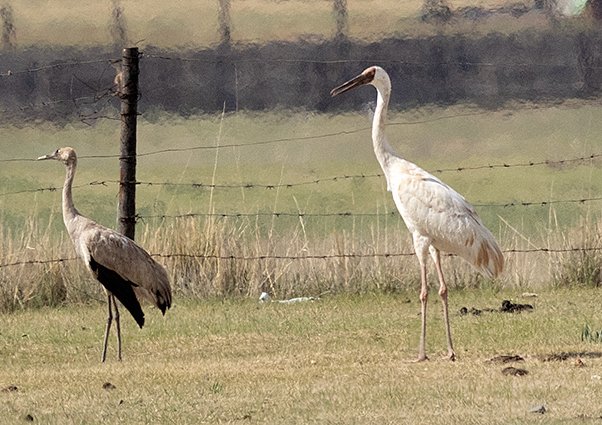
A group of White-winged Terns were beautiful to see in their breeding plumage but the song surrounding us was next to draw out attention with Mongolian Lark being a “lifer” for everyone. An impressive bird in song flight, with its obvious white wing patches, it is even more superb when seen on the ground in good light and here we were able to enjoy it in both of these ways. Alongside the beautiful Mongolian Lark we were also treated to good views of the more subtle Asian Short-toed Lark but something spotted in the distance overshadowed both of these fine birds. Fixing our telescopes on some distant white objects in wet grassland we were able to identify them as a group of Siberian Cranes. This critically endangered species was not one we expected to see on this birding trip which made this sighting even more special but given the distance we decided to get a closer view which was obtained by driving within a more sensible viewing distance. We were able to enjoy these wonderful birds for a long time before they flew a short distance away after being upset by an Upland Buzzard. Travelling with the Siberian Cranes was a single Common Crane and with small groups of Demoiselle Cranes scattered around this became a “four crane day”.
After this thrill we checked out some large pools adding Common Goldeneye, Black-headed Gull, Pied Avocet, Eurasian Curlew, Black-winged Stilt, Kentish Plover and several others to our list before driving back towards our camp. Making a stop on a rocky outcrop we enjoyed taking photographs of a very friendly Shore (Horned) Lark and a passing Upland Buzzard before returning to camp where a few Rock Sparrows were the final addition to the list for the day before dinner concluded a really excellent first day of the birding trip.
Day 3, 17th June 2026 – Gun Gulut Nature Reserve
Waking up early in the midst of the Mongolian wilderness was a wonderful experience and while waiting for breakfast I took a short walk from the camp to photograph Mongolian Larks. While in the process of doing this I came across a couple of small birds foraging in the short grass which turned out to be Pere David’s Snowfinch, a much-desired species for the group. When the female disappeared into a nest hole I knew that I would be able to take everyone else back there to see these birds later.
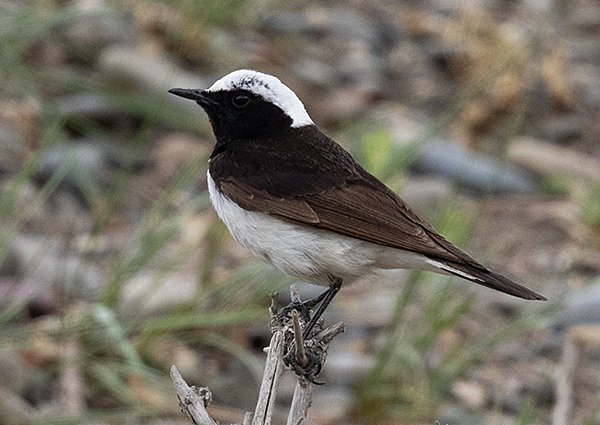
After breakfast we drove along the valley and took a walk along the base of some rocky hills getting excellent, close-up sightings of both Meadow Bunting and Pied Wheatear. The much hoped-for Daurian Partridge remained elusive but there were plenty of Isabelline Wheatears and a couple of Twite were a bit of a surprise. In the river a couple of Wood Sandpipers turned out to be the only ones of the trip before we moved on to a nice spot that overlooked a large area of wet marshland punctuated by reedy pools.
From this vantage point we were able to spot a lot of species including the three Black Storks from the previous day, several family groups of Demoiselle and White-naped Cranes as well as a couple of Eurasian Spoonbills. A distant, in-flight, Bar-headed Goose left us wanting better views but a hunting male Eastern Marsh Harrier came in close, flushing several Little Ringed Plovers from their hiding places. Scanning across the boggy areas we found several Black-tailed Godwits looking superb in their breeding colours and added a few more duck species with Northern Shoveler, Eurasian Wigeon and a single male Garganey. A cup of coffee while enjoying the spectacle in front of us made things very pleasant indeed while we listened to the song of an exhaltation of larks overhead that included Eurasian Skylark, Mongolian Lark and Asian Short-toed Lark as well as distant Shore Larks singing from the hills. Following on from this we spotted a Laughter of Lapwings, a Snooze of Spoonbills, an Incandescence of Common Redshank attacking potential predators as well as an Inevitability of Ruddy Shelduck. Generally we enjoyed the impressive location, the multitude of birds and enjoyed some humourous conversation about collective nouns before making our way back to our accommodation.
However, before reaching the accommodation, and taking our post-matutinal break, we stopped at the spot at which I had seen the Pere David’s Snowfinches earlier in the day. Fortunately, the spot was marked by a random post in the ground and it did not take long before we first spotted a female and then a couple of different age groups of male Pere David’s Snowfinch to finish a good morning of birds.
Resuming after taking time out to relax in our accommodation we returned to the area of wet steppe and pools that we had visited the previous afternoon. Most of the same species were to be seen, including the Siberian Cranes, and we added Citrine Wagtail plus a pair of Black-necked Grebes to our tally as well as some more excellent views of Swan Geese. However, we had one particular target species in mind as the afternoon drew into the early evening so we drove into some areas of dry foothills to look for Daurian Partridge. Slowly walking along a dry gully we came across Pied Wheatear and Shore Lark before Davka stopped and called us close to him; there it was, a Daurian Partridge more or less frozen in time in the shade of some small bushes. It did eventually scurry away a short distance before stopping again to confirm that it wasn’t a stuffed toy and we were able to get excellent views of a bird that we had all been looking forward to seeing. With a very early start the following day we decided to quit while we were ahead, have an early dinner and retire to our rooms to admire the sunset.
Day 4, 18th June 2026 – Gorkhi-Terelj National Park
Starting before sunrise we drove towards the famous Gorkhi-Terelj National Park, parts of which receive lots of visitors from Ulan Bataar and overseas due to its impressive landscape consisting of rocky pinnacles, hill slopes covered in larch forest, wet upland valleys, meandering rivers and mountain streams. We arrived in an impressive upland river system with wet boggy areas and rocky tors punctuating the scenery, setting up for breakfast in the field next to one of these tors. As we drank a welcome hot coffee in an area that was surprisingly chilly in the morning we admired a colourful Common Rockthrush glowing in the morning sunlight with small parties of Demoiselle Cranes parading in the wet grasslands behind us. A couple of Blyth’s Pipits were performing their song flight from rocky peaks which attracted an aerial attack from a Eurasian Hobby and although there was a mid-air tussle the pipit escaped unscathed and undeterred to deliver its song.
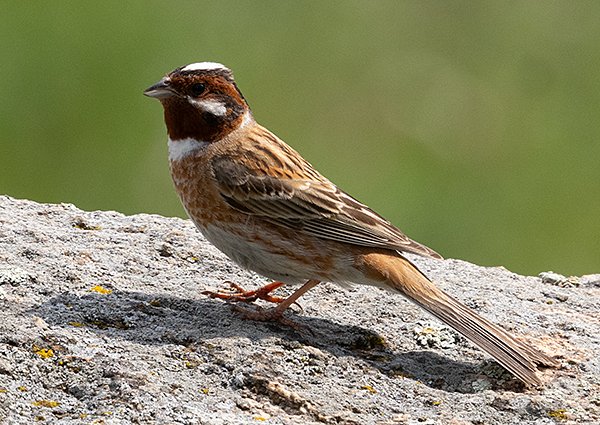
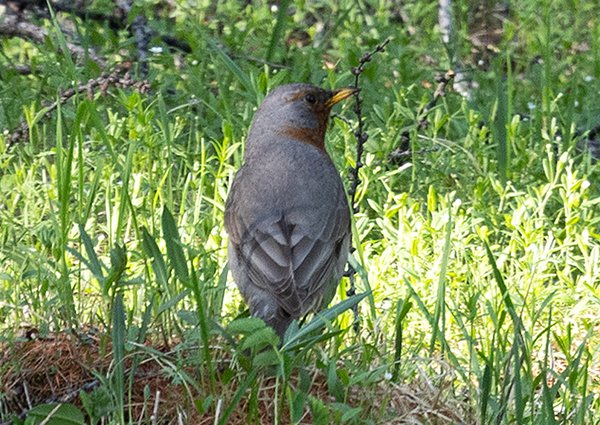
Fed and watered we contiued to an area known as the “Capercaillie Forest” and with much expectation we proceeded to walk slowly, scanning the forest floor as well as within the trees for birds catching the morning sun. Things were unexpectedly quiet although we did photograph an Olive-backed Pipit while hearing many more in song. Daurian Redstart followed but we saw precious little until emerging from the forest and getting fine views of smart Pine Buntings feeding in the trees and foraging on the ground. Re-entering the forest there was still no sign of any Capercaillies although we did see a very nice Red-throated Thrush bouncing around on the forest floor.
After a few hours of searching unsuccessfully we moved on to another area of forest and repeated the same tactic. This revealed a pair of Willow Tits, a Two-barred Warbler and an Oriental Cuckoo which showed itself repeatedly but refused to sit still for very long.
Moving on again a different area of forest contained a number of dead trees where we hoped we might find some of the rarer woodpeckers. We did find a Taiga Flycatcher as well as a couple more Red-Throated Thrushes but it started to feel like birding was tough with low levels of activity despite the seemingly optimal weather conditions. Cinereous Vultures and a young Steppe Eagle were seen well with our first Eastern Buzzards of the trip cruising oalong hill ridges and we were treated to the weird sight of a group of Ruddy Shelduck perched on the branches of a dead tree within the forest.
Our final stop before lunch took us to an area which was known to Davka as one where Ural Owl could be found and it was especially good to find two of these impressive owls quite easily, particularly as the morning had been quite tricky with low levels of bird activity.
After lunch we headed down a beautiful river valley, stopping to do some birding in the willows fringing the rushing river where the first bird we found was a Lesser Whitethroat. Following that was a nice male Black-faced Bunting although some people were unable to get a good view; one to remember and go back for later; but a nice rosy Common Rosefinch was easier to get on to. A Grey Wagtail was seen singing its jolly song from a rock and a Hoopoe flew across carrying food for its young in a nest somewhere nearby. Here, however, we ran into a problem. Our lead vehicle was leaking fluid at a rapid rate and the driver had lost his power steering. The decision was made to pack all our luggage into the damaged vehicle and he would deliver it to our accommodation and find a repair while we would all squeeze into one vehicle and continue birding. Davka and I drew the short straws and got crammed into the luggage space which gave us a bumpy ride across rivers, marsh and up into the hills where we would get out and search another area of forest for Black-billed Capercaillie.
Once again walking slowly through the forest scanning for a large black bird was the strategy but once again the forest was quiet. A Eurasian Nuthatch was a pleasant distraction but as we were moving uphill after this sighting there was an explosive sound of heavy wingbeats and as we turned around a huge black bird flashed through the trees. For Scott, who happened to be looking in the right direction, there was an eyeful of a Black-billed Capercaillie in flight. However, for the rest of us there was just a black shape moving quickly through the trees. Barry needed to go back to the vehicle and we learned later that this ran him straight into the Capercaillie whereas the rest of us searched, in vain, for the bird, finding only Yellow-browed Warbler and a nest belonging to a pair of Great Spotted Woodpeckers. With the skies greying and a breeze strengthening it was time to make the considerable drive to our accommodation, stopping to look, unsuccessfully, for Goldewiski’s Bunting but by this time windy weather made locating small birds very unlikely. The journey to a very nice ger camp was an uncomfortable one for those of us crammed into the luggage area but we survived with dinner and comfortable accommodation to help us unwind.
Day 5, 19th June 2026 – Gorkhi-Terelj National Park
We were up early, eager to get back to the location where we had encountered the Black-billed Capercaillie but the personel in charge of weather didn’t get the memo requesting blue skies so that we found ourselves gathering in the dark being drenched by heavy rain. Consulting the forecast rain was predicted until around 10am and with a river that we needed to ford to get to the right location being a raging torrent, even when the rain stopped it would not be possible to reach the Capercaillie zone. Waiting in our comfortable gers was a little frustrating but the weather forecast was correct, at 10am the rain did indeed stop. At 10.05am it started snowing! We asked our local guide, Davka, how to find birds in the forest in snow in June and he looked at us in a bewildered way. Of course, he had never had to try to locate birds in mid-June is a blizzard ever before such was the peculiarity of the weather. The snow did eaze so we set of for an hour or so of birding at a nearby location that consisted of pine trees along a series of streams.
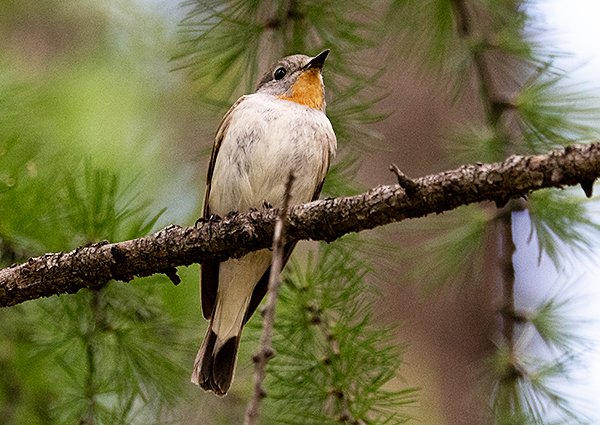
As we arrived we spotted a handsome male Mandarin Duck from the vehicles as well as a nice performance by a Great Spotted Woodpecker. Getting out of the vehicles a light drizzle began again but there were a few birds to see including several White Wagtails (subspecies leucopsis) and our first Coal Tit of the trip. A juvenile Taiga Flycatcher confused us all for a moment until the adult arrived to feed it a fat insect larvae while we searched fruitlessly for Black Woodpecker. Another addition to our Mongolia bird list was a fine male Common Redstart which was quickly followed by a family group of Spotted Flycatchers hunting actively in the canopy. It was good to be out and adding birds to our list, even though they were widespread Eurasian species, after the rained out morning but with the weather closing in again we went back to our accommodation for lunch.
After lunch the weather was a bit clearer although very breezy, never the conditions one wants for woodland birding. Still, Davka knew some areas nearby for us to look for Chinese Bush Warbler and Eurasian Three-toed Woodpecker so off we went. We tried several little valleys that contained shrubby undergrowth normally favoured by the Bush Warbler but with the windy conditions we were rather searching in vain for this type of bird. We did find a few Brown Shrikes and got a really great view of a couple of Booted Eagles, both dark and pale morphs while we had Daurian Jackdaws and Red-billed Choughs as constant companions. We battled on against the conditions, visiting several spots and putting in quite a lot of walking, getting wet feet for our trouble with not a lot to show for it. Eventually we gave up but stopping in a village along the way to do a little shopping we found a nesting colony of Siberian House Martins with their mud nests attached under the eaves of an old house and out final stop gave us excellent views of a Citrine Wagtail attended its recently-fledged chick. While things had been difficult throughout the day our spirits were still fairly high while enjoying a good dinner, which opened with an amusing amuse bouche, and hoping for better things the following day.
Day 6, 20th June 2026 – Gorkhi-Terelj National Park – Ulan Bataar
The weather news was a little better in the early morning, no sunshine but equally there was no rain, although many of the higher areas were covered in snow. Once again it was impossible to ford the river we needed to cross so we settled for the long way around and began birding at “Capercaillie Forest” in a snowy winter wonderland in the middle of June! Entering this Narnia-like forest, the landscape was undeniably beautiful but very cold and there were few birds to see until Davka spotted a large black object in a distant tree which triggered a long period of trying to find just the right angle to set up the ‘scope to get long range views of what seemed to be a Capercaillie in a tree. For some time it was very convincing, a stretched out neck, slight movement, a wedge-shaped tail and as we were in the process of convincing ourselves the wind blew and the black shape suddenly separated revealing that it has been created by an amazing alignment of black branches; a real anticlimax. We tracked back and forwards for some time, wandering into the forest, scouring the area for our target but with no luck at all so the decision was made to try the area where we had flushed one before.
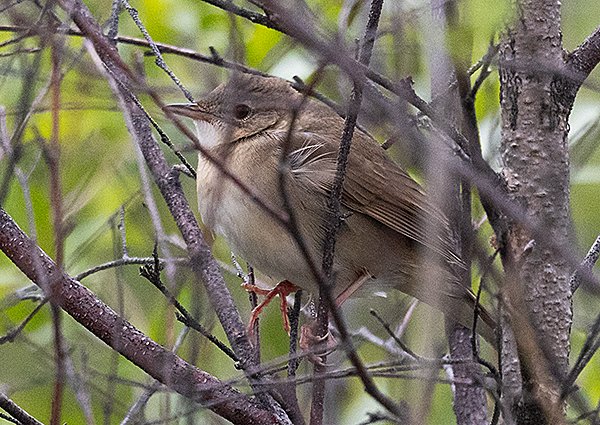
I wish I could say that our determination paid off but a combination of weather conditions, low bird activity and travel difficulties from our accommodation due to the flooded river meant that more than half of us had to leave with better views desired of this much-anticipated bird. As we searched this second area of forest the weather did begin to improve with sightings of a male Red-flanked Bluetail, a few Red-throated Thrushes, Daurian Redstart and a couple of Yellow-browed Warblers. With our feet getting cold we exited the forest but for a short time the sun began to peep through the clouds and the wind dropped which elicited some activity from a Chinese Bush Warbler that we flushed from ground-hugging bushes. A burst of call playback gave us the result that we wanted and we managed to get really nice and prolonged views of this skulking little brown bird as it sang back to us. The low “chucking” sound of a Siberian Rubythroat alerted us to that bird’s presence and over the next twenty minutes or so we struggled to get a good view of this bird as it sung from different locations within the scrubby vegetation. Eventually those who had not previously seen this stunning bird managed to get very close range views of it without the use of binoculars.
Moving on we stopped at the willow-lined river we had visited a few days back in order to try and get everyone a good view of Black-faced Bunting. We did achieve this but it did take a lot of effort as the breeze had become stronger again and we also saw Great Tit, Common Rosefinch and a couple of Siberian House Martins in the same area before we left for a steaming hot lunch in a nice warm ger.
After lunch the weather had deteriorated once again but we gave the “Capercaillie Forest” another try before we started our journey back towards Ulan Bataar, arriving at our hotel in time for dinner and looking forward to the next section of this birding tour in remote Western Mongolia.
Day 7, 21st June 2026 – Ulan Bataar – Khovd – Khar-Us Lake – Jargalant Mountain
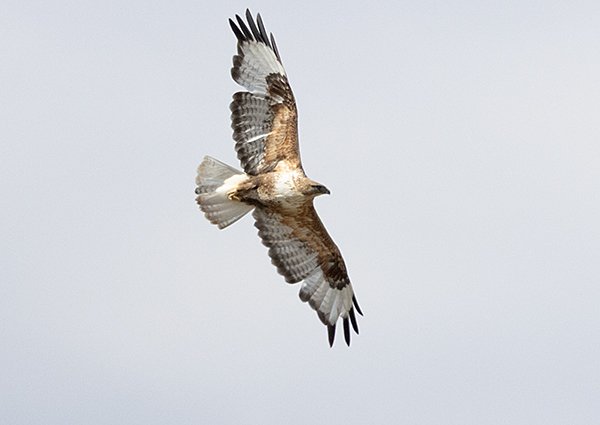
Negotiating our transfer from our hotel, to Chinggis Khan airport and the flight to Khovd all went smoothly and we were very pleased to see clear skies on arrival. We collected some supplies at a supermarket on the outskirts of Khovd before heading straight towards Khar-Us Lake. Driving through stony plains and gorges we saw large numbers of Common Swifts and stopped to view a small party of Greater Sand Plovers and a Long-legged Buzzard resting on the ground before getting great flight views of this smart raptor.
At the lakeside itself stony semi-desert met a thin line of wet grassy habitat and then fringing reeds at the lakeside and a multitude of birds including a large number of species that were new for the trip. Savi’s Warbler was a bird that had bamboozled many of us in a variety of countries across its range so when we heard two or three “reeling” birds we got quite excited. Well, it turned out that at Khar-Us Lake seeing Savi’s Warbler was rather easy with a couple of birds showing themselves extremely clearly but Great Reed Warblers were even easier with plenty of them uttering their scratchy song from the tops of reeds. Overhead the sound of a displaying Common Snipe drew our attention and we watched this amazing show for some minutes before it moved on. Scanning the lake revealed large numbers of wildfowl including Greylag Goose, Whooper Swan, the ubiquitous Ruddy Shelduck, lots of Common Pochard and large numbers of colourful Red-crested Pochard. Scanning distant ducks I spotted two male White-headed Ducks in the distance through the heat haze so we decided to walk closer to obtain meaningful views. They turned out to be rather further up the lake than I had thought but this gave us the opportunity to get stunning views of Pallas’s Grasshopper Warbler, a few Bearded Tits, Isabelline Shrike and several pairs of Greater Short-toed Larks collecting food for chicks.
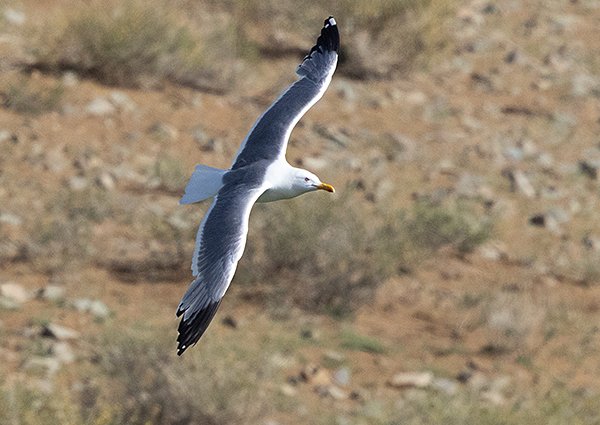
As we enjoyed watching large numbers of birds and a good variety of species a female Western Marsh Harriers glided by and a steady flow of Pallas’s Gulls flying back and forth was a real highlight; this is a really impressive gull in breeding plumage. Western Yellow Wagtails were also new for the trip but we would have to wait until after lunch to see the white-headed adults of this leucocephala subspecies and a couple of Green Sandpipers were also new. Eventually we got close enough to see two male White-headed Ducks well through the telescope before taking a break for lunch in a ger camp at the lakeside.
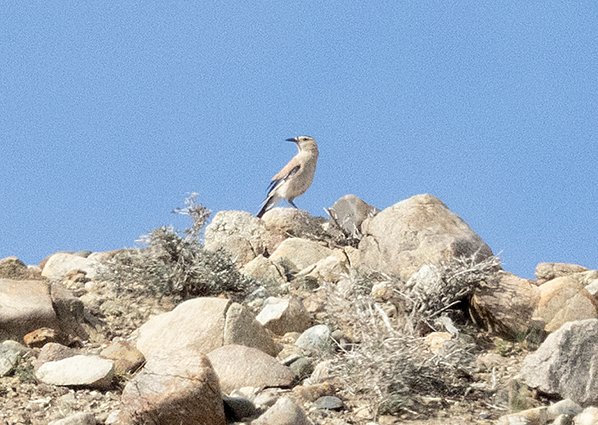
After lunch lakeside birding resumed, searching for Relict Gull as one had been seen here fairly recently before our visit. Scanning through large numbers of Black-headed Gulls that were backlit in the afternoon sun was hard going but we did add Northern Pintail to our list as well as Caspian Tern. Pied Avocet, Black-winged Stilt and a single Kentish Plover were also seen. Much of our effort was put into looking for Relict Gull. We didn’t see one but we would have a better chance later on in the trip at a bredding site. However, I did hear the flight call of Mongolian Finch and we tracked down a pair of these birds in an area of wet grassland but unfortunatley most people were unable to get a decent view of them before they flew off into the distance; another one for later in the birding tour. This wetland birding had been very enjoyable with a lot of great birds but we decided to leave with the plan to look for another key species close to our camp for the next few nights.
Heading uphill from the stony plains and lakeside marshes we found ourselves in the rocky, dry foothills of Jargalant Mountain in the late afternoon. At first we stopped in an elevated area and scanned the surroundings spotting several Shore Larks, an Isabelline Wheatear and some Pied Wheatears but there was no sign of our main target. Moving to a different area we walked along a dry valley as well as onto the surrounding ridges, scanning for birds at all times but it wasn’t until we got back into the vehicles and drove further up the valley that we found what we were looking for: Mongolian Ground Jay. This range-restricted species, also known as Henderson’s Ground Jay, was one of our top target species for this tour so it was not only wonderful to be standing in such wilderness watching a much-anticipated bird, but for us to find it so quickly too. We watched this bird as it perched atop a rocky crag, calling incessantly as we enjoyed the moment. It then fluttered across the valley and repeated the show from another rocky ridge before eventually disappearing; a magical moment. With this success we continued uphill to our ger camp, with a commanding view of the landscape, spotting a Golden Eagle on a distant ridge as we waited for dinner and a good night’s sleep.
Day 8, 22nd June 2026 – Jargalant Mountain
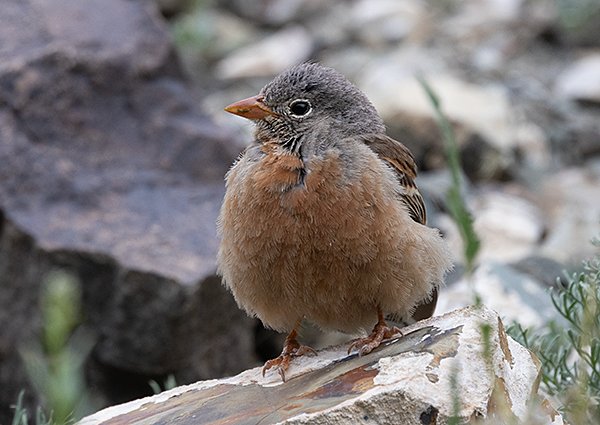
Waking up in such a majestic setting was a wonderful experience. We gathered early for a pre-breakfast birding session along a nearby gorge where we would enjoy some excellent birds. A gentle path took us into the heart of the gorge and it wasn’t long before we detected some Mongolian Finches. However, good views, once again, eluded most of the group but we would catch up with these smart little finches a little later. A singing Black Redstart of the eastern race phoenicuroides greeted us with song from a rocky pinnacle with Pied Wheatears doing the same thing further down the gorge. The pleasant song of Brown Accentor was the next thing to hear and it didn’t take long before we were watching this attractive little bird at close range as it searched for food among the rocks while a pair of Eurasian Crag Martins swooped around close-by. An interesting sighting was a group of Western House Martins that seemed to be collecting insects from an old Golden Eagle nest and a Common Rockthrush provided a splash of colour. Continuing along the gorge the birds kept coming with Grey-necked Bunting coming next. Our list of top quality bunting sightings was enhanced with a lovely male of this species coming in very close allowing us to see every detail including its smart pink bill.
Overhead a magnificent Golden Eagle soared while at the point we were about to turn around the faint sound of a Sulphur-bellied Warbler was heard. Scouring the hillside we were able to spot the bird singing from a tiny twisted tree which was then joined by second bird giving us nice views through the telescope but we were then lucky in that they both started foraging within the rocky terrain, gradually coming towards us, fluttering across the valley to gradually pick their way up to a ridge and out of sight. Upon the ridge we spotted the outline of a Chukar Partridge which led to several sightings of this bird as we walked back towards camp for breakfast. Along the way I spotted a small bird fluttering around which turned out to be a White-winged Snowfinch. Unfortunately, others in the group couldn’t get onto it before it flew away but we trusted Davka when he said we could catch up with that bird later in the day. A really nice pre-breakfast birding session ended at the camp and once we had eaten we prepared for the rest of the day.
The plan was to drive up to the highest parts of the mountain, spending most of the day up there in search of our main targets, Altai Snowcock, White-winged (Guldenstadt’s) Redstart, White-winged Snowfinch as well as Snow Leopard. However, as we were getting into the vehicles a small group of circling vultures looked interesting and on a closer look the by now familiar Cinereous Vultures were joined by a pair of Himalayan Griffons; massive birds. Driving uphill we stopped when we located a pair of Mongolian Finches and this time everyone got great views of these birds, with the sunshine illuminating the pink hue of the male. A little further up we made another stop to view White-winged Snowfinch as it fed on the seeds of rock-hugging plants but our next stop, much higher up the mountain, was enforced, due to a pancture. Some shepherds helped out drivers fix the problem and we were driving to the highest points of the mountain very soon after, reaching a spectacular outlook at an altitude of just over three thousand metres above sea level. For the next few hours we scanned the hillsides and ridges in search of our target species while we were able to enjoy plenty of White-winged Snowfinches singing and chasing each other around us.
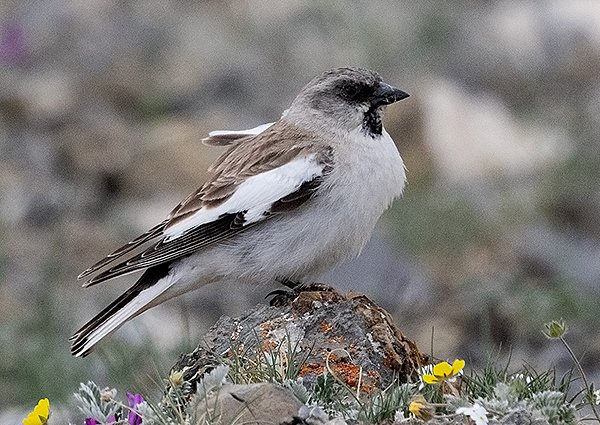
We spotted a male White-winged Redstart at distance briefly a few times but not it was not a satisfying sighting at all but a singing Water Pipit was easier to get onto. We kept scanning the hillsides for snowcock and Snow leopards but only spotting Northern Ravens, some far-roaming domestic camels, Golden Eagle and another Himalayan Griffon flying overhead before lunch at our very commanding spot. The fine weather had started to become cloudy and breezy so we sat with the vehicles sheltering us. Sneaking off for a toilet break I got a glimpse of a male White-winged Redstart lurking around within some crags and as I waited for another look the female arrived with a bill full of invertebrates and disappeared into a fissure in the rocks; obviously feeding chicks in a nest. So, I went back and called everyone else over and within a short period of time we were watching both male and female repeatedly visit the nest which was, luckily, far enough away for us not to be causing a disturbance. Even so, once we had seen the birds well we left to leave them in peace to continue feeding their nestlings.
Back to scanning the hillsides the weather was starting to get chilly and the task started to seem fruitless but after a few of us had relocated to a slightly different spot Davka announced that he had spotted Altia Snowcock. He managed to explain to me where to look and it was really hard to make out the bird at such distance but just a little movement revealed the bird’s location, sitting facing us. I was able to give directions for everyone else and little by little we were all able to get views of Altai Snowcock as it moved around feeding, eventually joined by a few more birds. The view was fairly distant but the sun came out for a few moments to make viewing that bit better before the weather finally closed in, the rain came down and the snowcocks were obscured by the weather. This was our prompt to head downhill.
Much further down the mountain we stopped in a stony valley with a lot of large scrubby bushes where we hoped to find Barred Warbler. Despite the strong breeze and light rain we found a magnificent adult Barred Warbler collecting invertebrates, creeping around in the bushes and perching atop them for long moments to give us yet another top quality bird to end this excellent day with. As the weather got worse we appreciated that we had been lucky to have decent weather up until this late stage in the day and retreated to our gers for a short break before meeting again for dinner.
Day 9, 23rd June 2026 – Jargalant Mountain – Durgun Lake – Margaz Mountains
After an early breakfast at camp we checked out a nearby crag for European Eagle Owl. We got several flight views of a pair of these huge owls but they retreated to the shadows so it was time to move on to track down some more of our target birds along the way to our next destination. Descending the mountain we travelled across the stony plains to the nearby village of Urdgol, set next to a stream and wet grassland with the mountains as a backdrop. Here we found our main target very easily by spotting a group of Feral Pigeons. Needless to say it was not these that we were looking for but a pair of Hill Pigeons associating with them. Although there are several other subtle differences between this and Feral Pigeon the main identifying feature is the white and black banding on the tail which we got a nice display of as they fluttered around a short distance away. Taking a walk around an area of trees planted as a wind break we did not see much apart from vast numbers of Black Kites, many of which had nests tucked away in the trees. There were Western House Martins, Barn Swallows, a Eurasian Hoopoe and plenty of Eurasian Tree Sparrows too but with the Hill Pigeons flying off into the village we moved on again.
Further travel through stony plains led us towards Durgun Lake, another large lake with reedy fringes within a network of rivers and channels. A heat haze was already building up and this made our views of Saiga Antelope rather shimmery before we made our first birding stop at the lakeside. Perhaps most notable here were the large number of flying insects which were a bit annoying but as they didn’t bite they were easy to ignore for a while. A flock of Eurasian Curlews alongside many Greater Sand Plovers were obvious nearby and a passing call alerted us to several Gull-billed Terns flying back and forth with plenty of Common Terns and Caspian Terns to be seen too. A few Greater Short-toed Larks were spotted in some grassy patches but we took a swift drive a little further along to search for other species. Along the way David called out to stop the vehicle as he spotted a group of Pallas’s Sandgrouse next to the track so that we were able to use the vehciles as hides to watch a flock of about thirty of these wonderful birds; one of our key target species for the day.
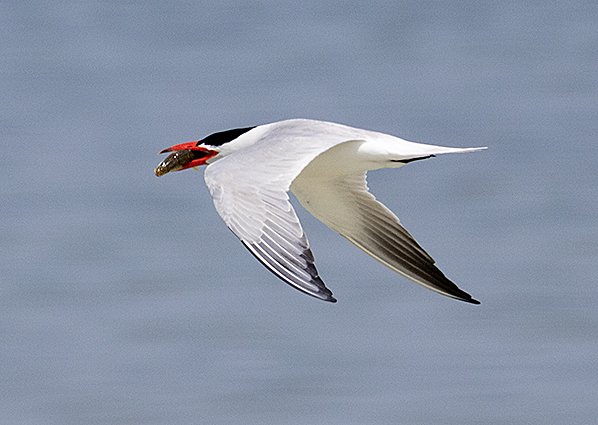
Our next stop was one at the lakeside where an extensive area of mud and islets attracted a big congregation of birds including lots of wildfowl, terns and wading birds. Looking carefully through the waders turned up several birds of interest including a male Ruff with a stunning cinnamon-cloured ruff and even though he was alone he was strutting around like Mick Jagger performing Honky-Tonk woman, chasing away other shorebirds as if he owned that particular patch of mud. As it turned out, one of the species he had a problem with was an Asian Dowitcher which was part of a group of six of these top-quality shorebirds that were in full breeding plumage and feeding right in front of us: superb! All of us had seen both of these species before, some of us had seen them many times, but to see them both in breeding plumage was a real treat and the behaviour of the male Ruff was exceptional to see. Added to the breeding plumage gang was a single Curlew Sandpiper with its dark rusty underparts to complete an attractive triumvirate. As we got ourselves a little closer to these wonderful birds a couple of larks foraging in front of us drew our attention. At first we thought they were Greater Short-toed Larks but as we got closer we could see streaking on the upper breast which revealed them to be a pair of Turkestan Short-toed Larks, yet another great bird that allowed us to study it in detail.
Further along our route we needed to cross a small channel of water but the problem was a broken bridge that would not take a vehicle. However, there was a small pontoon ferry but arranging it took quite some time so we took advantage of the stop to continue birding. The reedy channel turned out to be a great spot with an accommodating Savi’s Warbler, several Great Reed Warblers and our best view of Paddyfield Warbler up to this point. Some juvenile Bearded Tits were a nice addition and a flypast by a male Western Marsh Harrier was quite spectacular too. Somewhere under the partially collapsed bridge a pair of White Wagtails of the subspecies personata were feeding nestlings but best of all was Little Bittern, a species that none of us had seen on very many occasions with a lovely male perched up in the reeds for quite some time before we also spotted a female by the waterside.
Once the vehicles had been punted across the channel we continued to a location next to a reedy pool where we had lunch and also admired a couple of families of Black-throated Divers. We chose to use the British English name for this species rather than the North American Arctic Loon because in the heat of summer in Mongolia the word Arctic seemed ridiculous. Regardless of this humourous transatlantic disagreement we all enjoyed the superbly intricate plumage of these wonderful birds and when they started uttering their marvellous call it really added to the atmosphere. This was a nice spot to have our lunch and when it was over it was time to start a long journey to our next camp at the Margaz Mountains. We were told to prepare for a five hour journey and that’s pretty much what it turned out to be.
The journey itself was really spectacular, repeatedly crossing wide, meandering rivers running through a variety of arid plains, rolling steppe, rocky outcrops and eventually a stop at possibly the most remote village I have ever been to. Here we had to search the town for the person who worked at the fuel station so that we could refuel for the remainder of the journey. Our drivers had their work cut out as we entered an area of sand dunes, fixed by tufts of grass here and there. I guess it was inevitable that eventually one of the vehicles would get stuck in the sand but a few of us dug it out and then pushed the vehicle out of trouble. The remainder of the journey went without incident and finally we saw the superb location of our next camp, set in a grassy area backed by spectacular rock formations. The camp was the best of all that we stayed in on the tour with well-equipped gers, a good internet connection and nice food served in a comfortable restaurant ger. At this point it was good to relax, plan the next day and enjoy a Golden Gobi beer.
Day 10, 24th June 2026 – Bayan Lake – Margaz Mountains
Our first day in this area started with looming clouds so we decided to get out as soon as we could to take advantage of dry weather while we had it. We drove towards some upland wetlands, a series of marshes and pools along a river that culminates in Bayan Lake. The landscape was impressive with rocky hills on one side and giant sand dunes on the other and there were plenty of birds. Our first stop gave us slight elevation over a large area of wetland while we had breakfast in the field, somewhat cold with the threatening weather. However, on arrival a Pallas’s Fish Eagle was seen in flight, giving us nice views of this rare bird before it landed in a location where we could go and get a better view a little later. The wet areas held a nice collection of birds with Demoiselle Crane, a single Common Crane, lots of nesting Northern Lapwings and a wide selection of wildfowl including lots of good views of Bar-headed Geese, a species it felt like we should have seen well before this. As we ate our breakfast the song of a single Eurasian Skylark was accompanied by a Mongolian Lark and a couple of Western Yellow Wagtails came in close, although light conditions didn’t really allow for the best photos.
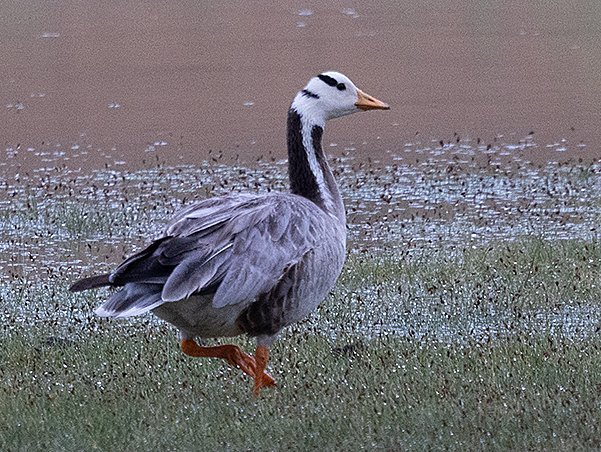
Other birds out on the wetlands included Eurasian Spoonbill, Common Redshank, Mongolian Gull, Northern Shoveler and a small number of Swan Geese too but as we finished breakfast we decided to drive close to the Pallas’s Fish Eagle. This was easily achieved, using the vehicles as a hide, with the bird sitting on some wet grassland on the edge of the lake while on the other side of the vehicles a Little Owl was found sitting on a rocky wall along with a few Rock Sparrows. Continuing further down the series of wetlands we scanned the lakes for rarer ducks, in particular Stejneger’s Scoter, but with no luck but were treated to a flypast by another Palla’s Fish Eagle before spotting a third bird perched close to the lake. Good numbers of Black-throated Divers were nice to see and in general bird numbers were high with plenty to look at but being hungry for new species we moved on to an arid area of stony plains with little tufty bushes where we successfully found Asian Desert Warbler. This little bird performed incredibly well, singing from nearby bushes and darting around in between choruses; several of us had seen this bird before elsewhere but never as prolonged and as clearly as this. The weather closed in though and after scanning the main lake in the neginning of the rain we retreated back to camp where it was more or less time for lunch anyway.
The weather forecast was for rain for much of the remainder of the day, but perhaps with a small window of dryness a little later on, so we took a break in our gers, processing our photos and reading books. Every half an hour or so I took a look outside and by about 3pm the rain was just a very light drizzle so after a quick chat with Davka we had a plan. We would head to a hot spot for Mongolian Accentor while our trackers would go off in search of Snow Leopard, a plan that had all of us excited that there was even a chance to see this much sought-after mammal. The Accentor turned out to be easy, as a pair of them bounced around the boulders at the base of a scenic rocky outcrop allowing us to watch it for a long time and at very close range while the weather improved dramatically. Although it is a bit of a little brown job Mongolian Accentor (also known as Koslov’s Accentor) proved to be a chirpy little bird, performing nicely and singing a nice little song. With this success we moved around the rocky outcrop into an area where these rock formations proliferated providing a really awesome landscape that seemed to go on forever. As we walked we found Rock Sparrows everywhere and a pair of Mongolian Finches. A Brown Accentor also put in an appearance as did a single Eurasian Crag Martin and a couple of Common Rockthrushes but another real birding highlight was a Lammergeier (Bearded Vulture) perched on a cliff face at close range; a truly stunning view of this awesome bird. Soon after, though, the real excitement began.
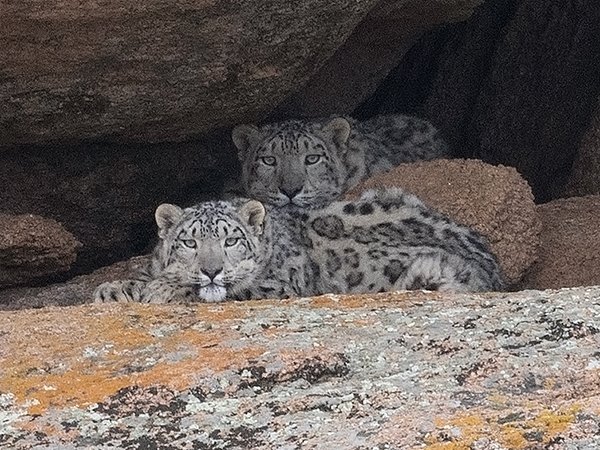
By now the sun had come out and Davka got a message from our trackers that there was news of Snow Leopard so we jumped into the vehicles and sped off in search of the trackers. Eventually a swarm of Cinereous Vultures gave us a clue as to where the action might be happening and we met up with our trackers. Told to be as quiet as we could be we scrmabled up the rocky slope as quickly as possible and I was shown, by our trackers, where two Snow Leopards were laying in front of a small cave across the gorge. I got everyone else into a position where they could see this cave and explained where they should look and it was with delight and relief when, one by one, everyone else told me they had spotted the Snow Leopards; what an incredible sighting! We certainly took our time to enjoy watching these amazing animals, setting up our telescopes for improved viewing while one of the two cats retreated a little into the cave.
While everyone enjoyed this spectacle Davka went off to find another place to view from that was closer and equally secluded and after I joined him he went back to get the others, leaving me in the wilderness watching Snow Leopards with nobody else in sight; quite a moment. When the rest of the group assembled the improvement of the view was obvious to all; quite exceptional with one Snow Leopard visible behind the other resulting in some awesome photographic opportunities. Eventually after soaking in the magnitude of this sighting and the overall atmosphere it was getting towards th evening so we quietly withdrew and drove back to our camp for what was probably the most satisfying meal of the trip. Sometimes we are blessed with magical moments and what we had experienced that afternoon was definitely one of those.
Day 11, 25th June 2026 – Bayan Lake – Margaz Mountains
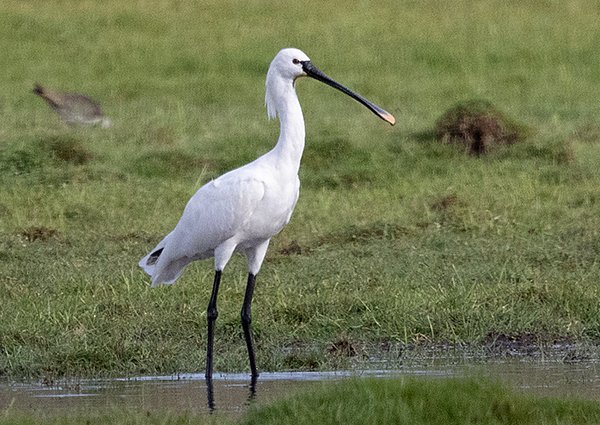
After the excitement of the previous day we were in high spirits. Once again we started our day in the wetlands of Bayan Lake and it was a completely different experience in sunny conditions with a riot of Eurasian Skylarks in song joined by smaller numbers of Asian Short-toed Lark, Northern Lapwings swooping around everywhere, Bar-headed Geese looking resplendent in the morning sunshine, Green Sandpipers calling and all of the species that we had seen the previous day including two Pallas’s Fish Eagles resting at the water’s edge. We found a really lovely place to stop and have breakfast with imposing sand dunes forming a backdrop where we could take in the abundance of birds and the landscape with Little Ringed Plovers in front of us, a gang of Eurasian Spoonbills feeding in a pool, Demoiselle Cranes strolling around and various wildfowl flying past along the valley. A couple of White-winged Terns joined the many Common Terns before we moved on to an area of reeds to look for some different species.
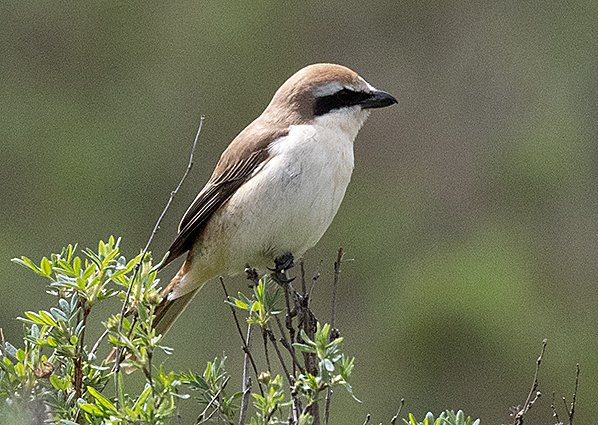
It did not take long before we were enjoying wonderful views of a Bluethroat singing from the reed tops but a weird-looking shrike drew our attention. A brown-coloured shrike with a bright rufous tail and if flight there were no white spots in the wing and after some searching we refound the bird which turned out to be a Turkestan Shrike rather than the Isabelline Shrikes we had become familiar with. A few more Bluethroats were seen as well as a Paddyfield Warbler and we also found the only White-tailed Eagle of the trip perched on some nearby rocks. This was a nice little diversion but we carried on moving along, flushing a Black-crowned Night Heron as we crossed a small stream and when we made a random stop to scan our surroundings a song nearby caught our attention. It sounded something like I remembered Pallas’s Reed Bunting to sound like so we played a bit of call and got a definite answer. Scanning a nearby collection of rushes we spotted it singing from a low perch. Getting out of the vehicles we were all able to get good views of this species that was much-wanted by the group before it suddenly flew off into the distance.
In the main Bayan Lake we found a pair of Red-breasted Mergansers, which was unexpected, but when we returned to the large marshy wetland we scanned through the large numbers of wildfowl present. Mallard, Common Pochard, Red-crested Pochard and many other species we obvious and we also spotted a single male Common Goldeye but it was something else that caused the biggest interest. Although they were very distant and the heat haze was a problem there were definitely three drake Falcated Ducks among the crowd so we spent the next half an hour or so getting as close as we could for improved views. In truth we never could get as close as we would have liked because of the nature of the wetland but we did our best and obtained reasonable views through the telescope. Having had a good morning and time ticking on we went back to camp for lunch and a short break.
Our afternoon session took a similar shape to the previous day with us out birding around impressive rock formations while the trackers went out looking for cats, this time Pallas’s Cat. By this time it was hard for us to find new birds however, we enjoyed another sighting of Mongolian Accentor, lots of Rock Sparrows and some more Mongolian Finches. We tried to find Godlewiski’s Bunting but with no success but the shape of a Siberian Ibex perched on a rocky ridge against the skyline made us all freeze. As we watched this individual move up the rocky slope a second, third then fourth appeared, including a wonderful mature male. This mammal sighting was very exciting and with the addition of Pallas’s Pika it was already a good afternoon for mammals when we got the news that a Pallas’s Cat den had been located. Jumping in the vehicles we raced off to a secluded viewing area and from distance we were able to spot a couple of young Pallas’s Cats playing around at the entrance of their den. An in flight Saker Falcon which eventually perched on the ground was the main ornithological distraction but there were also good views of Steppe Eagle and Upland Buzzard to be had. We sat watching the Pallas’s Cats for a prolonged period until eventually the mother came strolling across the plains to attend the young; a wonderful sight. After some time with the kittens she walked out into the grassy steppe again to hunt for small mammals and we watched her as she stalked her prey until it appeared that she caught something although she seemed to eat it herself rather than take it back to her youngsters.
This wonderful ending to the day was very satisfying and on the drive back there were several salutory flypasts by squadrons of Pallas’s Sandgrouse before our final night at this lovely camp.
Day 12, 26th June 2026 – Plover Plains – Uvs Lake
With the successes of the previous few days of our Mongolia birding trip we were keen to look for the final two big targets of the tour and after breakfast we headed off across the wilderness to a known breeding site for the first of these. After an hour and a half we stopped at an elevated spot from which we could scan across a large plain of short grasses but the most obvious birds, at first, were Common Swifts and Pacfic Swifts screaming around overhead. The most obvious bird, sitting on the ground, was an Upland Buzzard and further scanning revealed high numbers of both Isabelline Wheatear and Shore Lark, with nothing else within a sensible distance of us. Scanning further afield, to distances that were not senseible, I spotted some very distant shape that seemed to have a pale head. Watching this at extreme range it suddenly flew a short distance, revealing plover-shaped wings and upon landing it proceeded to feed, bobbing its head to the ground; Oriental Plover. The distance was so extreme, however, that it was not worth trying to let others view through the ‘scope and instead getting immediately close would be the best plan. Curiously there seemed to be some debate among our local crew on how to do that and instead we took a short detour where we saw a Great Sand Plover but eventually we got down onto the plain and drove in the general direction of where the bird had been seen. Upon stopping it did not take too long to find two superb male Oriental Plovers, with superb morning light on them, and we walked a little closer to get really good telescope views of this highly-anticipated bird.
These birds were rather active and shy so rather than go straight towards them we took a detour that gave us a slightly elevated view of them, obtianing better views still as well as spotting a Pallas’s Sandgrouse. As we gathered to leave we spotted a couple of raptors sitting on a rocky outcrop together; Steppe Eagle and Upland Buzzard. At this point we had a drive of a few hours in order to reach our accommodation in time for lunch close to Uvs Lake.
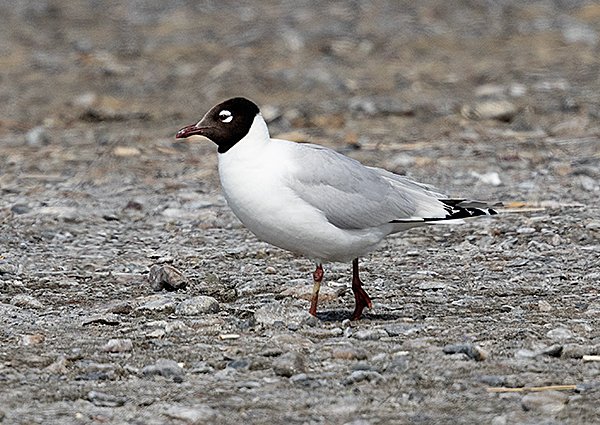
Having arrived, settled into our accommodation and eaten lunch we were ready for late afternoon and early evening birding at Uvs Lake. It was just a short drive to the lake shore where some areas of mud were exposed and a few groups of local tourists were having picnics. At first it seemed an unlikely spot to see a globally rare bird but we could see groups of birds in the water that looked worth examing. However, as we walked off it occurred to me to check the gulls that were quite close, including birds that were feeding on picnic leftovers. This turned out to be exactly the right thing to do with a Relict Gull strutting around next to a parked car, behaving exactly like gulls do around seaside towns in Britain. It flew off into a melee of Black-headed Gulls for a while but it didn’t take long before it came back, being joined by a second bird and fed along the lake shore with Black-headed Gulls and Mongolian Gulls allowing us to get close and obtain wonderful views of Relict Gull in full breeding plumage.
With the target acheived so easily we found ourselves with time on our hands so we decided to just explore the habitat and see if we could add anything to our trip list. We birded an area of wet marshland, lagoons, reedy pools, grassland and scrubby patches around the lake which was very rich in birds such as Northern Lapwing, Eurasian Skylark, Common Crane, Eurasian Spoonbill, Mongolian Gull and a variety of the wildfowl seen throughout the trip. A couple of Eurasian Curlew provided only the second sighting of this bird during our journey and a pair of Little Terns was an addition to the list. Also new for the tour were a small group of Black Terns hunting over the far side of the pools and we got some excellent views of the leucocephala subspcies of Western Yellow Wagtail. A couple of family parties of Black-throated Divers gave the photographers among us the chance to get some nice shots and it was nice to spend a few hours in this peaceful spot to just see what we could find. Had it not been for the close range views we had already obtained, the small colony of Relict Gulls that we found would have been the highlight of the afternoon; watching them strut about performing their courtship display was fun to watch.
After this the only thing left was to return to camp and attack the generous portions of food we were served.
Day 13, 27th June 2026 – Ulan Gom Farmlands – Khovd
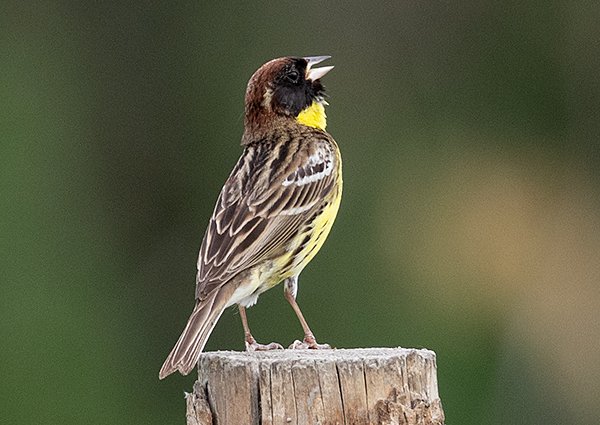
Having obtained superb views of our target bird at Uvs Lake, Relict Gull, we decided to drive a short distance to some farmland plots close to the nearby town of Ulan Gom where there would be the chance of a few new species for the trip, including some that would be “lifers” for some members of our group. The prime reason for visiting this spot was that Davka knew it as one which contains breeding Yellow-breasted Buntings. These formerly common birds have been reduced in number dramatically across their global range with trapping for food being a major cause of this delcine. However, in this low-intensity mixed farming system was an easy place to get great views of this beautiful bird. All of us had seen Yellow-breasted Bunting in the past but never in full breeding plumage so that visiting this area was a real treat. As this was a very different habitat to any other that we visited on this birding tour there were several other species that we were able to add here too, including a pair of Richard’s Pipits, Tree Pipit, a couple of Eurasian Wrynecks which are always superb birds to see, a pair of Hoopoes feeding a fledged chick and, after much effort, a single Common Grasshopper Warbler. We also heard the distinctive call of Common Quail but as it was several fields away and inaccessible we could not get close to it, while a couple of singing Common Chiffchaffs eluded everyone other than myself.
We then moved a short distance to another patch of farmland where some locals were a bit worried about what we were doing but a short chat smoothed things out and we proceeded to look for Grey-capped Goldfinch, a split from European Goldfinch. By this time the weather had become quite sunny and hot so it wasn’t an easy task. However, we did locate a pair of these birds but they proved to be very tricky to get a good view of. We were very persistent and patient, amusing ourselves watching some Common Starlings feeding young and this patience was rewarded when the pair of Grey-capped Goldfinches descended into some low branches to forage for seeds and perform well for the admiring crowd. This success was the catalyst for us to go and forage for our own lunch; little did we know quite how successful we would be!
Nearby, in the town of Ulan Gom, we went into a local restaurant where the house special was ordered. When it was served it consisted of a vast platter of cooked meats and salads that was shared between six people but could have fed at least twice the number. Mongolians certainly enjoy good portions at meal times!
After our most massive, mesmerising, Mongolian meat mountain we braced ourselves for the five hour drive back to the town of Khovd. This journey took us through the incredible Mongolian wilderness once again with stony desert, rolling steppe, rocky mountains and dry plains forming the landscape along the way. One short stop was taken when we spotted a Mongolian Ground Jay perched on top of a scrubby bush giving us another fine view of this top quality bird. A second, longer and more targeted stop was taken at the base of some towering rocky mountains adjacent to grassy meadows where we tracked down a beautiful male Desert Wheatear that came in exceptionally close to us before we completed our journey to Khovd and checked into a very comfortable hotel where we had dinner which consisted, again, of generous servings of various meats.
Day 14, 28th June 2026 – Kovd – Ulan Bataar – Bogt Khan Mountain
Our day began with breakfast being delivered to our rooms followed by the short drive to Khovd airport and the flight back to Ulan Bataar. By the time we had claimed our baggage it was time for lunch, which we had in an airport restaurant before we headed to the forested slopes of Bogt Khan Mountain, just outside of Ulan Bataar.
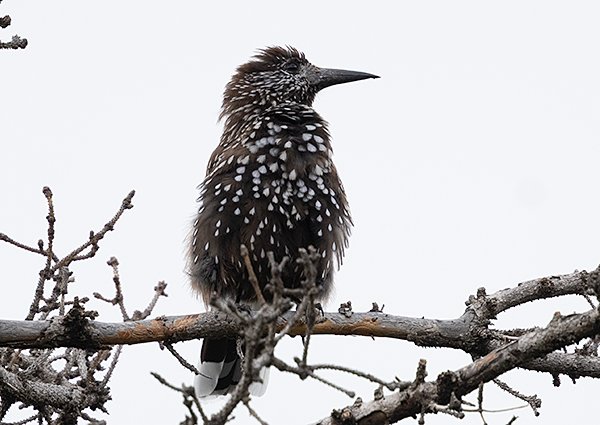
Being a weekend and close to the city there were quite a few locals enjoying this scenic spot but it was easy to wander off up a wooded slope to get away from the crowds. The customary Black Kites were in evidence and the call of Common Cuckoo echoed across the valley as we walked through larch groves. it was difficult to see any birds within the forest so we moved to a picturesque Alpine meadow from which we could observe the treetops. With a rain storm having just stopped there were several birds perched out in the open attempting to dry off. A singing Daurian Redstart was first, followed by a Great Spotted Woodpecker but then we spotted a species that was much-desired by some in our group: Spotted Nutcracker.
Perched in the open we were able to get nice views of a bird that was a “lifer” for some and a species that none of us had seen for quite some time before our attention went to a singing Pine Bunting. We enjoyed the atmosphere and looked hard for different species of woodpeckers but instead came up with some Willow Tits, a Lesser Whitethroat and another Pine Bunting that was very accommodating before the soft call of a crossbill made us search the tree tops for this bird. Eventually we all got some rather backlit views of a couple of Red Crossbills; not the birds we were hoping for but another addition to our trip list.
The sound of traditional Mongolian music drew us towards a focal point of this attractive setting and as we emerged from a line of trees we could see an old Buddhist temple halway up the rocky mountains with some ladies dressed in traditional clothing singing nearby. Sharon, David and I headed up towards this interesting cultural interlude and were invited by the singers to take photos with them in their amazing traditional gowns, while we tried our best not to look like scruffy birders. With clouds looning and time ticking by we walked back to the vehicles, seeing a couple of Eurasian Hobbies along the way before going to our hotel for dinner.
Day 15, 29th June 2026 – Baga Bayan
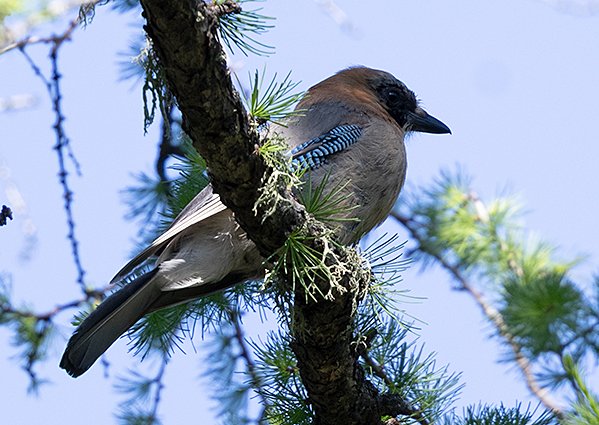
The weather was bright and sunny for the last day of our Mongolia birding tour so that we travelled around the outskirts of Ulan Bataar and into the wooded hills with much anticipation. On arrival we had breakfast in the field, in an area surrounded by buildings but right next to the forest with White Wagtails singing from the rooftops and Daurian Redstarts singing from the treetops. A group of Willow Tits chattered garrulously in a nearby tree alongside a calling Great Tit and shortly after we were lured into the forest to resume our quest; Willow Tits, Great Spotted Woodpecker, Eurasian Nuthatch and an army of Pallas’s Warblers ensued while the squawk of a corvid alerted us to the presence of a Eurasian Jay, a bird many of us were familiar with but a very different subspecies, brandtii, than we were used to; a widespread bird but it was nice to still be adding birds to the trip list at this late stage. The Eurasian Jay was chased off by a noisy Spotted Nutcracker so we continued uphill in search of woodpeckers. A female Red-flanked Bluetail put in an appearance and as we were descending Davka spotted a female Eurasian Bullfinch which was briefly joined by a male before flying off.
Returning back towards the vehicles we noticed a few small birds moving around in a low willow tree. The most obvious of these were Great Tits but a more sombre-looking bird was skulking around with them; a Dusky Warbler and another first for the trip. This seemed like a good time for a coffee break and while that was enjoyed I took a look behind some of the buildings where there was a lot of shrubby vegetation. Here there was another Dusky Warbler but the song of a Thick-billed Warbler was what caught my attention and after scanning the vegetation I spotted it singing from a single bare tree around one hundred metres away. Knowing that this was a potential “lifer” for some in the group I went back and we walked over to try to refind the bird and get a good view through the telescope. Fortunately it was still singing from the same perch allowing us to watch it for some time before it dropped down into the shrubbery.
It was a warm mid-morning by this time and the plan was to visit a slightly different patch of woodland in search for more birds. The low vegetation in this area contained at least two more Dusky Warblers and a Brown Shrike but a singing Siberian Rubythroat refused to show itself. Entering the forest again we were still hoping for some species of woodpecker other than Great Spotted Woodpecker. After a short walk we heard a woodpecker-like sound that did not sound quite right for Great Spotted Woodpecker so we decided to investigate further. The hope was for Eurasian Three-toed Woodpecker but after some searching it proved to be the sound of some juvenile Great Spotted Woodpeckers. After this we searched fruitlessly, briefly seeing a Red-flanked Bluetail before it was time to get lunch in a nearby restaurant. After lunch we could have continued our search but that would likely have got us stuck in a traffic jam in Ulan Bataar and arriving at our accommodation late and in a rush so we opted to end the birding. This was a good decision as the traffic was bad enough as it was but we got to our hotel with time to take a shower and change before having a final dinner together, discuss the most memorable moments of the trip and vote for “Bird of the trip”.
Day 16, 30th June 2026 – Departure
We all had breakfast together in the hotel restaurant after which we said our goodbyes with Sharon and Barry heading off on a short, touristic trip to the south of Mongolia. Scott went back to his room but David and I decided to take one last birding walk before our flights later in the day. Things were quite warm and bird activity was generally low but our walk took us along a quiet, old railway line through some pleasant scenery. A pair of Amur Falcons was a nice sighting but the most notable species was Azure-winged Magpie which had only been seen by myself while pre-trip birding in the same area. Returning to the hotel it was time to pack and take the taxi to Chinggis Khan International Airport for our onward flights concluding our Mongolia birding trip.
Bird of the Trip
- Siberian Crane
- Mongolian Ground Jay
- Relict Gull
- Grey-capped Goldfinch
- Black-throated Diver
However, we all agreed that if we had to rate the top sighting of this birding tour then unanimously our Snow Leopard sighting would be placed at number one.
Mongolica Resort: A hotel set close to the willow-lined Tuul river which is surrounded by areas of wet grassland, stony floodplains, willow scrub and lightly-wooded groves of trees, a series of streams and pools with rocky slopes as the backdrop. This is a key area for several species including Azure Tit, White-crowned Penduline Tit, White-cheeked Starling, Amur Falcon, nesting Rook (pastinator) and Long-tailed Rosefinch.
Gun Gulut Nature Reserve: A large area consisting of wet steppe grasslands, large meandering rivers and pools with freshwater marshes closely bordered by rocky hills with scrub woodland within the gulleys and gorges of the foothills. This is a key area for many species, particularly breeding White-naped Crane, Pere David’s Snowfinch, Daurian Partridge, Swan Goose and a wide variety of wetland birds.
Gorkhi-Terelj National Park: One of Mongolia’s most famous national parks, close to Ulan Bataar it contains a wide variety of habitats including wet upland plains punctuated by rocky tors, wooded river valleys, marshy pools, larch-covered hillsides, willow-lined streams and imposing rock formations. This is a prime location for a wide variety of birds, particularly woodland species with Black-billed Capercaillie as the speciality.
Khar-Us Lake: A huge lake set amongst arid stony plains with reedy fringes and imposing mountains as the backdrop. An interesting transition of semi-desert meets wet grassland, reedbeds and open water within a one hundred metres distances provides a wide variety of birds. This is a key site for White-headed Duck and many other wetland birds.
Jargalant Mountain: A huge area of ridges and valleys that mass together to form a high altitude region of gorges and peaks above 300 metres altitude. Most of the area is unwooded, dry and rocky with areas of grassy hillsides and valleys full of scrubby vegetation. An excellent site for finding Altai Snowcock and White-winged Redstart as well as a wide variety of other upland birds.
Urdgol Village: A small village of low houses set next to a stream and wet steppe within a greater area of dry stony plains and foothills. Planted areas of trees as windbreaks provide habitat for variety of migrant passerines at the right time of year while the village accommodates a small number of Hill Pigeons.
Durgun Lake: A similar, but slightly smaller, lake to Khar-Us Lake surrounded by stony plains but with a greater network of reedy channels and pools branching out from the main lake. A great place for seeing reedbed species and waterbirds such as Asian Dowitcher, Paddyfield Warbler, Black-throated Diver and flocks of Pallas’s Sandgrouse on the stony areas.
Bayan Lake: A series of lakes, marshes and other wetlands along a river valley that culminate in a large upland lake. The landscape here is dramatic with rocky hills on one side of the wetlands and sand dunes on the other with areas of wet grassland, beds of sedge and rush as well as reedy frings to the lakes. Lots of interesting birds are to be found here but it is probably the most reliable site in Mongolia for Pallas’s Fish Eagle.
Margaz Mountains: An extremely remote area in Western Mongolia where rocky mountains and tors dominate the landscape with a river, adjacent marshland, pools and lakes lead to sand dunes at slightly lower altitude on a highland plateau. This is a top location for many species including Mongolian Accentor, Asian Desert Warbler and Pallas’s Fish Eagle as well as mammals including Snow Leopard.
Plover Plains: An extensive area of grassy, pebbly steppe with a few ridges and slopes providing a few elevated areas backed, in the distance, by rocky hills. A know breeding site for Oriental Plover.
Uvs Lake: This is an incredibly large lake which borders Russia, set within the plains and surrounded, in the distance, by snow-capped mountains. The fringes of the lake, particularly around the delta of the river that empties into it, consist of wet grassland, pools, marshes and reedy areas with muddy patches all of which attract a wide variety of birds. This is a breeding site for Relict Gull with a small colony close to the accommodation.
Ulan Gom Farmland: Around the town of Ulan Gom these farmland plots are a very different type of habitat to all that surrounds it. Small plots of pasture and vegetables are separated by hedgerows and orchards with low inputs used and traditional European-style farming methods predominate. This area is key for Yellow-breasted Bunting.
Bogt Khan Mountain: This is an isolated mountain that is mostly wooded, looming just to the south of Ulan Bataar. There are two main access points and we used the southern point at Manzushir Monastery where an ancient Buddhist temple is perched at the end of a rocky valley set among larch forest and alpine meadows. This is a good location for Spotted Nutcracker.
Baga Bayan: North of Ulan Bataar this green valley culminates in wooded hills and areas of shrubby undergrowth that is a good place to see a wide variety of forest species.
The sites at which each species were seen are coded as below;
- Mongolica Resort/Tuul River: MR
- Gun Gulut: GG
- Gorkhi-Terelj National Park: GT
- Khar-Us Lake: KUL
- Jargalant Mountain: JM
- Urdgol Village: U
- Durgun Lake: DL
- Margaz Mountains: MM
- Bayan Lake: BL
- Plover Plains: PP
- Uvs Lake: UL
- Ulan Gom Farmland: UGF
- Khovd: K
- Bogt Khan: BK
- Baga Bayan: BB
During this Mongolia Birding Tour +++ species were seen. Those of us who arrived at Mongolica Resort earlier than the start date of the tour did some pre-tour birding and a few species were seen at that time that were not seen again on the tour dates. These species are marked with an asterisk (*). The sceintific names of notable subspecies have also been listed.
SPECIES
ANSERIFORMES: Anatidae
Bar-headed Goose
Greylag Goose
Swan Goose
Whooper Swan
Ruddy Shelduck
Common Shelduck
Mandarin Duck
Garganey
Northern Shoveler
Gadwall
Falcated Duck
Eurasian Wigeon
Eastern Spot-billed Duck
Mallard
Northern Pintail
Eurasian Teal
Red-crested Pochard
Common Pochard
Tufted Duck
Common Goldeneye
Common Merganser (Goosander)
Red-breasted Merganser
White-headed Duck
GALLIFORMES: Phasianidae
Black-billed Capercaillie
Daurian Partridge
Altai Snowcock
Chukar Partridge
CUCULIFORMES: Cuculidae
Oriental Cuckoo
Common Cuckoo
PTEROCLIFORMES: Pteroclidae
Pallas’s Sandgrouse
COLUMBIFORMES: Columbidae
Feral Pigeon
Hill Pigeon
Oriental Turtle Dove*
Eurasian Collared Dove
GRUIFORMES: Rallidae
Common Moorhen
Eurasian Coot
GRUIFORMES: Gruidae
Siberian Crane
White-naped Crane
Demoiselle Crane
Common Crane
PODICIPEDIFORMES: Podicipedidae
Great-crested Grebe
Eared (Black-necked) Grebe
CHARADRIIFORMES: Recurvirostridae
Black-winged Stilt
Pied Avocet
CHARADRIIFORMES: Charadriidae
Little Ringed Plover
Northern Lapwing
Oriental Plover
Greater Sand Plover
Kentish Plover
CHARADRIIFORMES: Scolopacidae
Eurasian Curlew
Black-tailed Godwit
Asian Dowitcher
Common Snipe
Common Sandpiper*
Green Sandpiper
Wood Sandpiper
Common Redshank
Ruff
Curlew Sandpiper
CHARADRIIFORMES: Laridae
Little Tern
Gull-billed Tern
Caspian Tern
Black Tern
White-winged Tern
Common Tern
Black-headed Gull
Pallas’s Gull
Relict Gull
Mongolian Gull
GAVIIFORMES: Gaviidae
Black-throated Diver
CICONIIFORMES: Ciconiidae
Black Stork
SULIFORMES: Phalacrocoracidae
Great Cormorant
PELICANIIFORMES: Threskiornithidae
Eurasian Spoonbill
PELICANIIFORMES: Ardeidae
Little Bittern
Black-crowned Night Heron
Great Egret
Grey Heron
ACIPITRIFORMES: Accipitridae
Bearded Vulture (Lammergeier)
Himalayan Griffon
Cinereous (Black) Vulture
Booted Eagle
Steppe Eagle
Golden Eagle
Eurasian Sparrowhawk
Western Marsh Harrier
Eastern Marsh Harrier
Black Kite
Pallas’s Fish Eagle
White-tailed Eagle
Upland Buzzard
Eastern Buzzard
Long-legged Buzzard
STRIGIFORMES: Strigidae
Eurasian Eagle Owl
Little Owl
Ural Owl
BUCEROTIFORMES: Upupidae
Eurasian Hoopoe
PICIFORMES: Picidae
Eurasian Wryneck
Lesser Spotted Woodpecker*
Great Spotted Woodpecker
FALCONIFORMES: Falconidae
Common Kestrel
Amur Falcon
Eurasian Hobby
Saker Falcon
Peregrine Falcon
PASSERIFORMES: Laniidae
Isabelline Shrike
Turkestan Shrike
Brown Shrike
PASSERIFORMES: Corvidae
Eurasian Jay
Azure-winged Magpie*
Eurasian Magpie
Mongolian Ground Jay
Spotted Nutcracker
Red-billed Chough
Daurian Jackdaw
Rook
Carrion Crow
Northern Raven
PASSERIFORMES: Paridae
Coal Tit
Willow Tit
Azure Tit
Great Tit
PASSERIFORMES: Remizidae
White-crowned Penduline Tit
PASSERIFORMES: Panuridae
Bearded Tit
PASSERIFORMES: Alaudidae
Eurasian Skylark
Shore Lark
Greater Short-toed Lark
Mongolian Lark
Asian Short-toed Lark
Turkestan Short-toed Lark
PASSERIFORMES: Hirundinidae
Sand Martin
Eurasian Crag Martin
Barn Swallow
Barn Swallow
Western House Martin
Siberian House Martin
PASSERIFORMES: Phylloscopidae
Yellow-browed Warbler
Pallas’s Warbler
Dusky Warbler
Sulphur-bellied Warbler
Two-barred Warbler
PASSERIFORMES: Acrocephalidae
Great Reed Warbler
Paddyfield Warbler
Thick-billed Warbler
PASSERIFORMES: Locustellidae
Pallas’s Grasshopper Warbler
Savi’s Warbler
Common Grasshopper Warbler
Chinese Bush Warbler
PASSERIFORMES: Sylviidae
Barred Warbler
Lesser Whitethroat
Asian Desert Warbler
PASSERIFORMES: Sittidae
European Nuthatch
PASSERIFORMES: Sturnidae
Common Starling
White-cheeked Starling
PASSERIFORMES: Turdidae
Red-throated Thrush
PASSERIFORMES: Muscicapidae
Spotted Flycatcher
Bluethroat
Siberian Rubythroat
Taiga Flycatcher
Red-flanked Bluetail
Black Redstart
Common Redstart
Daurian Redstart
Guldenstadt’s (White-winged) Redstart
Common Rockthrush
Northern Wheatear
Isabelline Wheatear
Desert Wheatear
Pied Wheatear
PASSERIFORMES: Passeridae
Rock Sparrow
White-winged Snowfinch
Pere David’s Snowfinch
Eurasian Tree Sparrow
House Sparrow
PASSERIFORMES: Prunellidae
Brown Accentor
Mongolian Accentor
PASSERIFORMES: Motacillidae
Western Yellow Wagtail
Citrine Wagtail
White Wagtail
White Wagtail
Grey Wagtail
Richard’s Pipit
Blyth’s Pipit
Tree Pipit
Olive-backed Pipit
Water Pipit
PASSERIFORMES: Fringillidae
Hawfinch*
Mongolian Finch
Common Rosefinch
Long-tailed Rosefinch
Twite
Red Crossbill
Grey-capped Goldfinch
Eurasian Bullfinch
PASSERIFORMES: Emberizidae
Pine Bunting
Meadow Bunting
Grey-necked Bunting
Black-faced Bunting
Yellow-breasted Bunting
Pallas’s Reed Bunting
SCIENTIFIC NAME
ANSERIFORMES: Anatidae
Anser indicus
Anser anser
Anser cygnoides
Cygnus cygnus
Tadorna ferruginea
Tadorna tadorna
Aix galericulata
Spatula querquedula
Spatula clypeata
Mareca strepera
Mareca falcata
Mareca penelope
Anas zonorhyncha
Anas platyrhynchos
Anas acuta
Anas crecca
Netta rufina
Aythya ferina
Aythya fuligula
Bucephala clangula
Mergus merganser
Mergus serrator
Oxyura leucocephala
GALLIFORMES: Phasianidae
Tetrao urogalloides
Perdix dauurica
Tetraogallus altaicus
Alectoris chukar
CUCULIFORMES: Cuculidae
Cuculus optatus
Cuculus canorus
PTEROCLIFORMES: Pteroclidae
Syrrhoptes paradoxus
COLUMBIFORMES: Columbidae
Columba livia
Columba rupestris
Streptopelia orientalis
Streptopelia decaocto
GRUIFORMES: Rallidae
Gallinula chloropus
Fulica atra
GRUIFORMES: Gruidae
Leucogeranus leucogeranus
Antigone vipio
Grus virgo
Grus grus
PODICIPEDIFORMES: Podicipedidae
Podiceps cristatus
Podiceps nigricollis
CHARADRIIFORMES: Recurvirostridae
Himantopus himantopus
Recurvirostra avocetta
CHARADRIIFORMES: Charadriidae
Thinornis dubius
Vanellus vanellus
Anarhynchus veredus
Anarhynchus leschenaulti
Anarhynchus alexandrinus
CHARADRIIFORMES: Scolopacidae
Numenius arquata orientalis
Limosa limosa
Limnodromus semipalmatus
Gallinago gallinago
Actitis hypoleucos
Tringa ochropus
Tringa glareola
Tringa totanus
Calidris pugnax
Calidris ferruginea
CHARADRIIFORMES: Laridae
Sternula albifrons
Gelochelidon nilotica
Hydroprogne caspia
Chlidonias niger
Chlidonias leucopterus
Sterna hirundo
Chroicocephalus ridibundus
Ichthyaetus ichthyaetus
Ichthyaetus relictus
Larus mongolicus
GAVIIFORMES: Gaviidae
Gavia arctica
CICONIIFORMES: Ciconiidae
Ciconia nigra
SULIFORMES: Phalacrocoracidae
Phalacrocorax carbo sinensis
PELICANIIFORMES: Threskiornithidae
Platalea leucorodia
PELICANIIFORMES: Ardeidae
Botaurus minutus
Nycticorax nycticorax
Ardea alba
Ardea cinerea
ACIPITRIFORMES: Accipitridae
Gypaetus barbatus
Gyps himalayensis
Aegypius monarchus
Hieraaetus pennatus
Aquila nipalensis
Aquila chrysaetos
Accipiter nisus
Circus aeroginosus
Circus spilonotus
Milvus migrans lineatus
Haliaeetus leucoryphus
Haliaeetus albicilla
Buteo hemilasius
Buteo japonicus
Buteo rufinus
STRIGIFORMES: Strigidae
Bubo bubo
Athene noctua
Strix uralensis
BUCEROTIFORMES: Upupidae
Upupa epops
PICIFORMES: Picidae
Jynx torquilla
Dryobates minor
Dendrocopos major
FALCONIFORMES: Falconidae
Falco tinnunculus
Falco amurensis
Falco subbuteo
Falco cherrug
Falco peregrinus
PASSERIFORMES: Laniidae
Lanius isabellinus
Lanius phoenicuroides
Lanius cristatus
PASSERIFORMES: Corvidae
Garrulus glandarius brandtii
Cyanopica cyanus
Pica pica
Podeces hendersoni
Nucifraga caryocatactes
Pyrrhocorax pyrrhocroax
Coloeus dauuricus
Corvus frugilegus
Corvus corone
Corvus corax
PASSERIFORMES: Paridae
Periparus ater
Poecile montanus
Cyanistes cyanus
Parus major
PASSERIFORMES: Remizidae
Remiz coronatus
PASSERIFORMES: Panuridae
Panurus biarmicus
PASSERIFORMES: Alaudidae
Alauda arvensis
Eremophila alpestris
Calandrella brachydactyla
Melanocorypha mongolica
Alaudala cheleensis
Alaudala heinei
PASSERIFORMES: Hirundinidae
Riparia riparia
Ptyonoprogne rupestris
Hirundo rustica tytleri
Hirundo rustica rustica
Delichon urbicum
Delichon lagopodum
PASSERIFORMES: Phylloscopidae
Phylloscopus inornatus
Phylloscopus proregulus
Phylloscopus fuscatus
Phylloscopus griseolus
Phylloscopus plumbeitarsus
PASSERIFORMES: Acrocephalidae
Acrocephalus arundinaceus
Acrocephalus agricola
Arundinax aedon
PASSERIFORMES: Locustellidae
Helopsaltes certhiola
Locustella luscinioides
Locustella naevia
Locustella tacsanowskia
PASSERIFORMES: Sylviidae
Curruca nisoria
Curruca curruca
Curruca nana
PASSERIFORMES: Sittidae
Sitta europaea
PASSERIFORMES: Sturnidae
Sturnus vulgaris
Spodiopsar cineraceus
PASSERIFORMES: Turdidae
Turdus ruficollis
PASSERIFORMES: Muscicapidae
Muscicapa striata
Luscinia svecica
Calliope calliope
Ficedula albicilla
Tarsiger cyanurus
Phoenicurus ochruros phoenicuroides
Phoenicurus phoenicurus
Phoenicurus auroreus
Phoenicurus erythrogastrus
Monticola saxatilis
Oenanthe oenanthe
Oenanthe isabellina
Oenanthe deserti
Oenanthe pleschanka
PASSERIFORMES: Passeridae
Petronia petronia
Montifringilla nivalis
Pyrgilauda davidiana
Passer montanus
Passer domesticus
PASSERIFORMES: Prunellidae
Prunella fulvescens
Prunella kozlowi
PASSERIFORMES: Motacillidae
Motacilla flava leucocephala
Motacilla citreola
Motacilla alba leucopsis
Motacilla alba personata
Motacilla cinerea
Anthus richardi
Anthus godlewskii
Anthus trivialis
Anthus hodgsoni
Anthus spinoletta
PASSERIFORMES: Fringillidae
Coccothraustes coccothraustes
Bucanetes mongolicus
Carpodacus erythrinus
Carpodcus sibiricus
Linaria flavirostris
Loxia curvirostra
Carduelis caniceps
Pyrrula pyrrula
PASSERIFORMES: Emberizidae
Emberiza leucocephalos
Emberiza cioides
Emberiza buchanani
Emberiza spodocephala
Emberiza aureola
Emberiza pallasi
SITES SEEN
ANSERIFORMES: Anatidae
GG, BL
GG, KUL, DL, BL, UL
MR*, GG, BL
GG, KUL, DL, BL, UL
All locations
GG, BL
MR*, GT
GG, GT, KUL, BL
GG, KUL, DL, BL
MR, GG, BL, UL
BL
GG, KUL, DL, BL
MR*, GG, BL
All wetlands
KUL, BL, UL
GG, BL
KUL, BL
GG, KUL, DL, BL, UL
GG, DL, BL, UL
GG, BL
MR, GG, GT
BL
KUL
GALLIFORMES: Phasianidae
GT
GG
JM
JM
CUCULIFORMES: Cuculidae
GT
MR, GT, UGF, BG
PTEROCLIFORMES: Pteroclidae
DL, BL, PP
COLUMBIFORMES: Columbidae
Most locations
UV
MR*
MR*
GRUIFORMES: Rallidae
MR*, KUL, DL
GG, KUL, BL, UL
GRUIFORMES: Gruidae
GG
GG
MR*, GG, GT, KUL, DL, BL, UL
GG, BL, UL
PODICIPEDIFORMES: Podicipedidae
GG, KUL, DL, BL, UL
GG
CHARADRIIFORMES: Recurvirostridae
GG, KUL, DL, BL, UL
GG, KUL, BL, UL
CHARADRIIFORMES: Charadriidae
MR*, GG, KUL, BL, UL
GG, GT, DL, BL, UL
PP
KUL, DL, PP
GG, DL, BL, UL
CHARADRIIFORMES: Scolopacidae
GG, DL, UL
GG
DL, BL
KUL
MR*
KUL, BL
GG
GG, DL, BL, UL
DL
DL
CHARADRIIFORMES: Laridae
UL
DL, UL
KUL, DL
UL
GG, KUL, BL
MR*, GG, KUL, DL, BL, UL
GG, KUL, DL, BL, UL
KUL, DL, BL, UL
UL
GG, KUL, DL, BL, UL, UGF
GAVIIFORMES: Gaviidae
DL, BL, UL
CICONIIFORMES: Ciconiidae
GG
SULIFORMES: Phalacrocoracidae
MR*, GG, KUL, DL, BL, UL
PELICANIIFORMES: Threskiornithidae
GG, KUL, DL, BL, UL
PELICANIIFORMES: Ardeidae
DL
BL, UL
KUL, DL, UL
MR*, GG, KUL, DL, BL, UL
ACIPITRIFORMES: Accipitridae
JM, MM
JM
MR*, GG, GT, JM, MM, BL, UL
MR*, GT, DL
GT, BL, MM, PP
JM
GT
KUL, DL, BL, UL
GG
All locations
BL
BL
MR*, GG, BL, MM, PP
GT, BB
KUL
STRIGIFORMES: Strigidae
JM
BL
GT
BUCEROTIFORMES: Upupidae
MR*, GT, UV, MM, UL, UGF
PICIFORMES: Picidae
UGF
MR*
GT, BK, BB
FALCONIFORMES: Falconidae
MR*, GT, MM
MR, GG
GT, BK
GG, MM
BL
PASSERIFORMES: Laniidae
KUL, JM, BL, MM, UL
BL
GT, BB
PASSERIFORMES: Corvidae
BB
MR*
Most locations
JM, Ulan gom to Khovd journey
BK, BB
MR, GG, GT, MM, BB
MR, GG, GT
MR, GG
All locations
MR*, GT, JM, K, BK, BB
PASSERIFORMES: Paridae
GT, BK
GT, BK, BB
MR
MR, GT, BB
PASSERIFORMES: Remizidae
MR
PASSERIFORMES: Panuridae
KUL, DL
PASSERIFORMES: Alaudidae
GG, GT, BL, UL, UGF
GG, JM, MM, BL, PP
KUL, DL
GG, GT, BL
GG, BL
DL
PASSERIFORMES: Hirundinidae
GG, KUL, BL
JM, MM
MR, GG
KUL, JM, UV, DL, BL, PP, UL, UGF
JM, UV, BL
GT
PASSERIFORMES: Phylloscopidae
GT
MR*, GT, BB
BB
JM
GT
PASSERIFORMES: Acrocephalidae
KUL, DL, BL, UL
KUL, DL, BL, UL
BB
PASSERIFORMES: Locustellidae
KUL
KUL, DL
UGF
GT
PASSERIFORMES: Sylviidae
JM
MR*, GT, GK
BL
PASSERIFORMES: Sittidae
GT, BB
PASSERIFORMES: Sturnidae
KUL, DL, UGF
MR
PASSERIFORMES: Turdidae
GT
PASSERIFORMES: Muscicapidae
GT
BL
MR*, GT
MR*, GT
GT, BB
JM, MM
GT
MR, GT, BK, BB
JM
GT, JM, MM
Most locations
Many locations
K
MR*, GG, JM, K
PASSERIFORMES: Passeridae
GG, JM, MM, BL, PP
JM
GG
All locations
MR, GT, KUL, UV, UGF
PASSERIFORMES: Prunellidae
JM, MM
MM
PASSERIFORMES: Motacillidae
KUL, DL, BL, UL
GG, GT, BL, UL
MR, GT, BB
KUL, DL, BL
GT, JM, BB
UGF
GG, GT
UGF
GT, BB
JM
PASSERIFORMES: Fringillidae
MR*
KUL, JM, MM
MR*, GT
MR
GG
BK
UGF
BB
PASSERIFORMES: Emberizidae
GT, BK
MR*, GG
JM
GT
UGF
BL