

Sulawesi & Halmahera Endemics Birding Tour
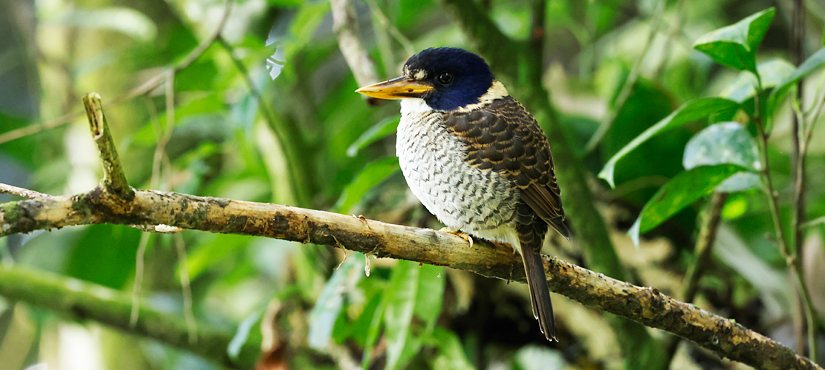
 4th – 21st October 2027: Sulawesi & Halmahera endemics birding tour highlights include Knobbed Hornbill, Ivory-breasted Pitta, Sulawesi Pitta, Sulawesi Lilac Kingfisher, Purple-bearded Bee-eater, Scaly-breasted Kingfisher, Standardwing Bird-of-Paradise, Maleo, Diabolical Nightjar, North Moluccan Pitta, Sulawesi Masked Owl, Moluccan Owlet-Nightjar, Rusty-backed Thrush, Ashy Woodpecker, Geomalia, Ochre-bellied Boobook, Azure Dollarbird – £5300 per person
Trip Details
- Date: 4th – 21st October 2027
- Cost: £5300
- Single Supplement: £410
- Deposit: £660
- Tour length: 17 Days (16 days birding)
- Min / Max group size: 4 / 7
- Start/Finish: Ternate/Palu
- Tour Type: Birding
- Photo Opps: Fair to good
- Physicality: Moderate
- Tour Leaders: Joma Blair & Local Guide
Contact us if you have questions about this birding tour to Sulawesi & Halmahera – info@calidrisbirdingtours.com
Sulawesi & Halmahera Endemics Birding
Birding on the islands of Sulawesi and Halmahera is to enter a land of forests, volcanoes, farmland and bustling cities that have been centres of world commerce for centuries, separated from other land masses for long enough for a huge number of endemic species to evolve. If you enjoy being in a place where almost every bird you see is an endemic species then this Sulawesi and Halmahera birding tour will have a strong appeal.
To the east of the Wallace line lie the islands of Sulawesi and Halmahera both major centres of endemism and for much of the twentieth century had almost mythical status to most people living in the west. These days both islands are easily visited and this gives birders access to one of the most endemic-rich regions of the world. The underpopulated Halmahera hosts a wealth of birdlife not only in its forests but also within plantation gardens, orchards and wetlands where roads are often narrow and slow. In contrast parts of Sulawesi are full of people but it doesn’t take long for birders to be immersed in rainforest that contains a lode of mesmerising birds such as the weird Sulawesi Hornbill and curious Maleo. By visiting a number of centres of endemism within the island we will see the maximum number of species unique to Sulawesi as possible and it might just make you want to visit some of the more obscure satellite islands, with their own endemics next time.
The birdlife on these islands is mouth-watering with the truly bizarre Standardwing Bird-of-Paradise tempting birders to Halmahera where huge Blyth’s Hornbills cruise through the forest canopy joined by a chorus of colourful parrots that include Moluccan Eclectus, Collared Lory and Moluccan King Parrot among many others and the jewel-like Ivory-breasted Pitta and North Moluccan Pitta lurking on the forest floor. Over on the larger island of Sulawesi there are a mind-boggling array of endemic kingfishers, Sulawesi Lilac Kingfisher, Green-backed Kingfisher and Scaly-breasted Kingfisher to mention a few of the best. Knobbed Hornbill is not only massive but wonderfully colourful while the forest floor hosts exciting birds that include the peculiar Maleo, Great Shortwing, Sulawesi Pitta and Geomalia. In addition to these highly-prized species there will be a collection of owls, flycatchers, parrots and monarchs to leave birders not knowing which way to look, making this one of the most amazing Indonesia birding tours.
Day 1, Arrival in Ternate – 4th October
We start this birding tour with arrival in Ternate followed by checking in to our comfortable hotel. Ternate is one of the islands of the Northern Moluccas; all islands in this area are two hours ahead of Jakarta. We will all meet for dinner together and discuss how the trip will proceed over the following days.
Day 2, Ternate-Sidangoli-Subaim – 5th October
After breakfast in the hotel we will make a short drive to the trail head to access a hide with the expectation of starting this birding tour with a real bang. Fifteen to twenty minutes of hiking the trail, which is steep in stretches, takes us to a permanent hide which overlooks a feeding station where we hope to see the stunning North Moluccan Pitta. Sitting quietly in the hide should afford us the sort of views of this pitta that are extremely rare when birding along trails in the forest and there is also a fairly good chance that Moluccan Dwarf Kingfisher will join the performance too.
After having enjoyed watching North Moluccan Pitta we will transfer to a jetty in the city from which we will charter a fast boat for the crossing to the island of Halmahera, which will take around an hour. There are a few birds to spot along the way, although the speed of the boat makes viewing tricky, with species such as Great Crested Tern, Red-necked Phalarope and Black-naped Tern to look out for. However, it is when we arrive on Halmahera that the birding begins in earnest with a series of birding stops as we travel towards our accommodation for the next few days. We will be looking for species such as Beach Kingfisher, the impressive Moustached Treeswift, colourful Rufous-bellied Triller and Blue-capped Fruit Dove as we travel to another hide that will hopefully provide us with another incredible bird; Ivory-breasted Pitta. It will certainly be a special day if we manage to connect with two species of pittas in one day but that is the big hope.
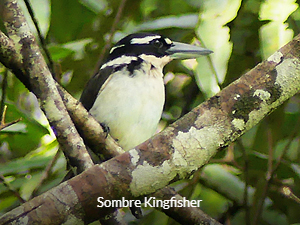
Further stops will be in an area where the endemic Sombre Kingfisher has a territory and other key targets will be Grey-headed Fruit Dove and Moluccan Monarch although, of course, there are plenty of other species for us to appreciate. The day will end with arrival at our accommodation in Subaim Village where we will settle in before meeting for dinner.
Days 3-4, Halmahera: Foli, Gunung Uni-Uni – 6-7th October
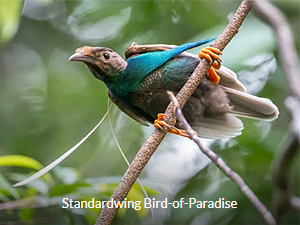
Using our accommodation in Subaim as our base we have two full days to explore the birds of the area with a number of locations to get into the forest to search for the key species, which include many endemics. Our first morning will involve a very early start to get ourselves into place at the right time to witness the incredible morning song and dance of Standardwing Bird-of-Paradise. This involves a short drive in a four-wheel drive vehicle followed by a short, but steep, walk down a trail to the viewing platform from which we should see a great show.
After enjoying this spectacle, provided by a truly iconic bird, we can do some more general birding along the nearby track with species such as Spectacled Imperial Pigeon, Blyth’s Hornbill, Cinnamon-bellied Imperial Pigeon, Halmahera Golden Bulbul and Moluccan Myzomela to look for. A wide range of Halmahera’s endemic birds can be found in this location so we will spend a good amount of time searching for species such as the impressive Goliath Coucal, the spectacular Moluccan Eclectus and Gurney’s Eagle to mention a few. One of the other key targets here is Azure Dollarbird; a splash of wondrous colour, but a bird that often requires some persistent searching.
Our two days in this area gives us time to visit various access points to the forest where lots of birds that have drawn us to this part of the world occur. There is a wide selection of parrots to look for including the tiny Moluccan Hanging Parrot, striking Chattering Lory, Moluccan King Parrot and Red-cheeked Parrot occurring. The sombre plumage of Halmahera Paradise-Crow belies the fact that it is related to the Birds-of-Paradise while more colourful possibilities include Blue-and-white Kingfisher and Common Paradise-Kingfisher. We will also have the time to track down any of the key species that are playing hard-to-get such as Sombre Kingfisher or to visit another hide for Ivory-breasted Pitta if the first location did not turn up the goods or if we simply want to see this fantastic bird again.
We can make a short stop in some rice fields at some point over the two days, for a change of pace, where birds such as Barred Rail, Chestnut Munia, Wandering Whistling Duck, White-browed Crake and a variety of other rice field/open country birds can be seen.
We will also have the time to do some night birding with perhaps the biggest prize being the weird, but wonderful, Moluccan Owlet-Nightjar. Other nocturnal target species include Halmahera Boobook and Moluccan Scops Owl.
Day 5, Subaim-Binagara-Ternate – 8th October
This will be our final day on Halmahera and , depending on the results on the previous days, we can get out early and make the drive to Aketajawe-Lolobata National Park, near the village of Binagara. The forest here harbours yet more treats including endemic species and many birds that are slightly more widespread in the region. The fantastic Scarlet-breasted Fruit Dove can be found here and there is another chance to find Goliath Coucal, a true giant within its family. We might be able to complete a spectacular set of kingfishers with Azure Kingfisher here as well as birds such as White-streaked Friarbird, Halmahera Oriole, Moluccan Spectacled Monarch and Red-flanked Lorikeet.
This location also gives us another chance at key species such as Standardwing Bird-of-Paradise, North Moluccan Pitta and Ivory-breasted Pitta should we need it. From Binagara we drive for about 1.5 hours to the harbour at Sofifi and then return, by speedboat, to Ternate where we will spend the night
Day 6, Ternate-Manado-Kotamobagu – 9th October
After an early breakfast we will take a morning flight to Manado. From here we will make a long drive of to our hotel in Kotamobagu but we can make some birding stops along the way. Amurang Fish Ponds provide us with a birding habitat we will not see much of on this tour so a stop here is nice to add some variety to our bird list. Here we should see out first Sulawesi Crows and add Black-faced Munia to our list. If we have a bit of luck we might get views of the very smart Spotted Harrier while migrating waders can include Wood Sandpiper, Pacific Golden Plover and Sharp-tailed Sandpiper, as well as the resident Pied Stilt. There’s a good chance that we add Sunda Teal to the list here too.
There will be a lunch stop along the way but we aim to get to our hotel in good time in preparation for an early start the following day.
Days 7-8, Tambun & Toraut – October 10-11th October
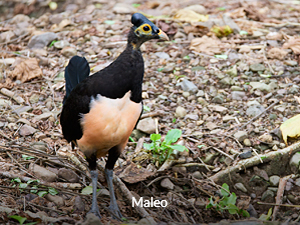
On our first morning in this area we will get out very early to ensure we get in place for a very special bird at the right time. Tambun is one of the stations in Bogani Nani Wartabone National Park (previously known as Dumoga Bone National Park); this national park is mainly covered by lowland rainforest. Despite human exploitation (egg-collecting) around the national park borders, the birds we are looking for still persist. Tambun is one of the nesting grounds for Maleo, a large, endemic megapode from Sulawesi. This bird mostly active on the ground but will perch in trees when disturbed. Maleos are famous for the way they incubate their eggs; in their communal breeding grounds, they use geothermal heat in the volcanic soil to incubate their eggs with the eggs left unattended to remain warmed by the soil. The young Maleos dig their way out of the ground after hatching and, remarkably, they are able to fly in order to avoid predators. We plan to spend the whole morning here to enjoy these remarkable birds to the full.
Of course, there are other birds to see here too; pockets of wetlands on the forest edge and within farmland provide a refuge for Wandering Whistling Duck and Sunda Teal with the possibility of Australasian Swamphen and Dusky Moorhen lurking in the shallows too while the magnificent Spotted Harrier is a bird to get excited about. Forested areas contain a wealth of birds such as Maroon-chinned Fruit Dove, Sulawesi Hornbill, Purple-winged Roller, Sulawesi Pitta and Sulawesi Cicadabird to mention a few. We must also remember to keep an eye on the skies with a good selection of raptors possible; Sulawesi Serpent Eagle, Sulawesi Hawk Eagle and Sulawesi Honey Buzzard can all be found here. A variety of sparrowhawks and goshawks are also possible.
A short, thirty minute drive from Tambun is another access point to the forest of Bogani Nani Wartabone National Park: Toruat. By visiting a slightly different forest type we hope to maximise our success in finding the key species of the region. Stephan’s Dove is fairly widespread but more abundant here than at some other locations. The fast-flying Purple Needletail is seen here more frequently than many other locations too and it can be a good place to look for Moluccan Drongo Cuckoo too. Spending our two days between the two nearby sites of Tambun and Toruat will allow us to find as many of the highlight species as possible with many of the endemic kingfishers, cuckooshrikes and other species occurring here.
Day 9, Kotamobagu-Manado – 12th October
Before going back to Manado, we will explore the forest road through forest on the lower slopes of Gunung Ambang. Here we have another chance to find species such as Maroon-chinned Fruit Dove, Superb Fruit Dove, Sulawesi Hornbill or perhaps our first Malia of the birding tour. This location also represents our first opportunity to locate other endemics such as Caerulean Cuckooshrike, Sulawesi Bush Warbler, Fiery-browed Myna and Citrine Canary-Flycatcher, although we will have further chances of these species later in the trip. We will leave fairly early to give ourselves time to make the long journey to our accommodation in Manado where we have a couple of other key species to look for.
After the long drive to Manado, during which we plan to make a stop for lunch, we plan to arrive at our accommodation, The Grand Luley Resort, with sufficient time to spend a few hours birding around the hotel gardens in the late afternoon, up until dusk.
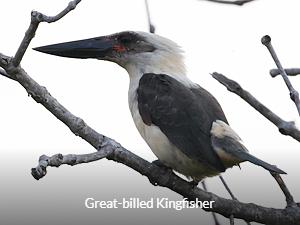
A boardwalk through the mangroves is where we intend to concentrate our efforts as there is a good chance to find the impressive, endemic Great-billed Kingfisher which favours this habitat and often sits on exposed perches at low tide as it hunts for prey. White-bellied Cuckooshrike is another key bird here, which is usually fairly common and easy to see around the hotel gardens while other species we might encounter include the tricky-to-see Black-billed Koel, Sulawesi Pygmy Woodpecker, Barred Rail, Sulawesi Hanging Parrot, Pink-necked Green Pigeon and Black Sunbird. The open nature of the gardens makes for good viewing and a great place to connect with a selection of the commoner birds of the area. The hotel is a good place to enjoy a good dinner, a few drinks and spend a comfortable night before moving on again in the early morning.
Day 10, Manado-Tangkoko – 13th October
We will check out of our hotel very early in the morning in order to get to Temboan Hill just after first light, when there is a flurry of bird activity. This location gives birders a vista over the forest, which forms Tangkoko National Park, with many exciting birds visiting trees close to the viewing area, including many of the key species of the Minahasa peninsula that we have travelled to see.
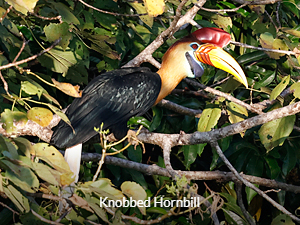
As the first rays of sunshine hit the treetops birds such as Green Imperial Pigeon, Grey-headed Imperial Pigeon, Sultan’s Cuckoo Dove and Grey-cheeked Green Pigeon sit out on exposed perches on a regular basis with smaller birds taking an early morning feed including Black Sunbird and Grey-sided Flowerpecker. The endemic Knobbed Hornbill has a claim to being the best-looking hornbill in this group of amazing birds and we hope to get good views of it here enjoying the early morning sun or feeding in a fruiting tree if any ficus trees are producing fruit. So we can enjoy watching, photographing and “scoping a good selection of birds here; all of this while having a nice breakfast served in the field.
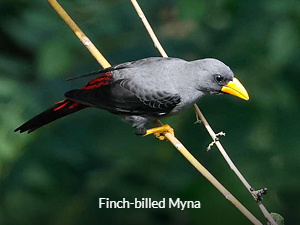
Sulawesi is blessed with a number of endemic mynas/starlings, most of which are quite different from those in the group that most birders are familiar with. The bushy crest of Sulawesi Myna really sets it apart from most other mynas and we stand a good chance of finding colourful his endemic species while we can expect small flocks of Finch-billed Starlings roving through the trees feeding, the feathers on their rump lighting up in the morning sun. The long tail of White-necked Myna makes this bird quite a remarkable sight too. Sulawesi Hanging Parrot, White-rumped Triller, Azure-rumped Parrot, Sulawesi Cicadabird and Yellow-breasted Raquet-tail are all also birds to look out for here.
We will take a break for lunch and the heat of the day but in the late afternoon we can have a change of scenery in a nearby agricultural research station where White-faced Cuckoo Dove can often be seen. While we sit and enjoy an afternoon tea/coffee break we should be able to watch Buff-breasted Rail and Banded Rail emerge from the dense, grassy vegetation. As the sun begins to set we should also see Isabelline Bush Hen join the party too while overhead Grey-rumped Treeswifts glide and perhaps they will be joined by Purple Needletail.
Days 11-12, Tangkoko Nature Reserve – 14-15th October
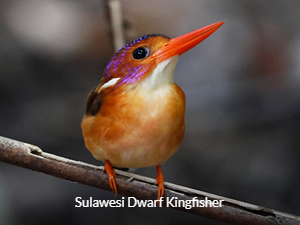
Two more full days in the Tangkoko/Temboan Hill area will give us plenty of time to get good views of a high proportion of the target birds without being in a rush as well as the time to track down those birds that play hard-to-get. A walk in Tangkoko lowland forest not only takes us through some great habitat but should provide great views of some exceptional species that include Green-backed Kingfisher, which is common here, Sulawesi Lilac Kingfisher and the stunning Rusty-backed Thrush. Along the way we should come across ground-foraging Philippine Megapodes as well as troops of Sulawesi Crested Macaques. As we are birding in the shady forest we will listen for the high-pitched call of Sulawesi Dwarf Kingfisher, a real gem of this habitat and although it can be tricky to track down, the chances of success are good here.
One of our early mornings at Tangkoko will be spent at a forest clearing, where we get a good view of the surrounding forest. Birds like Silvery-tipped Imperial Pigeon and Sulawesi Hanging Parrot often sit out in the open here but this is probably the best spot to get good views of the colourful Purple-winged Roller and also a reliable spot for Ornate Lorikeet, a real kaleidoscope of colour.
If we did not connect with Great-billed Kingfisher at Grand Luley Resort we can take a boat trip along the coast to an area of mangroves to look for this impressive bird. Pink-necked Green Pigeons, White-rumped Cuckooshrike and Pied Imperial Pigeons also lurk in these mangroves while along the way we are likely to see White-bellied Sea Eagle and Lesser Frigatebird.
Further visits to Temboan Hill and another lookout will give us the opportunity to look for the scarce Sulawesi Dwarf Hornbill and other species that are less abundant in the area such as Pied Cuckooshrike, Pygmy Hanging Parrot and Sulawesi Hawk Eagle as well as give us improved views of some species that may have been more distant on the first visit. We will also find time to look for nocturnal species; Sulawesi Scops Owl is common here and it is normally possible to get good views of Ochre-bellied Boobook. The impressive Sulawesi Masked Owl is another species that we have a high chance of seeing after dark and another endemic, Sulawesi Nightjar, is also regularly seen. With some effort, and a little luck, we may also be able to see Minahasa Masked Owl too, but this one is a bit more elusive than some of the others.
Day 13, Tangkoko-Gunung Mahawu, Tomohon – 16th October
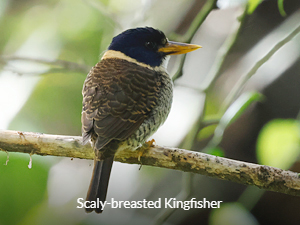
This morning we will leave Tangkoko very early to get to Mount Mahawu, near the town of Tomohon, arriving at a good time to look for Scaly-breasted Kingfisher. Gunung Mahawu has become a very good location for birders to see this, another, endemic kingfisher and hopefully we will get the sort of views that will be long remembered. Breakfast will be in the field here and a walk through the highland forest on the slopes of the mountain should provide a variety of species such as Sulawesi Heleia, Citrine Canary-Flycatcher, Mountain Tailorbird and Sulphur-bellied Whistler. Another key species to look for here is Sulawesi Blue Flycatcher which lurks in the shade of the forest undergrowth.
A visit to a hide, in the mid-morning, gives us the opportunity to watch another awesome bird in the form of Sulawesi Pitta. Similarly to other hides we will visit, these pittas come to a feeding station which is overlooked by a permanent hide in which we will sit and enjoy this stunning creature. The endemic Sulawesi Babbler will probably also attend, although its visual impact will be rather less.
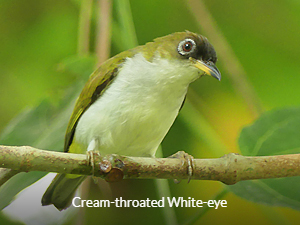
We can have lunch in a nearby restaurant where extensive flower gardens are a reliable place to get exceptionally good views of Sulawesi Myzomela, its stunning red plumage making a great photographic subject. This is also a great spot to get to grips with Sahul Sunbird, Chestnut Munia, Black-crowned White-eye and perhaps Crimson Sunbird. We can use the remainder of the day to look for any local targets we did not find in the morning before doing a little night birding to look for Speckled Boobook.
Day 14, Tomohon-Manado-Makasar-Palu-Lore Lindu – 17th October
Travel will take up much of today with an early morning flight to Palu from nearby Manado airport. On arrival at Palu the drive to our accommodation takes three to four hours, although we will make a series of birding stops once we are into forested areas. Flocks of small birds can contain Citrine Canary Flycatcher, Pale-blue Monarch, Sulawesi Pygmy Woodpecker, Sulawesi Leaf Warbler, Sulawesi Fantail and Malia with many of these to become familiar to us over the next few days. We will certainly make a stop in a few known territories of Purple-bearded Bee-eater listening carefully for the strange whistling call of this fantastic bird and it will certainly be a highlight of the day if we find it on our first attempt during this journey. Our drive will take us through prime habitat at a time of the day when raptors are in flight so we should look out for Sulawesi Hawk Eagle soaring overhead.
At the end of a long day we will reach our accommodation, Hotel Nasional Wuasa, where species such as Sahul Sunbird, Yellow-sided Flowerpecker and Sulawesi Crow inhabit the garden.
Days 15-17, Lore Lindu National Park – 18-20th October
With three full days to enjoy birding this area we will spend much of our time around the forested Lake Tambing area. There are a lot of exciting birds to look for, including many hard-to-find ones so it is important we manage our time well to try to locate Great Shortwing in the shadows, Maroon-backed Whistler, Blue-fronted Flycatcher or, if we are lucky, the rare Rufous-throated Flycatcher. More widespread species include Superb Fruit Dove, Knobbed Hornbill and Yellow-billed Malkoha and this is a very good spot for Malia while the colourful Fiery-browed Myna is fairly common.
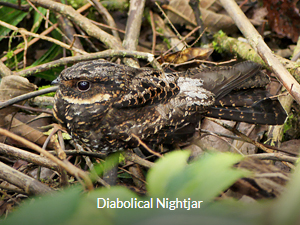
On our second morning, we will explore the higher elevation forest along the Anaso Trail. Key species here include the wonderfully-named Diabolical Nightjar which we can usually find on a roost site during daylight hours. Rather harder is the endemic thrush, Geomalia. This shy and scarce bird can sometimes be seen foraging along the trail in the early morning and similarly Sulawesi Thrush, slightly more common and more frequently encountered. We will hike quite high up the mountain to get into the domain of Hylocitrea, one of those taxonomic oddities that birds like. Also at this altitude we will be looking for White-eared Myza and if we are very lucky we might even spot Indonesian Serin in the treetops.
Other top quality birds to search for during our stay at Lore Lindu National Park include Piping Crow, Cerulean Cuckooshrike, Yellow-cheeked Lorikeet, Small Sparrowhawk and Dark-eared Myza. We will also spend time night birding here with a high chance of several exciting species including Cinnabar Boobook, Sulawesi Masked Owl, Speckled Boobook and the more widespread Great Eared Nightjar.
Day 18, Lore Lindu-Palu – 21st October
On our final morning of birding at Lore Lindu we will do what we so often do on the last day, make a plan that maximises the chances of finding any species that we have missed up to this point. Perhaps we need another effort at Geomalia or try to tease out Great Shortwing; whatever we still hope to see will be prioritised on this last morning.
The return journey to Palu will be punctuated with several stops along the way, including at some open country sites to attempt to see Pale-headed Munia and Red-backed Buttonquail. If there is time we can also stop in some fish ponds to see if we can add Javan Plover to our list. On arrival we will stay in a hotel near the airport where our tour will conclude for those not continuing with the extension or, for those of us who are, prepare for three more days of birding in Southern Sulawesi.
Optional Extension, 3 Days Birding from Makassar
Day19, Palu-Makassar-Malino – 22nd October
We take morning flight from Palu to Makassar and continue overland to Malino. When arriving in Malino we will go to the location for Makassar Myna. Night in Malino
Day 20, Malino-Makassar – 23rd October
Explore Lompobattang mountain range for Lompbattang Flycatcher and Lompobattang Leaf Warbler. In the afternoon return to Makassar. Night in Makassar
Day 21, Makassar-Jakarta – 24th October
We leave early in the morning to explore the forest in the limestone karst of Karaenta searching for Black-headed Kingfisher, recently described Sulawesi BrownFlycatcher and Black-ringed White-eye. Heading back to the airport and fly to Jakarta.
The following list outlines the key species that we have a good chance of seeing based on the experience of previous visits. It is not an exhaustive list of target birds but they are all notable for the memories they create or for being range-restricted. Of course we cannot guarantee that we will see them all but we do expect to locate a high proportion of them.
- Maleo – Macrocephalon maleo
- Superb Fruit Dove – Ptilinopus superbus
- Grey-headed Fruit Dove – Ptilinopus hyogastrus
- Cinnamon-bellied Imperial Pigeon – Ducula basilica
- Silver-tipped Imperial Pigeon – Ducula luctuosa
- Yellow-billed Malkoha – Rhamphococcyx calyorhynchus
- Goliath Coucal – Centropus goliath
- Moustached Treeswift – Hemiprocne mystacea
- Moluccan Owlet-Nightjar – Aegotheles crinifrons
- Diabolical Nightjar – Eurostopodus diabolicus
- Sulawesi Honey-buzzard – Pernis celebensis
- Sulawesi Serpent Eagle – Spilornis rufipectus
- Sulawesi Hawk Eagle – Nisaetus lanceolatus
- Spotted Harrier – Circus assimilis
- Sulawesi Masked Owl – Tyto rosenbergii
- Sulawesi Scops Owl – Otus manadensis
- Halmahera Boobook – Ninox hypogramma
- Ochre-bellied Boobook – Ninox ochracea
- Speckled Boobook – Ninox punctulata
- Knobbed Hornbill – Rhyticeros cassidix
- Sulawesi Dwarf Hornbill – Rhabdotorrhinus exarhatus
- Ashy Woodpecker – Mulleripicus fulvus
- Green-backed Kingfisher – Actenoides monachus
- Black-headed Kingfisher – Actenoides monachus capucinus
- Scaly Kingfisher – Actenoides princeps
- Common Paradise-Kingfisher – Tanysiptera galatea
- Sulawesi Lilica Kingfisher – Cittura cyanotis
- Great-billed Kingfisher – Pelargopsis melanorhyncha
- Blue-and-white Kingfisher – Todiramphus diops
- Beach Kingfisher – Todiramphus saurophagus
- Sombre Kingfisher – Todiramphus funebris
- Sulawesi Dwarf Kingfisher – Ceyx fallax
- Purple-bearded Bee-eater – Meropogon forsteni
- Purple-winged Roller – Coracias temminckii
- Azure Dollarbird – Eurystomus azureus
- Umbrella Cockatoo – Cacatua alba
- Ornate Lorikeet – Trichoglossus ornatus
- Golden-mantled Raquet-tail – Prioniturus platurus
- Moluccan Eclectus – Eclectus roratus
- Moluccan King Parrot – Alisterus amboinensis
- Sulawesi Hanging Parrot – Loriculus stigmatus
- Sulawesi Pitta – Erythropitta celebensis
- North Moluccan Pitta – Erythropitta rufiventris
- Ivory-breasted Pitta – Pitta maxima
- Sulawesi Myzomela – Myzomela chloroptera
- Ivory-backed Woodswallow – Artamus monachus
- Pied Cuckooshrike – Coracina bicolor
- Rufous-bellied Triller – Lalage aurea
- Sulawesi Fantail – Rhipidura teysmanni
- Standardwing Bird-of-Paradise – Semioptera wallacii
- Moluccan Monarch – Symposiachrus bimaculatus
- Moluccan Spectacled Monarch – Symposiachrus bimaculatus
- Piping Crow – Corvus typicus
- Sulawesi Leaf Warbler – Phylloscopus nesophilus
- Malia – Malia grata
- Sulawesi Bush Warbler – Locustella castanea
- Hylocitrea – Hylocitrea bonensis
- Finch-billed Myna – Scissirostrum dubium
- Fiery-browed Myna – Enodes erythrophris
- White-necked Myna – Streptocitta albicollis
- Sulawesi Myna – Basilornis celebensis
- Geomalia – Zoothera heinrichi
- Rusty-backed Thrush – Geokichla erythronota
- Sulawesi Thrush – Turdus turdoides
- Blue-fronted Flycatcher – Eumyias hoevelli
- Great Shortwing – Heinrichia calligyna
- Yellow-sided Flowerpecker – Dicaeum aureolimbatum
- Black Sunbird – Leptocoma aspasia
The map below shows the main locations visited on our route on this Sulawesi & Halmahera birding tour. There will be quite a few stops, particularly on the journeys between Palu and Lore Lindu national Park, that are not indictated here as the map would become too congested, instead we list the main locations.
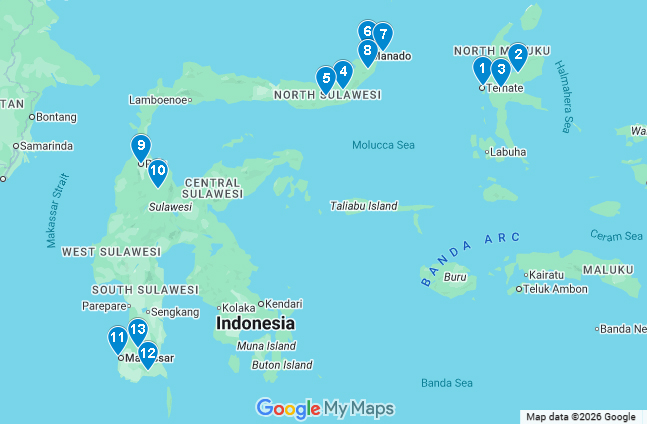
1. Ternate
5. Tambun & Toruat
9. Palu
13. Karaenta
2. Subaim
6. Grand Luley Resort
10. Lore Lindu National Park
3. Binagara
7. Tangkoko
11. Makassar
4. Kotamogagu
8. Gunung Mahawu
12. Gunung Lompobattang
The following is a selection of the birds of Sulawesi and Halmahera seen on previous visits to the locations we will visit on this birding tour.
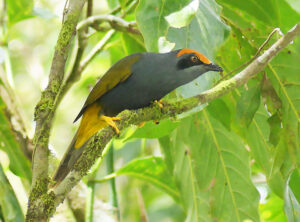
Fiery-browed Myna 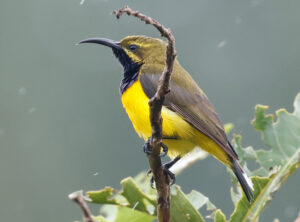
Sahul Sunbird 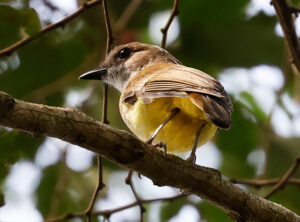
Sulphur-bellied Whistler 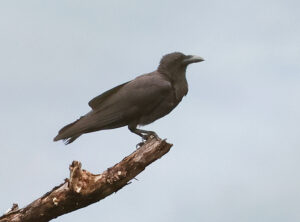
Sulawesi Crow 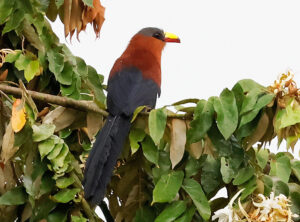
Yellow-billed Malkoha 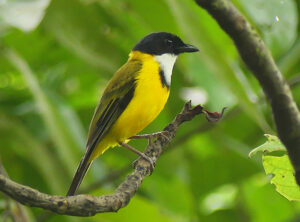
Moluccan Whistler 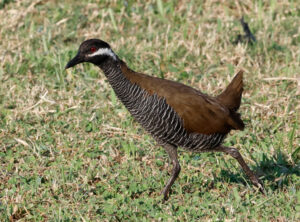
Barred Rail 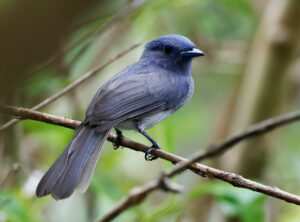
Pale-blue Monarch 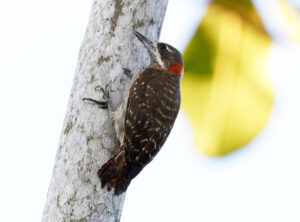
Sulawesi Pygmy Woodpecker 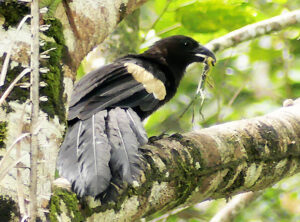
Goliath Coucal 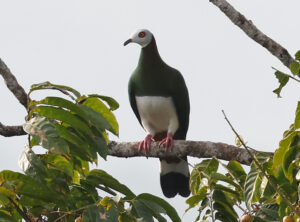
White-bellied Imperial Pigeon 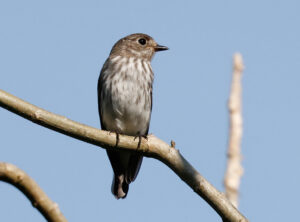
Grey-streaked Flycatcher
Tour Details
Tour Cost: £5300 per person
Single Supplement: £410
Extension Cost: £920 per person
Extension Single Supplement: £60 per person
Included in the tour cost: Transport including boats, domestic flights, road tolls, national park entry fees, accommodation including on the night of arrival, hide fees, all meals, bottled water, services of local birding guides, ranger fees and Calidris Birding Tours guide.
Not included in the tour cost: International flights, travel insurance, visa, alcoholic and soft drinks, tips, laundry, excess baggage fees, hotel mini bar, phone calls and any other items of a personal nature.
Accommodation: Accommodation ranges from very pleasant hotels to fairly simple homestays. At Ternate, Manado, Tomohon and Makassar we will stay in very comfortable hotels. At Kotamobagu we will stay in a hotel that is comfortable enough, but has seen better days. On the island of Halmahera we stay at a home stay which has individual chalets for us while at Tangkoko we stay in a pleasant homestay which, once again, has chalets and rooms which are simple but comfortable. Accommodation at all locations have air conditioning and private shower/toilets.
Physical effort: A good level of mobility is definitely essential but generally birding is done along quiet roads and tracks. A walk of a few kilometres is required at Tongkoko, altough it is done over fairly flat ground, but there is a decent hike up the Anaso trail at Lore Lindu National Park on one morning. Additionally, to reach some of the hides walks of fifteen to twenty minutes are required, sometimes on steep trails that can be muddy. Overall, though, most of the birding is within the capabilities of a high proportion of birders.
Weather: In lowland habitats expect hot and humid conditions for much of the day, while at higher altitude, at Lore Lindu in particular, weather can be variable with, sometimes, chilly temperatures in the early morning and showers are possible.
Food: Local food will be served at all locations, although at a couple of city hotels there will be breakfast buffets with western food selections; a number of breakfasts will be in the field, where the locals really take care of us. The cuisine of Sulawesi is one of the best in Indonesia with many dishes being similar to those within Thai cuisine, which should be familiar to many travellers. In Halmahera the cuisine is simpler but made with fresh, locally-sourced ingredients. Catering to vegetarians and vegans is not a problem at all here and food allergies can be catered for, but please inform us during the booking process of these.


Tour Leaders

Joma Blair
Joma’s love of birding was sparked witnessing throngs of bee-eaters, raptors and storks migrate over his childhood home in Egypt’s Sinai peninsula. Guided by his passion for the natural world ever since, he is soon to graduate with a Master’s at Imperial College London with a thesis on Antarctic seabird’s response to climate change. Alongside his studies he has birded on five continents, and this tour will be greatly enhanced by his deep scientific understanding of bird ecology and behaviour.
While every effort will be made to adhere to the advertised itinerary of this Sulawesi & Halmahera endemics birding tour, we reserve the right to make changes in the case of unforeseen circumstances that are beyond our control. These include problems with accessibility, national park closures, unseasonal weather events or any other reason that may demand an itinerary change or change of guide.
Recommended Field Guide

Birds of the Indonesian Archipelago: Greater Sundas and Wallacea (Second Edition)
Published in 2021 this is the most complete guide to the birds of Indonesia and an update on the first edition. This field guide contains all of the species that we can potentially see on this Sulawesi & halmahera birding tour. We strongly recommend that all participants on this tour purchase a copy after booking to familiarize themselves with the birds we hope to see.
The checklist that Calidris Birding Tours will issue for this tour will be based on IOC and eBird taxonomy with reference to the taxonomy used within this field guide, which can be at variance with other major listing authorities.
Read our full review of the book here – Birds of the Indonesian Archipelago.
Trip Reports
Photo Galleries
Related Birding Blog Posts
- Birding Wonders at Tangkoko, Sulawesi – posted by Nick Upton 25/04/26
- North Sulawesi Highlight Species – posted by Joma Blair 05/04/26
- Halmahera Highlights – posted by Nick Upton 01/10/17
- Tangkoko Delights – posted by Nick Upton 29/09/17
- The Hunt for Lompobattang Flycatcher – posted by Nick Upton 28/09/17
- Lore Lindu, Sulawesi – posted by Nick Upton 27/09/17
Terms and conditions: Please read the full Calidris Birding Tours terms and conditions which apply to the Sulawesi & Halmahera Endemics Birding Tour.